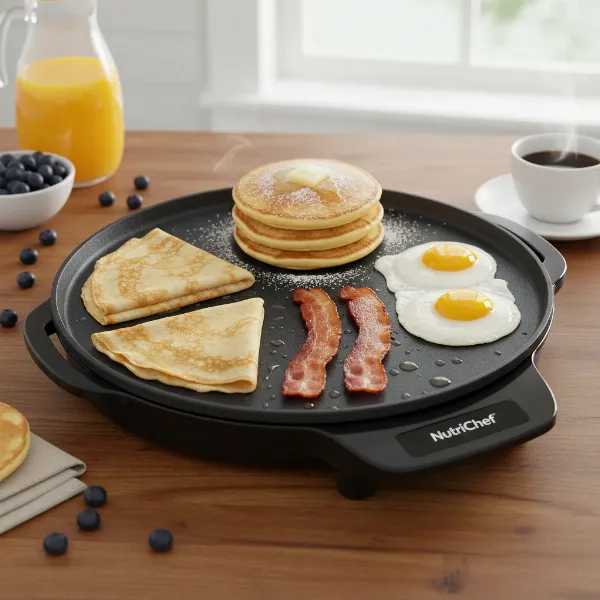
Are you tired of waiting endlessly for your cookware to heat up, delaying your culinary adventures? In today’s fast-paced world, efficiency in the kitchen is paramount, and a reliable electric skillet with rapid heating capabilities can be a game-changer. The Habor Electric Skillet, with its touted Fast Heating Technology, promises to revolutionize your cooking experience, offering quick readiness and consistent performance. But does it truly deliver on its promise of speed and convenience, making it a worthy addition to your kitchen arsenal? Let’s delve into a comprehensive review to uncover what sets this appliance apart.
What is an Electric Skillet?
An electric skillet, often referred to as an electric frying pan, is a self-contained countertop appliance designed for a wide array of cooking tasks. Unlike traditional skillets that rely on stovetop burners, an electric skillet integrates a heating element directly into its base, controlled by an adjustable thermostat. This design offers unparalleled flexibility, allowing you to fry, sauté, simmer, roast, braise, and even bake with precise temperature management, independent of your main stove.
The evolution of the electric skillet traces back decades, driven by a desire for more portable and controllable cooking solutions. Early models were simple, but modern iterations have embraced advanced features like non-stick coatings, diverse shapes, and, critically, faster heating technologies to meet the demands of contemporary home cooks.
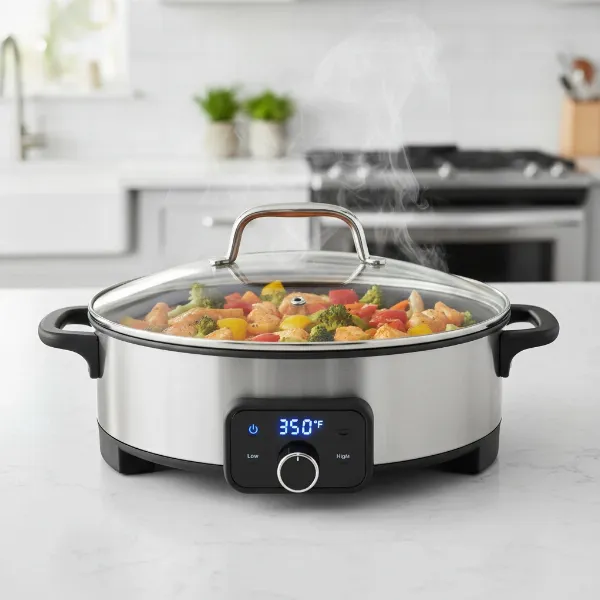 Modern electric skillet with non-stick coating on a kitchen counter, cooking a meal.
Advantages and Disadvantages of an Electric Skillet
Electric skillets have carved out a significant niche in kitchens worldwide due to their unique blend of features. However, like any appliance, they come with their own set of pros and cons.
Advantages
Electric skillets, especially those incorporating Fast Heating Technology like the Habor Electric Skillet, offer several compelling benefits:
- Flexibility and Convenience: Imagine cooking a full breakfast spread on your patio or preparing a hearty stew in a dorm room without a full kitchen. Electric skillets make this possible, providing an extra cooking surface or serving as a primary appliance in spaces with limited facilities. Their plug-and-play nature means cooking can happen virtually anywhere there’s an outlet.
- Precise Temperature Control: One of the most significant advantages is the built-in thermostat. This allows for incredibly accurate temperature regulation, preventing hot spots and ensuring even cooking. For delicate sauces or maintaining a perfect simmer, this control surpasses what many stovetop burners can offer.
- Space Saving Design: Many electric skillets feature designs that prioritize storage, with detachable handles or bases that allow them to fold away neatly. This is particularly beneficial for smaller kitchens or those who appreciate an uncluttered countertop.
- Easy to Clean: Most modern electric skillets boast non-stick surfaces, making food release effortless and cleanup a breeze. Many models are fully immersible once the temperature control probe is removed, allowing for thorough washing by hand or even in a dishwasher.
- Fast Heating Technology: This is where models like the Habor Electric Skillet shine. Rapid preheating means less waiting and more cooking. It translates to quicker meal preparation, saving valuable time during busy weekdays.
|
Our Picks for the Best Electric skillet in 2026
As an Amazon Associate I earn from qualifying purchases.
|
||
| Num | Product | Action |
|---|---|---|
| 1 | Nuwave Medley XL Digital Electric Skillet, Family Size Griddle w/Glass Lid, 2025 New & Improved Precision Heating, 100°-425°F, PFAS Free G11 Nonstick Ceramic Coating, Portable Hot Plate, 7qt Capacity |

|
| 2 | Elite Gourmet 12"x12"x2.15” Ceralast™ PFAS Free Ceramic Electric Skillet, Dishwasher Safe, Rapid Heat Up, 1200W, Dark Grey |
|
| 3 | FOHERE 16-Inch Electric Skillet with Glass Cover, 1500W Rapid Heat, Adjustable Temperature, Multi-Purpose Electric Skillet Fried Chicken, Perfect For Family Gathering Cooking |
|
| 4 | Elite Gourmet EG6201 Extra Deep 12"x12"x3.2" (7.5Qt.) Scratch Resistant Dishwasher Safe, Non-stick Electric Skillet with Glass Vented Lid, Adjustable Temperature, Black |
|
| 5 | Presto 06857 16-inch Electric Foldaway Skillet, Black |
|
| 6 | Pioneer Woman 3.5L Electric Skillet, Linen Speckle |
|
| 7 | Elite Gourmet EG808 8” x 8" Non-stick Electric Skillet, Dishwasher Safe with Tempered Glass Vented Lid, Rapid Heat Up, 600W, Black |
|
| 8 | Elite Gourmet EG-6203# Extra Deep 16"x13"x3.2" (10.5Qt.) Scratch Resistant, Easy Pour Spout Dishwasher Safe, Non-stick Electric Skillet with Glass Vented Lid, Adjustable Temperature, Black |
|
| 9 | bella Make & Take Electric Skillet, Fits-anywhere™ kitchenware, EverGood™ Ceramic Coating, Adjustable Temperature & Dishwasher-Safe Tempered Glass Lid, Cast Aluminum Base, 1200 Watt, Oatmilk |
|
| 10 | Blue Diamond 7QT 5-in-1 Extra Large Electric Skillet, Healthy Ceramic Nonstick Interior, Non-Toxic PFAS-Free, Temperature Control, Stay Cool Handles, Easy Clean, Graphite |
|
Disadvantages
While highly beneficial, electric skillets do have a few limitations to consider:
- Limited Mobility: While portable in the sense of being able to move them around, they are inherently tethered to a power outlet. This means you can’t use them entirely off-grid without a power source.
- Requires Power Supply: An electrical outlet is always necessary for operation. This might be a minor inconvenience in situations where power is scarce or during power outages.
- Not Suitable for All Cooking Methods: While versatile, electric skillets may not reach the extremely high temperatures required for intense searing that some specialized stovetop pans or woks can achieve. For instance, achieving a super thick, crispy crust on a steak might still favor a cast iron skillet over direct flame.
Popular Types of Electric Skillets on the Market
Electric skillets come in various forms, each designed to cater to different cooking preferences and kitchen needs. Understanding these categories can help you identify the best fit for your culinary endeavors.
Classification by Shape
The shape of an electric skillet often dictates its versatility and how efficiently it fits into your cooking routine.
- Round Skillets: These are the most traditional and common shape, excellent for general frying, simmering, and sautéing. They are ideal for dishes that require stirring or flipping without corners.
- Square Skillets: Offering a larger cooking surface area compared to round skillets of similar footprint, square models are great for cooking multiple items simultaneously, such as pancakes, eggs, or sandwiches.
- Rectangular Skillets: These provide the maximum cooking capacity, making them perfect for family-sized meals, large batches of stir-fries, or even acting as a buffet server for gatherings.
Classification by Material
The material of the cooking surface greatly impacts performance, durability, and ease of cleaning.
- Non-Stick Skillets: By far the most popular, non-stick coatings (like ceramic, Teflon-free options, or granite-infused) ensure food doesn’t stick, require less oil, and are incredibly easy to clean. They are often a top choice for everyday cooking.
- Cast Iron Skillets: Less common in electric versions, but prized for their exceptional heat retention and ability to achieve high searing temperatures. They require more maintenance but offer superior durability.
- Stainless Steel Skillets: Durable and non-reactive, stainless steel electric skillets are generally easy to clean and maintain. They might require a bit more oil to prevent sticking compared to coated non-stick surfaces.
Classification by Features
Modern electric skillets incorporate various features to enhance usability and cooking performance.
- Skillets with Glass Lids: A transparent tempered glass lid is a highly desirable feature, allowing you to monitor your food’s progress without lifting the lid, thus retaining heat and moisture.
- Skillets with Detachable Temperature Controls: This feature is crucial for easy cleaning, as it allows the pan itself to be fully immersed in water or placed in a dishwasher without damaging the electrical components.
- Skillets with Timer Functions: While less common, some advanced models may include integrated timers for more precise cooking control, particularly useful for recipes requiring specific cooking durations.
Comparing Notable Electric Skillet Brands
When considering an electric skillet like the Habor, it’s helpful to understand how leading brands stack up. While specific data for every Habor model’s “Fast Heating Tech” isn’t universally available, we can infer its competitive edge by looking at what makes other top skillets stand out in the categories of speed, heat distribution, and overall performance.
Here’s a general comparison table of some prominent electric skillet brands and characteristics often found in high-performing models:
| Feature/Brand | Presto | Hamilton Beach | Elite Gourmet | Zojirushi | Habor (with Fast Heating Tech) |
|---|---|---|---|---|---|
| Price Range | $$ | $$ | $$ | $$$$$ | $$ – $$$ |
| Heating Speed | Good (some models are very fast) | Good (quick preheat noted) | Quick preheat | Slower to heat, but very stable | Excellent (core feature) |
| Heat Distribution | Excellent (thick cast aluminum bases) | Excellent (ceramic coating, even spread) | Good (can vary by model) | Most consistent and even | Likely excellent and rapid |
| Non-Stick Coating | Teflon, Ceramic | Ceramic (Durathon) | Granite (honeycomb pattern) | Titanium non-stick | Expected high-quality non-stick |
| Versatility | Roasting, braising, steaming, buffet | Frying, pancakes, steak, stir-fry | Deep-frying, large meals, hotpots | Warming, baking, delicate dishes | High versatility for various dishes |
| Ease of Cleaning | Fully immersible, dishwasher-safe | Dishwasher-safe | Fully immersible, easy clean | Removable insert, requires careful cleaning | Likely easy, immersible design |
| Key Differentiator | Foldaway design, ControlMaster heat | Ceramic durability, consistent results | Deep pan capacity, attractive design | Precision temperature, consistency | Speed & efficiency, rapid readiness |
Note: The “Habor (with Fast Heating Tech)” column reflects anticipated characteristics based on the product’s emphasis on rapid heating, drawing parallels with high-performing aspects of other brands.
The “Fast Heating Tech” of the Habor Electric Skillet would ideally place it at the forefront for users prioritizing quick meal preparation and efficiency. While Zojirushi excels in heat consistency, its slower preheat time might be a trade-off. Brands like Presto and Hamilton Beach often offer a balance of performance and value, with several models known for good heating speeds. The Habor model, by specifically highlighting “Fast Heating Tech,” positions itself to compete directly on speed, alongside consistent performance.
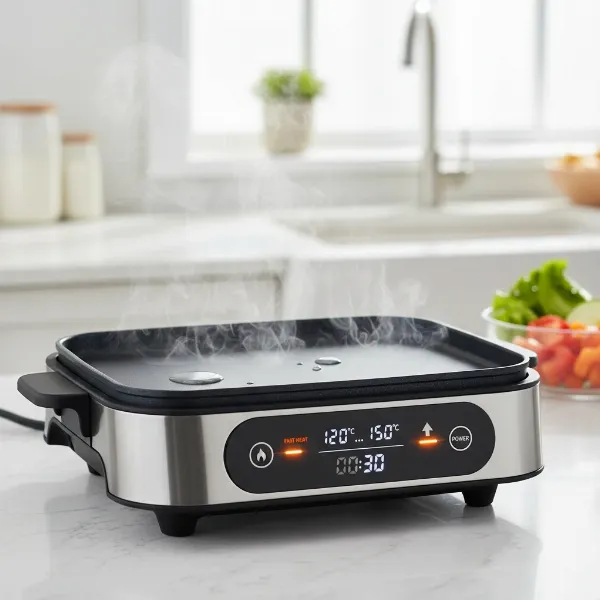 Habor electric skillet demonstrating fast heating technology with a quick preheating indicator.
Guide to Choosing the Right Electric Skillet for You
Selecting the perfect electric skillet involves more than just picking a brand. It’s about matching the appliance’s capabilities to your personal cooking style, kitchen space, and specific needs.
1. Identify Your Usage Needs
Before anything else, consider how you intend to use your electric skillet.
- Everyday Cooking: If it’s a primary cooking tool for daily meals, look for durability, easy cleaning, and consistent performance.
- Entertaining/Buffet Serving: For large gatherings, a spacious rectangular skillet with a “keep warm” function and an attractive design is ideal.
- Camping/RV/Small Spaces: Portability, compact storage (like foldable models), and energy efficiency become key.
- Specific Dishes: If you primarily make pancakes, choose a square shape for maximum surface area. For deep-frying, a deeper pan is essential.
2. Consider Size and Capacity
The dimensions of the skillet dictate how much food you can cook at once and how much storage space it will require.
- Small (8-10 inches): Ideal for single servings or small apartments.
- Medium (11-13 inches): Suitable for couples or small families (2-4 people).
- Large (14-16 inches or more): Best for larger families, entertaining, or batch cooking.
Remember to account for the depth of the skillet as well, especially for stews, deep-frying, or roasting.
3. Choose the Right Material
The cooking surface material affects both cooking performance and maintenance.
- Non-Stick (Ceramic, PTFE-free): Excellent for healthy cooking with less oil and effortless cleanup. Ceramic options are popular for being PFOA/PFAS-free.
- Hard-Anodized Aluminum: Durable, heats evenly, and often has a good non-stick coating.
- Cast Iron (electric): Offers superior heat retention and distribution, great for searing, but typically heavier and requires more care.
4. Evaluate Key Features
Look beyond the basics to find features that enhance your cooking experience.
- Fast Heating Technology: For models like the Habor, this is a prime feature. Ensure reviews confirm quick and even heating.
- Accurate Temperature Control: A wide temperature range and a precise thermostat dial are crucial for versatile cooking. Look for controls that maintain a steady temperature.
- Glass Lid: Essential for monitoring food without losing heat and moisture.
- Cool-Touch Handles: Ensures safety when moving the skillet, especially when hot.
- Pour Spout: Convenient for draining liquids or serving sauces.
- Detachable Power Cord/Immersible Pan: Makes cleaning significantly easier.
5. Research Brand Reputation and Reviews
Investigate what other users and experts say.
- Reliability and Durability: Look for brands known for long-lasting appliances.
- Customer Service: Good support can be invaluable if issues arise.
- User Reviews: Pay attention to comments regarding actual cooking performance, heating consistency, and ease of cleaning. For the Habor Electric Skillet, look specifically for feedback on its “Fast Heating Tech.”
6. Compare Prices
Finally, consider your budget. Electric skillets are available at various price points. Balance cost with features and expected longevity. Sometimes, investing a little more in a reputable brand with desired features like Fast Heating Technology can save you money and frustration in the long run.
Tips for Using and Maintaining Your Electric Skillet
To ensure your Habor Electric Skillet, especially one with advanced “Fast Heating Tech,” serves you reliably for years, proper usage and maintenance are key.
Usage Tips
Mastering your electric skillet will elevate your cooking game.
- First-Time Use: Before its inaugural cooking session, always wash the skillet thoroughly with warm, soapy water, rinse, and dry completely. Many manufacturers recommend a “seasoning” process for non-stick surfaces, which typically involves wiping a thin layer of cooking oil across the surface and heating it gently before letting it cool. Always refer to your Habor model’s specific manual for precise instructions.
- Adjusting Temperature Correctly: The precise thermostat is a major advantage. Start at a lower temperature than you might instinctively use on a stovetop, as electric skillets often heat more evenly and consistently. With a “Fast Heating Tech” model, reaching your desired temperature will be remarkably quick, so keep an eye on it to avoid overheating, especially initially. For best results, allow the skillet to preheat fully before adding ingredients.
- Using Appropriate Utensils: To protect the non-stick coating and prolong its lifespan, always use non-metal utensils made of wood, silicone, or heat-resistant plastic. Metal utensils can scratch and damage the surface, compromising its non-stick properties.
- Avoid Overcrowding: While electric skillets often boast generous cooking surfaces, overcrowding can lead to steaming instead of searing, especially with high-moisture foods. Cook in batches if necessary to maintain consistent heat and achieve desired browning.
Cleaning and Storage Tips
Proper cleaning and storage are vital for the longevity and performance of your electric skillet.
- Clean After Every Use: Once the skillet has cooled down completely, unplug it and remove the temperature control probe. For most non-stick models, a soft sponge, warm water, and mild dish soap are sufficient. For tougher residues, let the skillet soak for a short period before cleaning. Avoid abrasive scrubbers or harsh chemical cleaners, as these can damage the non-stick surface. The fully immersible design of many skillets simplifies this task significantly.
- Store Correctly: Ensure the skillet is completely dry before storing to prevent water spots or potential mold growth. Store it in a cabinet or pantry, ideally with a protective layer (like a soft cloth or paper towel) between the skillet and other cookware to prevent scratches, especially if stacking. For models with foldaway handles, utilize this feature for compact storage.
“The true magic of an electric skillet isn’t just its ability to cook; it’s the freedom it offers. From precise temperature control for delicate dishes to rapid heating for everyday meals, it empowers home cooks to achieve professional results with unmatched convenience.” – Chef Elena Rodriguez, Culinary Innovator & Appliance Specialist
Conclusion
The Habor Electric Skillet, with its emphasis on “Fast Heating Tech,” stands as a promising contender in the world of countertop cooking appliances. Its core value proposition lies in delivering rapid preheating and consistent, controllable heat, addressing the modern cook’s need for efficiency without compromising on performance. While specific individual reviews for this exact Habor model can sometimes be niche, the principles behind a well-designed electric skillet—versatility, ease of use, and precise temperature management—are universally beneficial.
By offering quick readiness and a wide range of cooking possibilities, from perfectly seared steaks to fluffy pancakes, the Habor Electric Skillet aims to simplify and enhance your culinary routine. For those seeking an appliance that combines speed with reliable functionality, it’s certainly worth considering. Could the Habor Electric Skillet be the smart, fast-heating solution your kitchen has been waiting for?
Frequently Asked Questions
What does “Fast Heating Tech” mean for an electric skillet?
Fast Heating Tech in an electric skillet signifies its ability to reach desired cooking temperatures much quicker than conventional models. This is typically achieved through optimized heating elements and efficient design, reducing preheating time and speeding up meal preparation.
Can an electric skillet replace my stovetop?
While an electric skillet is incredibly versatile and can handle many cooking tasks, it typically complements rather than completely replaces a traditional stovetop. It’s excellent for specific dishes, as an extra cooking surface, or in spaces without a full kitchen, but a full range offers greater capacity and diverse heat sources.
Is an electric skillet energy efficient?
Many modern electric skillets are quite energy efficient, often consuming less power than a conventional stovetop burner or oven for similar tasks. Their precise temperature control prevents wasted energy from overheating, and models with efficient heating elements (like those with Fast Heating Tech) can further reduce cooking times and energy use.
How do I know what temperature to use?
Start by referring to your Habor Electric Skillet’s user manual, which often provides recommended temperatures for various foods. Generally, lower temperatures (around 200-250°F) are for warming, medium (275-350°F) for frying and sautéing, and higher temperatures (375-425°F) for searing. Experimentation will help you find the perfect settings for your recipes.
Can I deep-fry in an electric skillet?
Yes, many electric skillets, especially deeper models, are well-suited for deep-frying. Their precise temperature control is a significant advantage, allowing you to maintain a consistent oil temperature, which is crucial for perfectly crispy results and safer frying.
Are electric skillets safe to leave unattended?
No, like any cooking appliance, an electric skillet should never be left unattended while in operation. Always be present to monitor your cooking, adjust temperatures, and ensure safety. Unplug the skillet once cooking is complete and it has cooled down.