For those who cherish the timeless charm of a vintage kitchen, modern appliances can often feel out of place. Yet, the convenience of contemporary cooking is hard to give up. Enter the retro style electric skillet – a perfect blend of nostalgic aesthetics and modern functionality, designed to complement your classic decor while delivering versatile cooking performance. This article explores how to find the ideal electric skillet that looks like it stepped out of a bygone era, seamlessly integrating into your vintage kitchen’s unique appeal.
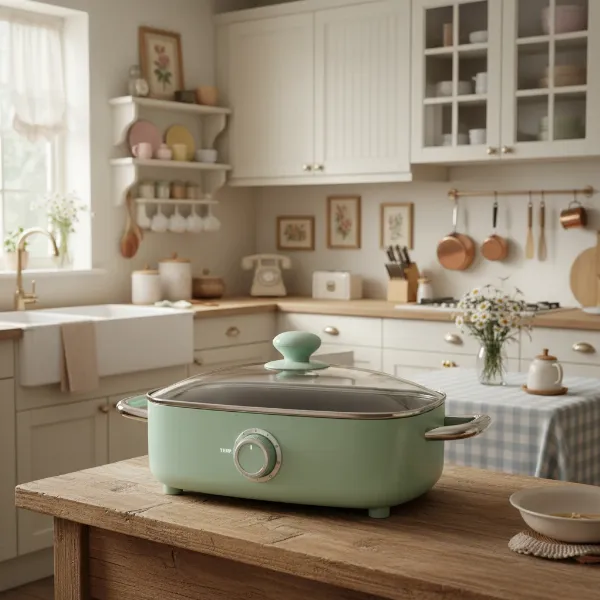 A mint green retro electric skillet sitting on a wooden countertop in a charming vintage kitchen.
What is an Electric Skillet?
An electric skillet, also known as an electric frying pan, is a versatile countertop appliance that brings an extra cooking surface to your kitchen. Unlike traditional skillets used on a stovetop, electric skillets feature a built-in heating element and a thermostat, allowing for precise temperature control independently. This makes them incredibly adaptable for a wide range of cooking tasks, from searing and frying to simmering, braising, and even baking or deep-frying.
Electric skillets rose to prominence as true kitchen heroes in the 1960s and 1970s, becoming as ubiquitous as air fryers are in today’s homes. Back then, they were celebrated for their convenience and ability to handle large family meals or buffet-style serving. Designs often featured polished aluminum or stainless steel exteriors, frequently offered in popular color palettes of the era such as avocado green, almond brown, and harvest gold. Brands like Presto, West Bend, and Sunbeam were at the forefront, crafting appliances that were both functional and stylish for the contemporary kitchen.
Advantages and Disadvantages of Electric Skillets
Electric skillets offer unique benefits, especially for those with limited stovetop space or who frequently entertain. However, like any appliance, they come with a few considerations. Understanding these can help you determine if a retro-style electric skillet is the right addition to your vintage kitchen.
Advantages
- Versatility and Convenience: An electric skillet can truly be a multi-purpose workhorse. It can fry bacon and eggs, simmer a hearty stew, prepare a one-pan meal, or even act as a warming tray for serving. Its ability to maintain a consistent temperature is crucial for dishes like fried chicken or deep-fried delights.
- Precise Temperature Control: Most models come with a removable temperature probe that allows for exact heat settings, ranging from “warm” to over 400 degrees Fahrenheit. This precision is difficult to achieve on a standard stovetop burner and is essential for consistent cooking results, preventing scorching or undercooking.
- Space-Saving: For kitchens with limited range burners or small stovetops, an electric skillet provides an invaluable extra cooking zone. It can also be taken out for specific meals or gatherings and then stored away, freeing up counter space for daily use.
- Easy to Clean: Many modern electric skillets are designed for easy cleanup. With the heating probe removed, many models are fully immersible in water or even dishwasher safe, simplifying the post-meal tidying process. Nonstick coatings also contribute significantly to ease of cleaning, ensuring food slides off with minimal effort.
|
Our Picks for the Best Electric skillet in 2026
As an Amazon Associate I earn from qualifying purchases.
|
||
| Num | Product | Action |
|---|---|---|
| 1 | Nuwave Medley XL Digital Electric Skillet, Family Size Griddle w/Glass Lid, 2025 New & Improved Precision Heating, 100°-425°F, PFAS Free G11 Nonstick Ceramic Coating, Portable Hot Plate, 7qt Capacity |

|
| 2 | Elite Gourmet EG808 8” x 8" Non-stick Electric Skillet, Dishwasher Safe with Tempered Glass Vented Lid, Rapid Heat Up, 600W, Black |
|
| 3 | bella Make & Take Electric Skillet, Fits-anywhere™ kitchenware, EverGood™ Ceramic Coating, Adjustable Temperature & Dishwasher-Safe Tempered Glass Lid, Cast Aluminum Base, 1200 Watt, Oatmilk |
|
| 4 | Elite Gourmet EG-6203# Extra Deep 16"x13"x3.2" (10.5Qt.) Scratch Resistant, Easy Pour Spout Dishwasher Safe, Non-stick Electric Skillet with Glass Vented Lid, Adjustable Temperature, Black |
|
| 5 | Elite Gourmet 12"x12"x2.15” Ceralast™ PFAS Free Ceramic Electric Skillet, Dishwasher Safe, Rapid Heat Up, 1200W, Dark Grey |
|
| 6 | Pioneer Woman 3.5L Electric Skillet, Linen Speckle |
|
| 7 | Blue Diamond 7QT 5-in-1 Extra Large Electric Skillet, Healthy Ceramic Nonstick Interior, Non-Toxic PFAS-Free, Temperature Control, Stay Cool Handles, Easy Clean, Graphite |
|
| 8 | Presto 06857 16-inch Electric Foldaway Skillet, Black |
|
| 9 | FOHERE 16-Inch Electric Skillet with Glass Cover, 1500W Rapid Heat, Adjustable Temperature, Multi-Purpose Electric Skillet Fried Chicken, Perfect For Family Gathering Cooking |
|
| 10 | Elite Gourmet EG6201 Extra Deep 12"x12"x3.2" (7.5Qt.) Scratch Resistant Dishwasher Safe, Non-stick Electric Skillet with Glass Vented Lid, Adjustable Temperature, Black |
|
Disadvantages
- Limited Portability: While an electric skillet can be moved from the kitchen to a dining area for serving, it always requires a power outlet. This means its use is tethered to electrical access, limiting true portability for outdoor cooking unless an appropriate power source is available.
- Requires a Power Source: As the name implies, these appliances run on electricity. For those mindful of energy consumption or seeking off-grid cooking solutions, this reliance on an electrical outlet might be a drawback. It’s a key distinction from traditional stovetop cookware.
- Not Suitable for All Cooking Methods: While highly versatile, electric skillets aren’t ideal for every cooking task. For instance, high-heat searing that requires extreme temperatures might be better suited for a heavy cast iron pan on a powerful burner. Additionally, their contained design might not be the best for very large, irregularly shaped items that require open-air cooking or constant turning in a wide, shallow pan.
Popular Retro Style Electric Skillets on the Market
Infusing your vintage kitchen with modern convenience doesn’t mean sacrificing style. Several electric skillets on the market today either offer a genuine retro aesthetic or possess elements that beautifully complement a classic kitchen design.
By Appearance and Key Retro Features
When searching for a retro-style electric skillet, look for specific design cues that evoke nostalgia. Often, this includes specific color palettes like a soft mint green, classic black, or even a speckled finish reminiscent of old graniteware. Polished aluminum or stainless steel exteriors can also provide a timeless, utilitarian look that blends well with mid-century modern or farmhouse vintage styles. Look for rounded edges and simple, functional lines rather than overly sleek or futuristic designs. Classic glass lids with prominent round knobs are another common feature found in both vintage and retro-inspired modern skillets.
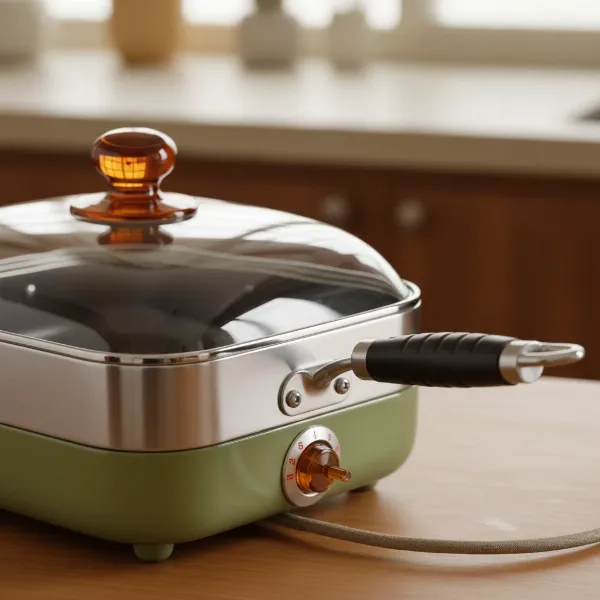 Close-up of a retro electric skillet showing classic design elements like a rounded shape and a glass lid with a prominent knob.
“A true retro appliance isn’t just about color; it’s about the feel, the form, and how it subtly cues a bygone era through its construction and thoughtful details.” – Admin, electricskilletguide.com
Featured Retro-Inspired Models
While explicitly “retro-style” skillets are a niche, some modern options capture the essence beautifully:
- DASH Rapid Heat Electric Skillet: This model is a standout for its color options, most notably a charming mint green that instantly evokes a retro feel. Its round shape and simple, functional design with cool-touch handles and a clear glass lid make it a popular choice for vintage-inspired kitchens. It offers a 14-inch cooking surface and heats up to 450 degrees Fahrenheit. However, note that the pan is not removable from the base and requires hand washing.
- Presto 16-inch Electric Skillet: While described as having a “contemporary look,” the fluid handle-and-leg configuration of this Presto skillet provides a “slightly retro vibe” that can integrate well into many classic kitchen settings. Its generous rectangular capacity makes it perfect for family meals or buffet serving, reminiscent of how electric skillets were used decades ago. It’s also fully immersible for easy cleaning, a practical feature for busy cooks.
- Starfrit The Rock Electric Skillet: This skillet, with its black surface and white speckles, offers a finish reminiscent of graniteware, a common material in vintage cookware. The use of Bakelite for the lid knob and side handles further enhances this nostalgic feel, as Bakelite was a popular material in older appliances due to its heat-resistant properties. While not overtly “retro” in shape, its material aesthetics can provide a subtle vintage touch.
When considering other brands, look for models with simple, sturdy construction, minimal digital displays, and finishes that prioritize classic metallic tones or muted, earthy colors over bright, contemporary hues.
Comparing Popular Electric Skillet Brands
When comparing electric skillet brands for a vintage kitchen, it’s often less about direct “retro models” from every manufacturer and more about finding the brands that offer features, colors, and designs that complement a classic aesthetic. Here’s a general comparison focusing on aspects relevant to retro appeal:
| Feature/Brand | Presto | DASH | Zojirushi | Cuisinart | Starfrit (The Rock) |
|---|---|---|---|---|---|
| Retro Vibe | “Slightly retro vibe” in handle/leg configuration. Classic, utilitarian designs. | Explicit “retro-looking mint green” option. Round shape. | Modern, versatile design. Less direct retro aesthetic. | Modern, brushed stainless look. | Graniteware-like speckled finish, Bakelite handles. |
| Colors | Often classic black/silver. | Mint Green, Red, Black | Metallic/Black | Brushed Stainless/Black | Black with white speckles |
| Capacity | 11-inch to 16-inch, generous. | 14-inch round, 20-cup capacity. | Deep, multi-functional pans. | Oval, rectangular options. | Standard (often shallower) |
| Material | Cast aluminum, nonstick. | Aluminum, nonstick. | Ceramic/stainless steel, titanium nonstick. | Cast aluminum, nonstick. | Cast aluminum, RocTec nonstick. |
| Cleaning | Many fully immersible, dishwasher safe (probe removed). | Hand wash only, pan not removable. | Hand wash only. | Dishwasher safe (probe removed). | Hand wash only, not immersible. |
| Key Appeal | Reliability, large capacity, easy cleaning. | Aesthetic choice, compact round design. | Versatility, high-quality cooking. | Even heat, fast cooking, sleek. | Durable nonstick, unique finish. |
| Price Range | Budget-friendly to mid-range. | Budget-friendly to mid-range. | Higher-end. | Mid to high-range. | Budget-friendly. |
While Zojirushi and Cuisinart offer excellent performance and quality, their designs tend to be more contemporary. For a stronger retro statement, DASH with its mint green option, or Presto with its classic functionality and subtle retro hints, might be better fits. Starfrit’s “The Rock” offers a distinct texture that could appeal to a vintage aesthetic.
How to Choose the Right Electric Skillet for a Vintage Kitchen (Buying Guide)
Selecting an electric skillet for a vintage kitchen goes beyond just functionality; it’s about finding a piece that feels authentic and enhances your chosen aesthetic. Here’s a guide to help you make an informed decision:
Determine Your Usage Needs
Before diving into aesthetics, consider how you’ll primarily use the skillet. Do you need it for everyday family meals, holiday entertaining, deep frying, or simply as a warming dish? Knowing your primary uses will help narrow down the necessary capacity, power, and specific features you’ll need. For instance, deep frying requires deep sides and consistent high heat.
Consider Size and Capacity
Electric skillets come in various sizes, from compact 6-inch models perfect for singles or small side dishes to oversized 16-inch rectangular units ideal for large families or gatherings. Measure your counter space and storage areas. A large skillet might be great for cooking, but a bulky, oddly shaped one could be a challenge to store in a vintage-style cabinet. Many retro kitchens embraced functionality, so a skillet that can be tucked away neatly is a plus.
Choose Suitable Materials
Most electric skillets feature nonstick-coated metal, typically heavy-gauge aluminum or stainless steel. For a vintage look, consider models with a polished aluminum or stainless steel exterior, reminiscent of older appliances. While cast iron electric skillets are less common new, their raw material inherently offers a vintage feel if you can find one. Ceramic nonstick coatings can also be a good, durable option. Always prioritize a durable nonstick surface to maximize the appliance’s lifespan, regardless of its vintage appeal.
Check Essential Features
Look for crucial features such as accurate and easy-to-read temperature control, a sturdy glass lid (allowing you to monitor cooking without losing heat), and cool-touch handles for safe handling. Removable heat probes are standard and allow for easier cleaning. Some models offer additional features like pouring spouts, steaming racks, or even multi-functional inserts, which can add to their versatility. Ensure these features don’t detract from the desired retro aesthetic.
Research Brands and Reviews
Explore brands known for reliability and quality. While direct “retro” lines are rare, look for brands like Presto or DASH that offer specific models with vintage-inspired colors or classic design elements. Read user reviews specifically for comments on durability, even heating, and how easily the appliance integrates into different kitchen styles. A brand with a long history in kitchen appliances might also subconsciously tap into that nostalgic feeling.
Compare Prices
Electric skillets vary significantly in price. Set a budget and compare models within that range. Remember that a higher price doesn’t always guarantee a perfect retro look, nor does a budget-friendly option mean sacrificing performance. Balance your aesthetic desires with practical considerations of price and features to find the best value for your vintage kitchen.
Tips for Using and Maintaining Your Electric Skillet
To ensure your retro-style electric skillet performs beautifully for years to come and continues to complement your vintage kitchen, proper usage and maintenance are key.
Usage
- First-Time Use: Always read the manufacturer’s instructions. Typically, you’ll need to wash the skillet and lid before the first use. Some nonstick surfaces may recommend a light seasoning with cooking oil before the initial cooking session.
- Adjusting Temperature: Utilize the precise temperature control. For frying, preheat the skillet to the recommended temperature before adding food. For simmering or holding warm, set it to the lowest stable temperature to prevent overcooking or drying out. Avoid constantly adjusting the temperature, allowing the skillet to reach and maintain its set heat.
- Suitable Utensils: Always use wooden, silicone, or heat-resistant plastic utensils on nonstick surfaces to prevent scratches and damage. Metal utensils can quickly degrade the nonstick coating, compromising both performance and longevity.
Cleaning and Maintenance
- Clean After Each Use: Allow the skillet to cool completely before cleaning. For immersible models, remove the heat probe, then wash the skillet and lid with warm, soapy water and a soft sponge. For non-immersible models, wipe the interior with a damp cloth and mild soap, being careful around the heating element connection.
- Proper Storage: Once thoroughly dry, store your electric skillet in a clean, dry place. If stacking other items on top, place a soft cloth or paper towel inside the skillet to protect the nonstick surface from scratches. Many skillets have compact storage designs, like folding handles, which can be beneficial in older kitchens with less storage.
Conclusion
Choosing the best retro style electric skillet for your vintage kitchen means finding that sweet spot where classic aesthetics meet modern culinary efficiency. From the distinct mint green hues of a DASH skillet to the subtle retro hints of a Presto, there are options to beautifully complement your nostalgic decor. These versatile appliances offer precise temperature control, making them ideal for everything from a traditional Sunday breakfast to a festive buffet. By considering your cooking needs, prioritizing durable materials, and paying attention to design details like classic handles or finishes, you can select an electric skillet that feels like an authentic piece of your vintage home. What culinary delights will you create first in your stylish new-old appliance?
Frequently Asked Questions
What makes an electric skillet “retro style”?
A retro-style electric skillet typically features design elements reminiscent of mid-20th-century appliances, such as specific color palettes (e.g., mint green, avocado green, harvest gold), classic shapes, polished metal finishes, and simple, utilitarian controls. These aesthetics evoke a nostalgic feeling, making them suitable for vintage kitchen decor.
Can I find new electric skillets that genuinely look vintage?
While truly vintage models are often found in antique shops, several modern brands produce electric skillets with retro-inspired designs and color options. Brands like DASH offer contemporary functionality wrapped in a nostalgic aesthetic, providing the best of both worlds for a vintage kitchen.
Are retro electric skillets less efficient than modern ones?
Not at all. “Retro style” refers primarily to the aesthetic design, not outdated technology. Modern retro-style electric skillets incorporate current heating elements, precise temperature controls, and durable nonstick coatings, ensuring they are just as efficient and high-performing as any other new electric skillet on the market.
What colors were popular for electric skillets in the 1970s?
In the 1970s, electric skillets and other kitchen appliances commonly featured colors like avocado green, harvest gold, almond brown, and rich gold. These earthy and warm tones were characteristic of the era’s interior design trends, offering a distinct vintage appeal.
Is it safe to use old, truly vintage electric skillets?
While aesthetically appealing, truly vintage electric skillets may not meet modern safety standards and could have worn electrical components or nonstick coatings containing materials no longer used. It is generally recommended to opt for new retro-style models that adhere to current safety regulations for peace of mind.