Ever found yourself standing in the kitchen aisle, staring at a wall of cookware, feeling a bit overwhelmed? You see terms like “Teflon,” “granite-infused,” and then there’s the one that sounds both high-tech and earthy: ceramic. If you’ve ever wondered What Is A Ceramic Nonstick Coating and why it’s popping up on everything from frying pans to our beloved electric skillets, you’ve come to the right place. As your guide here at Electric Skillet Guide, I’ve spent countless hours searing, sautéing, and simmering on these surfaces. Let’s pull back the curtain and get to the bottom of this popular kitchen technology. It’s simpler than you think, and understanding it is the key to becoming a true master of your electric skillet.
The Story Behind the Shine: De-mystifying Ceramic Nonstick
So, let’s get right to it. What are we really talking about when we say “ceramic coating”?
A ceramic nonstick coating is a slick, glossy surface applied to cookware that’s derived from sand. It’s created using a technology called a “sol-gel” process, which essentially turns inorganic silica (the main component of sand) into a gel that can be sprayed onto the aluminum or stainless steel body of a pan and then cured with high heat.
The result is a hard, glass-like surface that is incredibly smooth and naturally nonstick. Think of it as a layer of liquid glass baked onto your pan. This process creates a cooking surface that’s free from the chemicals you might have heard about in traditional nonstick pans, which is a huge part of its appeal.
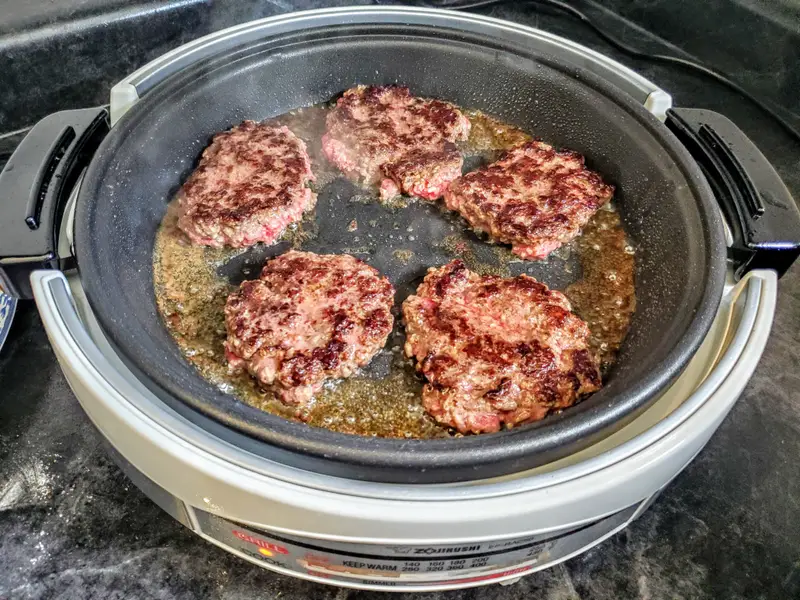
It’s Not Your Grandmother’s Pottery
The first thing to clear up is a common misconception. When you hear “ceramic,” you might picture a heavy, breakable coffee mug or a casserole dish. That’s not what this is. A ceramic-coated electric skillet isn’t made entirely of ceramic. Instead, it has a metal core (usually aluminum for its excellent heat conductivity) that is then coated with this special sol-gel layer. This gives you the best of both worlds: the even heating of metal with the easy-release properties of the ceramic finish.
Why Did Ceramic Coatings Become So Popular?
The rise of ceramic nonstick is directly linked to growing consumer awareness about the chemicals used in traditional nonstick coatings, specifically PTFE (polytetrafluoroethylene), famously known by the brand name Teflon. While PTFE itself is generally considered stable and safe at normal cooking temperatures, concerns arose around a chemical called PFOA (perfluorooctanoic acid), which was historically used in its manufacturing process. Manufacturers have since phased out PFOA, but the demand for a completely different, “natural” alternative paved the way for ceramic coatings to shine. They hit the market as the PFOA-free and PTFE-free option, offering peace of mind to health-conscious cooks.
How a Ceramic Nonstick Coating Performs in an Electric Skillet
Now for the fun part. How does this surface actually feel and cook in an electric skillet? In my test kitchen, it’s a dream for certain tasks. The large, flat surface of an electric skillet combined with a slick ceramic coating is an unbeatable combination for cooking a huge batch of pancakes for the family or frying a dozen eggs without a single one sticking.
Here’s a breakdown of the pros and cons you can expect:
The Bright Side (Pros):
- Completely Toxin-Free: This is the big one. High-quality ceramic coatings are made without PFOA, PTFE, lead, or cadmium. You can cook for your family with confidence.
- Excellent Heat Tolerance: Ceramic coatings can generally withstand higher temperatures than traditional nonstick coatings before they begin to break down. This is a great feature for getting a good sear on a steak in your electric skillet, though you should never use extreme high heat.
- Super Slick Surface (At First): When new, a ceramic surface is remarkably nonstick. Food glides right off, making both cooking and cleanup a breeze.
- Great Heat Conduction: The coating is thin enough that it doesn’t interfere with the heat transfer from the skillet’s aluminum base, ensuring you get that consistent, even cooking electric skillets are known for.
The Reality Check (Cons):
- Durability Can Be an Issue: Let’s be honest, this is the Achilles’ heel of most ceramic coatings. They are more brittle than PTFE-based coatings and can be more susceptible to chipping and scratching if you’re not careful. Metal utensils are a definite no-go.
- The Nonstick Property Fades: Over time and with use, the nonstick performance of a ceramic coating will degrade. This process can be sped up by using high heat, abrasive sponges, or cooking sprays (which can create a residue that’s tough to remove).
- Requires Gentle Care: You can’t treat a ceramic skillet like an old cast-iron workhorse. It needs a little more TLC, which we’ll cover next.
Ceramic vs. Teflon (PTFE): The Head-to-Head Showdown
To make it even clearer, here’s a simple table comparing the two most common nonstick surfaces you’ll find on an electric skillet.
| Feature | Ceramic Nonstick Coating | Traditional PTFE (Teflon) |
|---|---|---|
| Composition | Sand-derived (silica) via sol-gel process | A synthetic polymer (polytetrafluoroethylene) |
| Health & Safety | Free of PTFE, PFOA, lead, and cadmium | Modern versions are PFOA-free |
| Max Heat | Generally safe up to 450°C / 840°F | Can release fumes above 260°C / 500°F |
| Durability | More brittle, prone to scratching and chipping | More flexible and generally longer-lasting nonstick |
| Best For | Health-conscious cooks, low to medium-heat cooking | All-purpose cooking, those wanting maximum durability |
| Care | Hand-wash only, no metal utensils, no cooking spray | Often dishwasher-safe, more forgiving of utensils |
Keeping Your Ceramic Electric Skillet in Tip-Top Shape
If you invest in a beautiful electric skillet with a ceramic surface, you want it to last. The good news is that with the right care, you can significantly extend its nonstick life.
According to kitchen appliance engineer John Carter, “The number one mistake people make with ceramic coatings is thermal shock. Never run a hot skillet under cold water. The drastic temperature change can cause micro-fractures in the coating, leading to a rapid decline in its nonstick properties.”
Here’s your go-to checklist for ceramic care:
The Do’s:
- Season it (lightly) before first use: Wash and dry the skillet, then wipe a very thin layer of neutral oil (like canola or grapeseed) over the surface. Heat it on low for a few minutes, let it cool, and wipe out the excess. This helps seal the microscopic pores.
- Use the right utensils: Stick to wood, silicone, bamboo, or nylon.
- Cook with a little fat: While it’s nonstick, a small amount of butter or oil will improve performance and longevity.
- Use low to medium heat: Your electric skillet is designed for precise temperature control. There’s rarely a need to crank it to the max. Ceramic performs best at moderate temperatures.
- Let it cool before washing: Remember John Carter’s advice! Patience is key.
The Don’ts:
- Never use metal utensils: This is the fastest way to scratch and ruin your coating. No knives, no metal spatulas, no forks.
- Avoid abrasive cleaners: Ditch the steel wool or harsh scrubbing pads. A soft sponge or cloth is all you need.
- Say no to cooking sprays: Aerosol cooking sprays contain propellants and emulsifiers that burn onto the surface at low temperatures, creating a sticky build-up that’s almost impossible to remove and will ruin the nonstick finish.
- Skip the dishwasher: Even if the manufacturer says it’s “dishwasher safe,” the harsh detergents and high heat will wear down the coating much faster. Hand-washing is always best.
|
Our Picks for the Best Electric Skillet in 2026
As an Amazon Associate, we earn from qualifying purchases.
|
||
| Num | Product | Action |
|---|---|---|
| 1 | Presto 07117 12\" Electric Skillet with glass cover |

|
| 2 | Chefman XL Electric Griddle with Removable Temperature Control, Immersible Flat Top Grill, Burger, Eggs, Pancake Griddle, Nonstick Extra Large Cooking Surface, Slide Out Drip Tray, 10 x 20 Inch |
|
| 3 | BLACK+DECKER Electric Skillet, Variable Temperature Control, Nonstick Cooking Surface, Dishwasher Safe, Tempered Glass Lid, 12\"x15\" |
|
| 4 | Presto 06852 16-Inch Electric Skillet with Glass Cover |
|
| 5 | bella Make & Take Electric Skillet, Fits-anywhere™ kitchenware, EverGood™ Ceramic Coating, Adjustable Temperature & Dishwasher-Safe Tempered Glass Lid, Cast Aluminum Base, 1200 Watt, Surf |
|
| 6 | Elite Gourmet EG808 8” x 8\" Non-stick Electric Skillet, Dishwasher Safe with Tempered Glass Vented Lid, Rapid Heat Up, 600W, Black |
|
| 7 | Elite Gourmet 12\" x 12\" x 3” Ceralast™ Ceramic Non-stick PFAS Free, Dishwasher Safe Electric Skillet, Xtra Deep Dish, Rapid Heat 1200W, Black |
|
| 8 | Presto 06857 16-inch Electric Foldaway Skillet, Black |
|
| 9 | Elite Gourmet EG-6203# Extra Deep 16\"x13\"x3.2\" (10.5Qt.) Scratch Resistant, Easy Pour Spout Dishwasher Safe, Non-stick Electric Skillet with Glass Vented Lid, Adjustable Temperature, Black |
|
| 10 | Crux Extra Deep Nonstick Scratch Resistant Electric Skillet with Removeable Temperature Probe, 12\" x 12\", silver (14620) |
|
Is a Ceramic Coated Electric Skillet Right for You?
So, after all this, should your next electric skillet have a ceramic coating? It really comes down to your priorities as a cook.
A ceramic skillet is a fantastic choice if:
- You prioritize cooking with materials that are free from PTFE and other chemicals.
- You mostly cook delicate foods like eggs, fish, and pancakes that benefit from a slick surface.
- You are a careful cook who is willing to use the right utensils and follow proper care instructions.
You might want to consider a different surface if:
- You need a super-durable, “workhorse” skillet that can handle a lot of abuse.
- You tend to use metal utensils out of habit.
- Your top priority is the longest possible nonstick lifespan over any other factor.
Frequently Asked Questions
Q: Is ceramic nonstick coating 100% safe?
A: Yes, high-quality ceramic nonstick coating is considered very safe. It’s made from natural minerals and doesn’t contain controversial chemicals like PFOA or PTFE. It won’t release any fumes even if overheated, providing excellent peace of mind.
Q: How long does a ceramic coating actually last?
A: With proper care, a good quality ceramic coating can last for about 1-3 years of regular use. Its nonstick properties will gradually diminish over this time. Avoiding high heat, metal utensils, and dishwashers is the best way to maximize its lifespan.
Q: Why is my new ceramic electric skillet already sticking?
A: This is almost always caused by one of three things: using cooking sprays that leave a residue, overheating the pan which damages the coating, or invisible food film from improper cleaning. Try a deep clean by simmering a mixture of water and a few tablespoons of baking soda for 10-15 minutes.
Q: Can I use oil or butter on a ceramic coating?
A: Absolutely! In fact, it’s recommended. While ceramic is nonstick, using a small amount of a high-smoke-point oil or butter not only improves flavor but also acts as a buffer, helping to protect the coating and extend its life.
Q: Is ceramic coating better than Teflon (PTFE)?
A: It’s not about “better,” but “different.” Ceramic is better from a health-conscious, toxin-free perspective and has higher heat resistance. Traditional Teflon (PTFE) is generally more durable and its nonstick properties tend to last longer under heavy use.
Understanding what is a ceramic nonstick coating empowers you to make a smarter choice for your kitchen. It’s a fantastic technology that offers a safe, effective, and slick cooking surface, especially when paired with the controlled, even heat of a great electric skillet. While it may require a gentle hand, the results—from perfectly browned pancakes to flawlessly seared scallops—are well worth it. Now go on and cook with confidence! We’d love to hear about your own experiences with ceramic-coated skillets in the comments below.