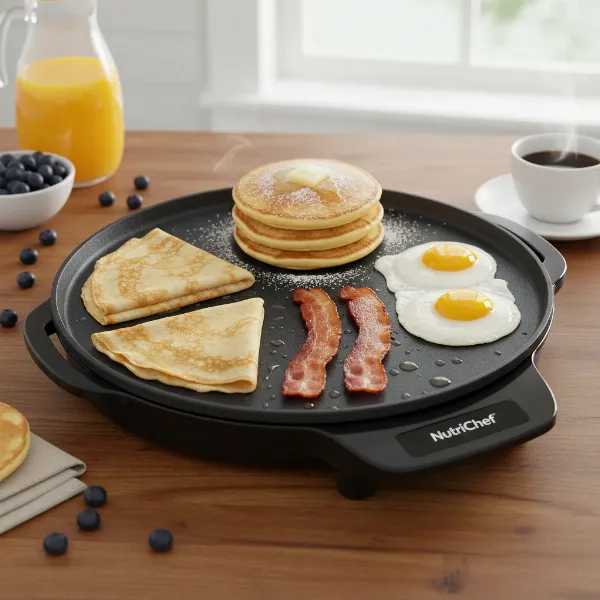
An electric skillet is a versatile kitchen workhorse, perfect for everything from frying and searing to simmering and even baking. However, few things are as frustrating as an electric skillet that heats unevenly, leaving you with food that’s burnt in one spot and undercooked in another. If your electric skillet isn’t distributing heat consistently, it can quickly turn a joyful cooking experience into a challenging one. Understanding the common culprits behind this issue is the first step to reclaiming your perfectly cooked meals.
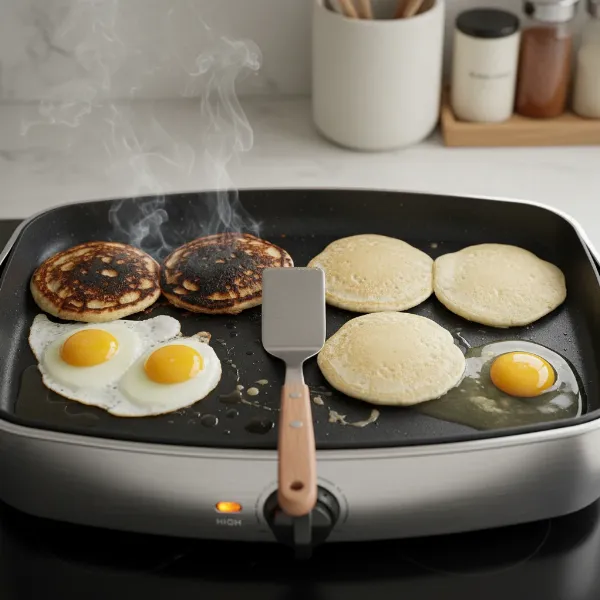 Electric skillet cooking food unevenly, with burnt and undercooked areas visible
What is an Electric Skillet?
An electric skillet is a countertop appliance designed for cooking a wide variety of foods. Unlike a traditional skillet used on a stovetop, an electric skillet has its own integrated heating element and temperature control, allowing it to function independently. This self-contained design offers precise temperature management, making it incredibly convenient for everything from preparing breakfast to cooking a family dinner.
The concept of electric cooking appliances has evolved significantly over time. Early versions were often basic, offering minimal temperature control. Over decades, advancements in materials and heating technology have led to the sophisticated, easy-to-use electric skillets we know today, featuring non-stick coatings, removable probes, and even smart features.
Advantages and Disadvantages of Electric Skillets
Electric skillets come with a host of benefits that make them a favorite in many kitchens, but they also have a few drawbacks to consider.
Advantages
- Flexibility and Convenience: Electric skillets are incredibly versatile, capable of performing many cooking tasks. Their portability means you can cook anywhere there’s an outlet, freeing up stovetop space and making them ideal for small kitchens, dorms, or even outdoor gatherings.
- Precise Temperature Control: One of the biggest advantages is the ability to set and maintain an exact cooking temperature, which is crucial for delicate dishes and consistent results. The built-in thermostat ensures uniform heat distribution across the cooking surface, at least when functioning correctly.
- Space Saving: For those with limited kitchen space, an electric skillet can often replace several pieces of cookware, consolidating functions into one appliance.
- Easy to Clean: Many modern electric skillets feature non-stick surfaces and are designed for easy cleaning, with some models even having dishwasher-safe components (after removing the heating element).
|
Our Picks for the Best Electric skillet in 2026
As an Amazon Associate I earn from qualifying purchases.
|
||
| Num | Product | Action |
|---|---|---|
| 1 | Presto 06857 16-inch Electric Foldaway Skillet, Black |

|
| 2 | bella Make & Take Electric Skillet, Fits-anywhere™ kitchenware, EverGood™ Ceramic Coating, Adjustable Temperature & Dishwasher-Safe Tempered Glass Lid, Cast Aluminum Base, 1200 Watt, Oatmilk |
|
| 3 | Elite Gourmet 12"x12"x2.15” Ceralast™ PFAS Free Ceramic Electric Skillet, Dishwasher Safe, Rapid Heat Up, 1200W, Dark Grey |
|
| 4 | FOHERE 16-Inch Electric Skillet with Glass Cover, 1500W Rapid Heat, Adjustable Temperature, Multi-Purpose Electric Skillet Fried Chicken, Perfect For Family Gathering Cooking |
|
| 5 | Blue Diamond 7QT 5-in-1 Extra Large Electric Skillet, Healthy Ceramic Nonstick Interior, Non-Toxic PFAS-Free, Temperature Control, Stay Cool Handles, Easy Clean, Graphite |
|
| 6 | Elite Gourmet EG6201 Extra Deep 12"x12"x3.2" (7.5Qt.) Scratch Resistant Dishwasher Safe, Non-stick Electric Skillet with Glass Vented Lid, Adjustable Temperature, Black |
|
| 7 | Elite Gourmet EG808 8” x 8" Non-stick Electric Skillet, Dishwasher Safe with Tempered Glass Vented Lid, Rapid Heat Up, 600W, Black |
|
| 8 | Pioneer Woman 3.5L Electric Skillet, Linen Speckle |
|
| 9 | Nuwave Medley XL Digital Electric Skillet, Family Size Griddle w/Glass Lid, 2025 New & Improved Precision Heating, 100°-425°F, PFAS Free G11 Nonstick Ceramic Coating, Portable Hot Plate, 7qt Capacity |
|
| 10 | Elite Gourmet EG-6203# Extra Deep 16"x13"x3.2" (10.5Qt.) Scratch Resistant, Easy Pour Spout Dishwasher Safe, Non-stick Electric Skillet with Glass Vented Lid, Adjustable Temperature, Black |
|
Disadvantages
- Limited Mobility: While portable, electric skillets still require a power outlet, which can restrict their placement compared to stovetop pans.
- Power Requirement: They rely on electricity, meaning they won’t work during power outages and consume electricity, which can be a consideration for energy-conscious users.
- Not Suitable for All Cooking Methods: Certain high-heat cooking techniques, like wok stir-frying, may not be optimally performed in an electric skillet due to its design and heating capabilities.
Common Causes of Uneven Heating in Electric Skillets
When your electric skillet starts performing inconsistently, it’s natural to wonder why. Uneven heating is a common complaint, and several factors can contribute to this frustrating issue. Understanding these causes is key to diagnosing and potentially resolving the problem.
One of the primary reasons for uneven heating can be issues with the heating element itself. Over time, these internal components can wear out or become damaged. If a section of the element is weaker or faulty, it won’t heat up as effectively as other areas, leading to noticeable hot and cold spots across the skillet’s surface. Think of it like a light bulb dimming in one part – the heat output is simply not consistent.
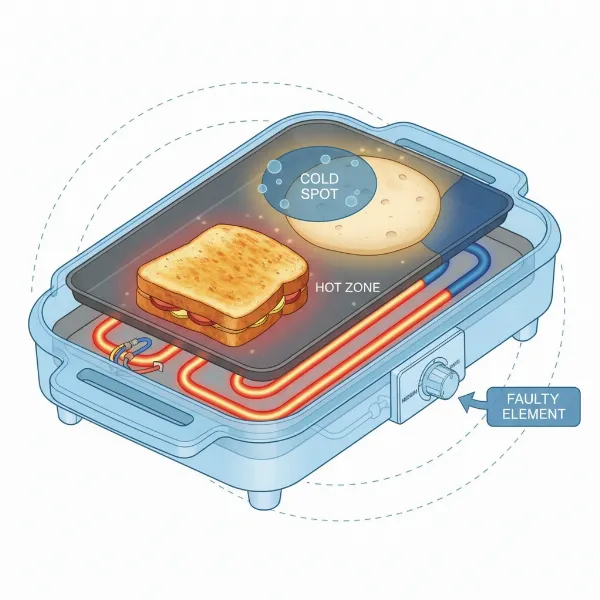 Diagram showing a faulty heating element with visible cold spots in an electric skillet
Another significant factor is cookware quality and condition. An electric skillet’s effectiveness relies on good contact between its cooking surface and the food. If the bottom of your skillet is warped, bent, or uneven, it won’t make full contact with the internal heating element. This lack of proper contact directly impacts heat transfer, causing certain areas to remain cooler. Lightweight, thin materials can also contribute, as they may not retain or distribute heat as effectively as heavier, flat-bottomed skillets.
“A pan with an uneven bottom can lead to uneven heating; if your pan rocks back and forth on a flat surface, it’s a sign maybe the pan is part of the problem.”
Debris or buildup on the cooking surface or around the heating element can also interfere with heat distribution. Bits of food, grease, or burnt-on residue can act as insulators, preventing heat from properly transferring to the food. A clean cooking surface ensures optimal heat conductivity.
Finally, electrical supply issues or a malfunctioning thermostat can play a role. An unsteady power supply to the skillet or a faulty thermostat that isn’t accurately reading and regulating the temperature can result in erratic heating patterns.
Types of Electric Skillets on the Market
Electric skillets come in various designs and materials, each offering different benefits. Knowing the common types can help you understand your own skillet better and choose a suitable replacement if needed.
Classified by Shape
- Round Skillets: These are the most traditional and common shape, versatile for many dishes from stir-fries to deep-frying.
- Square Skillets: Offering more usable cooking surface area than a round skillet of the same diameter, square skillets are great for larger batches or cooking longer items like fish fillets.
- Rectangular Skillets: Even larger than square models, rectangular skillets are ideal for family-sized meals, fitting multiple items simultaneously.
Classified by Material
- Non-stick Skillets: The most popular choice due to their easy food release and cleaning. The non-stick coating, usually PTFE or ceramic, prevents food from sticking.
- Cast Iron Skillets: Though less common for electric models, some electric skillets feature cast iron cooking surfaces known for their exceptional heat retention and even heating (once fully preheated).
- Stainless Steel Skillets: Durable and reactive to temperature changes, stainless steel electric skillets offer longevity and can achieve good browning.
Classified by Features
- Skillets with Glass Lids: Transparent lids allow you to monitor cooking progress without releasing heat and steam.
- Skillets with Detachable Temperature Controls: This feature is common, allowing the skillet body to be fully immersed in water for easier cleaning.
- Skillets with Timer Functions: Advanced models might include programmable timers for precise cooking control.
Comparing Popular Electric Skillet Brands
When investing in an electric skillet, brand reputation often correlates with quality and performance. Here’s a general comparison of some well-known brands:
| Brand | Price Range | Quality & Features | Durability | Notes |
|---|---|---|---|---|
| Zojirushi | High | Excellent temperature control, durable non-stick, deep pans | Very High | Often features a deeper design, ideal for stews and roasts. |
| Presto | Mid | Reliable performance, large capacity, often dishwasher safe | High | Known for affordability and consistent functionality. |
| Proctor Silex | Low | Basic functionality, good for simple tasks, compact | Moderate | Entry-level option, suitable for occasional use. |
| Cuisinart | Mid-High | Quality construction, often stainless steel finishes, precise control | High | Offers models with advanced features and sleek designs. |
| Hamilton Beach | Low-Mid | Good value, decent performance, various sizes | Moderate-High | A popular choice for everyday cooking. |
Note: This table provides a general overview. Specific models within each brand may vary in features, quality, and price.
Buying Guide: How to Choose the Right Electric Skillet
Selecting an electric skillet can seem overwhelming with the array of options available. To ensure you pick one that meets your needs and provides even heating, consider these factors:
Determine Your Usage Needs
Before anything else, think about how you’ll primarily use the skillet. Are you cooking for one or a large family? Do you plan to deep-fry, simmer, or simply warm food? Your intended use will dictate the size, depth, and features you need. For example, if you often make one-pan meals for a family, a large square or rectangular skillet would be more suitable than a small round one.
Consider Size and Capacity
The dimensions of the skillet are crucial. A larger capacity is great for families or meal prepping, but it also takes up more counter and storage space. Smaller skillets are more compact and heat up faster. Measure your available storage and cooking space before making a decision.
Choose the Right Material
- Non-stick: Easiest for cooking and cleaning, ideal for most everyday tasks. However, non-stick coatings can degrade over time, especially with improper care or metal utensils.
- Cast Iron/Stainless Steel: These materials offer superior durability and heat retention but are often heavier and may require more specific care. They are less common in fully electric skillet designs but are valued for their robust cooking properties.
Check for Key Features
Look for features that enhance usability and safety:
- Accurate Temperature Control: A precise temperature probe is essential for consistent cooking.
- Vented Glass Lid: Allows steam to escape and lets you monitor food.
- Cool-Touch Handles: For safe handling during and after cooking.
- Detachable Temperature Probe: Makes the skillet body fully immersible for easier cleaning.
- Dishwasher-Safe Components: A huge plus for convenience.
Research Brands and Reviews
Always check reviews from other users and reputable sources. Look for consistent feedback regarding even heating, durability, and ease of use. Brands known for quality appliances often provide better customer support and warranty coverage.
Compare Prices
Electric skillets come at various price points. While a higher price often indicates better build quality and features, it’s possible to find excellent value in mid-range models. Balance your budget with the features and quality you require.
Tips for Using and Maintaining Your Electric Skillet
Proper use and regular maintenance are vital for ensuring your electric skillet performs optimally and lasts for years. Following these tips can also help prevent uneven heating issues.
Usage Tips
- First-Time Use: Before using your new electric skillet, always read the manufacturer’s instructions. Many recommend washing the skillet, drying it, and then lightly seasoning the cooking surface with a small amount of cooking oil. This helps prepare the non-stick coating.
- Adjusting Temperature: Allow the skillet to preheat fully to the desired temperature before adding food. This ensures the entire cooking surface is evenly heated, reducing cold spots. Avoid overcrowding the skillet, as this can lower the temperature and lead to uneven cooking.
- Appropriate Utensils: Always use heat-resistant plastic, silicone, or wooden utensils, especially with non-stick surfaces, to prevent scratches and damage that can affect heating.
Cleaning and Maintenance
- Clean After Each Use: After the skillet has cooled down, clean it thoroughly. For non-stick surfaces, use warm, soapy water and a soft sponge. Avoid abrasive cleaners or scouring pads, as they can damage the coating. If your skillet has a removable temperature probe, ensure it is detached before cleaning the main body.
- Inspect Regularly: Periodically check the cooking surface for any signs of warping, scratches, or wear. Also, inspect the heating element (if visible) for damage or excessive buildup.
- Proper Storage: Store your electric skillet in a dry place. If stacking other items on top, consider placing a soft cloth or paper towel inside the skillet to protect the cooking surface from scratches.
Troubleshooting Uneven Heating: Step-by-Step
When your electric skillet starts showing signs of uneven heating, don’t immediately assume it’s broken. Often, a few simple troubleshooting steps can resolve the issue.
Step 1: Examine Your Cookware
The first and easiest check involves your cookware. Place your empty electric skillet on a flat surface and look for any warping or unevenness in the base. A warped skillet will not make consistent contact with the heating element, leading to cold spots. If the skillet itself is warped, replacement might be the best solution. Also, ensure the skillet is clean and free of any debris on the underside that could interfere with heat transfer.
Step 2: Clean the Heating Surface
Even tiny food particles or grease residue can impact heat distribution. Ensure the cooking surface of your electric skillet is thoroughly clean. Use a soft cloth or sponge with warm, soapy water. For stubborn, burnt-on food, a paste of baking soda and water can be effective, but always avoid abrasive cleaners or metal scouring pads that could damage the finish. Rinse thoroughly and dry completely before use.
Step 3: Check the Heating Element and Thermostat
For electric skillets with exposed heating elements (less common for integrated models but the principle applies internally), visually inspect the element. Are all parts glowing evenly when heated? If you notice dim spots or areas that don’t heat up, the element may be worn out or damaged. In some cases, the problem could be a faulty thermostat or temperature probe, which isn’t accurately regulating the heat. If you suspect an internal electrical issue or a damaged heating element, and you’ve confirmed it’s not simply debris or warped cookware, it’s often best to consult the manufacturer’s warranty or a professional repair service. Attempting to repair internal electrical components without expertise can be dangerous.
Step 4: Ensure Proper Power Supply
While less common for a dedicated electric skillet, ensure the power outlet you’re using is functioning correctly and providing a steady power supply. Avoid using the skillet on an extension cord if possible, as this can sometimes lead to reduced power or inconsistent performance. Always plug the skillet directly into a wall outlet.
When to Call a Professional
If you’ve gone through all the troubleshooting steps and your electric skillet still heats unevenly, it might be time to consider professional repair or replacement. Persistent issues, especially those related to the internal wiring, thermostat, or heating element, often require the expertise of a qualified technician. Attempting complex electrical repairs yourself can be dangerous and may void any existing warranty. Before contacting a professional, gather any information about your skillet, including the model number and a detailed description of the problem.
Conclusion
An electric skillet heating unevenly can be a significant annoyance, but often the solution is simpler than you think. By systematically checking your cookware, ensuring cleanliness, and inspecting the heating components and power supply, you can usually diagnose and resolve the issue. Regular cleaning and proper maintenance are your best defense against such problems, extending the life of your appliance and ensuring consistent cooking results.
Remember, a well-maintained electric skillet is not just a tool; it’s an investment in your culinary adventures, allowing you to create perfectly cooked dishes every time. Don’t let uneven heating diminish your joy in the kitchen—take action and get your skillet back in top shape!
Frequently Asked Questions
Why does my new electric skillet heat unevenly?
Even new electric skillets can sometimes heat unevenly due to manufacturing defects in the heating element or minor warping of the cooking surface. It’s also possible that initial use hasn’t properly seasoned the surface, or the temperature probe isn’t seated correctly.
Can old cooking oil residue cause uneven heating?
Yes, absolutely. Accumulated old cooking oil and burnt food residue can create an insulating layer on the cooking surface, preventing heat from transferring efficiently and uniformly, leading to noticeable cold spots. Regular and thorough cleaning is crucial.
Is it normal for an electric skillet to have hot and cold spots?
While some minor variations can occur, significant hot and cold spots are not normal for a properly functioning Electric Skillet. If you notice distinct areas where food burns or remains undercooked, it indicates a problem that needs addressing.
How can I test if my electric skillet has cold spots?
A simple test is to spread a thin, even layer of flour across the preheated skillet surface. The areas where the flour browns faster are hot spots, and areas that remain white or brown slowly are cold spots. Another method is to cook a single layer of bread or tortillas.