There’s something universally comforting about the smell of pancakes on a weekend morning. But let’s be honest, the reality of cooking them can be a bit of a circus. Juggling multiple pans on the stovetop, dealing with hot spots that scorch one side while the other is still raw, and the inevitable “first pancake sacrifice” can turn a relaxing breakfast into a frantic rush. What if I told you there’s a better way? The secret to flawless, golden-brown pancakes every single time isn’t a fancy recipe—it’s your trusty electric skillet. This guide is your ticket to mastering the art of Making Pancakes In An Electric Skillet, turning this humble appliance into your breakfast superhero.
Why Use an Electric Skillet for Pancakes Anyway?
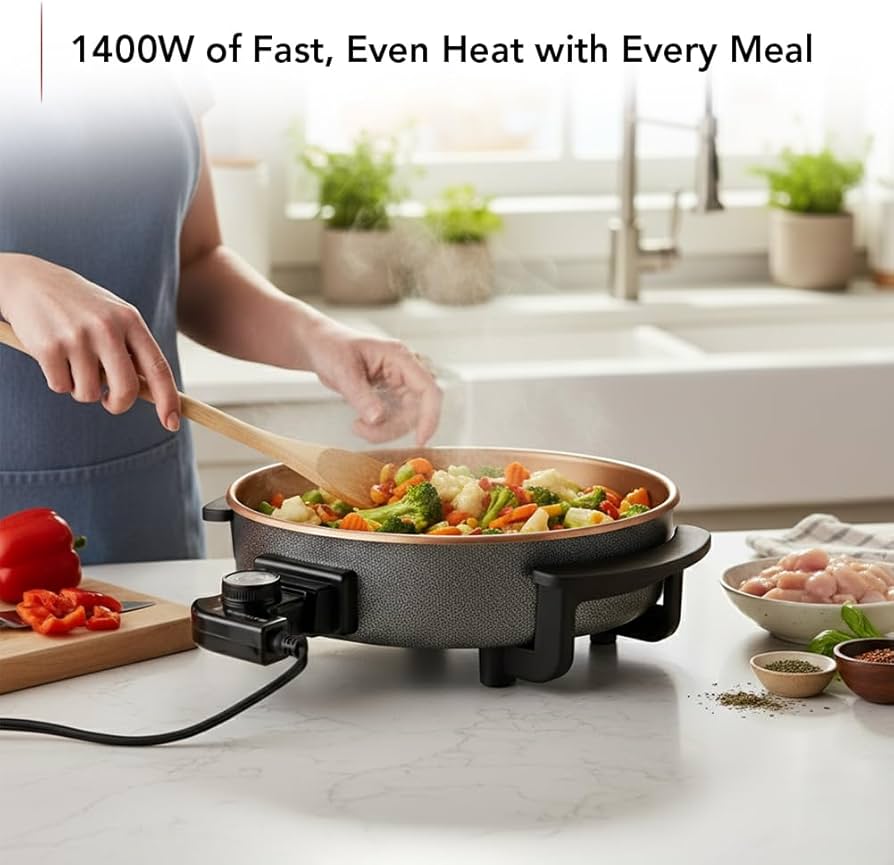
You might think of your electric skillet for frying chicken or simmering a stew, but for pancakes, it’s a total game-changer. If you’ve ever been frustrated by the limitations of a standard stovetop pan, you’re about to see the light.
Think of it this way: your stovetop burner is a small, concentrated circle of intense heat. A pan placed on top will always be hottest in the center, with cooler edges. An electric skillet, on the other hand, has heating elements woven throughout its base.
This provides two massive advantages:
- Unbeatable Temperature Control: You set the dial to a specific temperature, and the skillet maintains it. No more guesswork or constantly adjusting the flame. This precision is the key to consistently perfect pancakes.
- A Vast, Evenly Heated Surface: The entire cooking surface is a single, consistent temperature zone. This means you can cook four, six, or even eight pancakes at once, and every single one will cook at the same rate. No more family members eating in shifts!
“The number one mistake home cooks make with pancakes is inconsistent heat,” says culinary professional Chef Danielle Rose. “An electric skillet removes that variable entirely. It provides a stable thermal environment, which is the foundation for a perfect, evenly cooked pancake.”
The Secret Ingredient: Perfect Temperature Control
So, what’s the magic number? The sweet spot for making pancakes in an electric skillet is generally between 360°F and 375°F (around 185°C to 190°C). This temperature is hot enough to create that beautiful golden-brown crust and trigger the Maillard reaction (that’s the science-y term for delicious browning) without burning the outside before the inside is cooked through.
Starting with a lower temperature, say 325°F, might result in pale, tough, and rubbery pancakes because they steam more than they fry. Going too high, like 400°F, will scorch the exterior in a flash, leaving you with a gooey, raw center. The 360-375°F range is truly the promised land for pancakes.
|
Our Picks for the Best Electric Skillet in 2026
As an Amazon Associate, we earn from qualifying purchases.
|
||
| Num | Product | Action |
|---|---|---|
| 1 | Presto 06852 16-Inch Electric Skillet with Glass Cover |

|
| 2 | Elite Gourmet EG-6203# Extra Deep 16\"x13\"x3.2\" (10.5Qt.) Scratch Resistant, Easy Pour Spout Dishwasher Safe, Non-stick Electric Skillet with Glass Vented Lid, Adjustable Temperature, Black |
|
| 3 | Presto 07117 12\" Electric Skillet with glass cover |
|
| 4 | Chefman XL Electric Griddle with Removable Temperature Control, Immersible Flat Top Grill, Burger, Eggs, Pancake Griddle, Nonstick Extra Large Cooking Surface, Slide Out Drip Tray, 10 x 20 Inch |
|
| 5 | Presto 06857 16-inch Electric Foldaway Skillet, Black |
|
| 6 | bella Make & Take Electric Skillet, Fits-anywhere™ kitchenware, EverGood™ Ceramic Coating, Adjustable Temperature & Dishwasher-Safe Tempered Glass Lid, Cast Aluminum Base, 1200 Watt, Surf |
|
| 7 | Crux Extra Deep Nonstick Scratch Resistant Electric Skillet with Removeable Temperature Probe, 12\" x 12\", silver (14620) |
|
| 8 | Elite Gourmet EG808 8” x 8\" Non-stick Electric Skillet, Dishwasher Safe with Tempered Glass Vented Lid, Rapid Heat Up, 600W, Black |
|
| 9 | Elite Gourmet 12\" x 12\" x 3” Ceralast™ Ceramic Non-stick PFAS Free, Dishwasher Safe Electric Skillet, Xtra Deep Dish, Rapid Heat 1200W, Black |
|
| 10 | BLACK+DECKER Electric Skillet, Variable Temperature Control, Nonstick Cooking Surface, Dishwasher Safe, Tempered Glass Lid, 12\"x15\" |
|
A Foolproof Guide to Making Pancakes in an Electric Skillet
Ready to make the best pancakes of your life? It’s incredibly simple when you break it down. Follow these steps, and you’ll be flipping like a pro in no time.
Step 1: Get Your Batter Just Right
Whether you’re using a from-scratch recipe or your favorite boxed mix, the batter is your foundation. The golden rule? Don’t overmix! A few lumps are perfectly fine—in fact, they’re a sign of a tender pancake to come. Overmixing develops the gluten in the flour, which leads to tough, chewy pancakes instead of light, fluffy ones. Mix your wet and dry ingredients only until they’re just combined.
Let the batter rest for 5-10 minutes. This allows the flour to hydrate and the gluten to relax, resulting in a more tender final product.
Step 2: The Main Event: Cooking to Golden Perfection
This is where your electric skillet truly shines.
- Preheat with Precision: Plug in your electric skillet and set the temperature dial to 375°F. Let it preheat fully. Most models have an indicator light that will turn off or change color when the set temperature is reached. Do not skip this step! Placing batter on a cold or partially heated surface is a recipe for disaster.
- Grease Lightly: Even on a non-stick surface, a little bit of fat helps with browning and flavor. Lightly brush the surface with melted butter or a neutral oil like canola. You don’t need a lot; just a thin, even coating will do. You should hear a gentle sizzle when a drop of water hits the surface.
- Pour the Batter: Using a ¼ cup measure or a ladle, pour your batter onto the hot skillet, leaving at least an inch of space between each pancake to prevent them from merging into one giant pancake-blob. You’ll be amazed at how many you can cook at once!
- Watch for the Bubbles: This is the universal sign that it’s almost time to flip. You’ll see bubbles start to form on the surface of the pancake. Wait until the bubbles begin to pop and the edges of the pancake look set and slightly dry. This usually takes about 2-3 minutes.
- The Flip: Slide a thin, wide spatula completely under the pancake and flip it over with a confident flick of the wrist. The second side will cook much faster, typically only needing another 1-2 minutes. It should be a beautiful, even golden-brown.
- Serve and Repeat: Transfer the finished pancakes to a plate and continue with the remaining batter. Because the electric skillet’s temperature is so stable, your last pancake will be just as perfect as your first.
Common Pancake Pitfalls and How to Avoid Them
Even with the best equipment, things can sometimes go sideways. Here are a few common issues and how your electric skillet helps you solve them.
- Problem: My pancakes are burnt on the outside but raw inside.
- Cause: Your heat is too high. This is a classic stovetop problem.
- Solution: Your electric skillet solves this. Stick to the 375°F setting. If you still have issues, your skillet’s thermostat might run hot, so try dialing it back to 360°F.
- Problem: My pancakes are soggy and pale.
- Cause: Your heat is too low, or you didn’t preheat the skillet properly.
- Solution: Be patient and let the skillet come to full temperature before pouring the first drop of batter. A properly heated surface instantly begins cooking the pancake, creating a light crust.
- Problem: They are sticking to the non-stick surface!
- Cause: Either the non-stick coating is worn, or you didn’t use a small amount of fat. Sometimes, certain ingredients in the batter (like a lot of sugar) can be more prone to sticking.
- Solution: A very light coating of butter or oil isn’t just for flavor; it creates a buffer. If sticking is a persistent issue, it might be time to review our guide on how to clean and restore your non-stick skillet.
Frequently Asked Questions (FAQ)
Q1: What is the best temperature for making pancakes in an electric skillet?
A1: The ideal temperature is between 360°F and 375°F (185°C – 190°C). This allows the pancakes to cook through evenly while developing a perfect golden-brown exterior without burning.
Q2: Do I need to use oil or butter in a non-stick electric skillet?
A2: While not strictly necessary for preventing sticking on a new surface, a small amount of melted butter or neutral oil is highly recommended. It enhances the flavor, promotes even browning, and helps ensure an easy release.
Q3: Can I use an electric skillet like a griddle for pancakes?
A3: Absolutely! An electric skillet is essentially a deep-sided electric griddle. Its large, flat, and evenly heated surface makes it a superior tool for cooking pancakes, French toast, and bacon compared to a traditional frying pan.
Q4: How do I know when my pancake is ready to flip?
A4: Look for bubbles to appear and pop on the surface of the batter. The edges should also start to look dry and set. Once you see these signs, it’s time to take a peek underneath and flip.
Q5: Why are my pancakes coming out flat instead of fluffy?
A5: This is usually a batter issue, not a skillet issue. The two main culprits are overmixing the batter (which develops gluten) or using old baking powder that has lost its leavening power. Mix until just combined and ensure your ingredients are fresh.
The Breakfast Revolution in Your Kitchen
Once you start making pancakes in an electric skillet, you’ll never go back to the stovetop chaos again. The consistency, control, and sheer capacity it offers will transform your breakfast routine from a stressful chore into a joyful, delicious experience. You’ll be serving up stacks of perfectly uniform, fluffy, golden-brown pancakes that will make you look like a breakfast champion. So go ahead, dust off that skillet, and get ready to flip.
We’d love to hear about your own electric skillet pancake adventures! Share your favorite tips or recipes in the comments below.