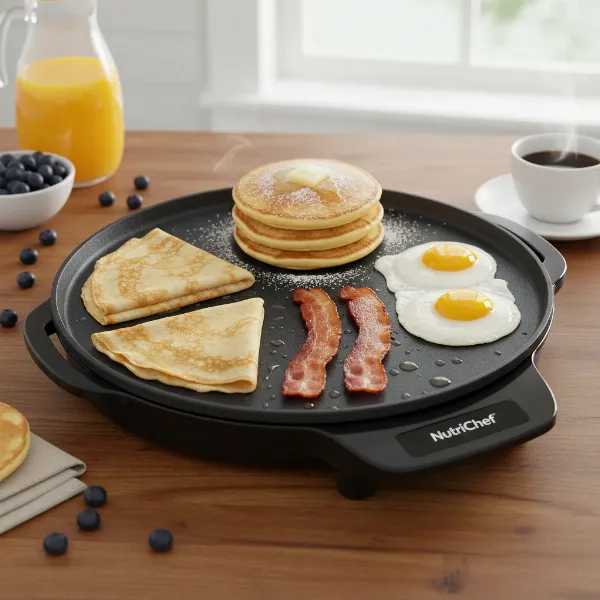
Electric skillets are incredibly versatile kitchen workhorses, capable of frying, sautéing, simmering, and even baking. For couples setting up their kitchen or looking to upgrade, choosing the right size is a pivotal decision. The debate often boils down to a 12-inch model offering compactness and efficiency versus a 16-inch version providing expansive cooking space. This guide will help you navigate the nuances, ensuring your electric skillet perfectly complements your culinary lifestyle as a couple.
What is an Electric Skillet?
An electric skillet, often called an electric frying pan, is a countertop appliance designed to provide consistent, controlled heat for various cooking tasks. Unlike traditional skillets that rely on a stovetop burner, electric models feature an integrated heating element and adjustable thermostat, offering precise temperature management. This independence from your stove makes them incredibly convenient, serving as an extra cooking surface when your burners are occupied, or as a primary cooking tool in smaller kitchens or RVs. From a quick omelet to a slow-cooked stew, an electric skillet can handle a surprising range of dishes.
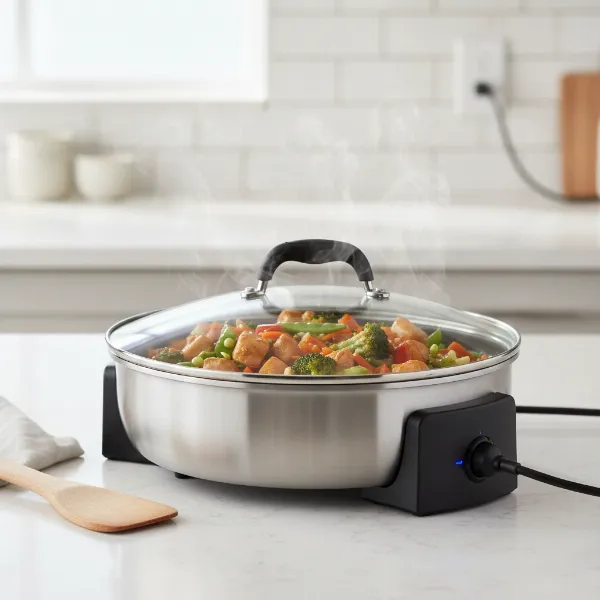 Electric skillet on a countertop cooking a meal with food inside.
Electric Skillet: Advantages and Disadvantages
Electric skillets bring a unique set of benefits and a few considerations to any kitchen. Understanding these can help you determine if this appliance is the right fit for your cooking needs as a couple.
Advantages
Electric skillets offer several compelling benefits that make them a valuable addition, especially for couples.
- Flexibility and Convenience: One of the most significant advantages is their independence from your stovetop. An electric skillet provides an additional cooking surface, perfect for holiday gatherings when burners are at a premium, or for everyday use in kitchens with limited range space. Their portability also allows you to cook virtually anywhere with an outlet, from a kitchen island to a patio.
- Precise Temperature Control: Unlike conventional stovetops which can have inconsistent hot spots, electric skillets maintain a steady, even temperature across the entire cooking surface. This consistency is crucial for achieving perfectly cooked dishes, whether you’re searing meats at high heat or simmering delicate sauces at a low, steady warmth.
- Space Saving: While an electric skillet is an additional appliance, it can often replace multiple single-purpose pans, effectively saving cabinet space. Its versatility means it can perform the functions of a frying pan, deep fryer, and even a slow cooker, all in one compact unit.
- Easy to Clean: Many modern electric skillets come with non-stick coatings, requiring less oil and making cleanup a breeze. Often, the pan insert is removable and dishwasher-safe, further simplifying post-meal tidying.
|
Our Picks for the Best Electric skillet in 2026
As an Amazon Associate I earn from qualifying purchases.
|
||
| Num | Product | Action |
|---|---|---|
| 1 | Pioneer Woman 3.5L Electric Skillet, Linen Speckle |

|
| 2 | Elite Gourmet 12"x12"x2.15” Ceralast™ PFAS Free Ceramic Electric Skillet, Dishwasher Safe, Rapid Heat Up, 1200W, Dark Grey |
|
| 3 | FOHERE 16-Inch Electric Skillet with Glass Cover, 1500W Rapid Heat, Adjustable Temperature, Multi-Purpose Electric Skillet Fried Chicken, Perfect For Family Gathering Cooking |
|
| 4 | Nuwave Medley XL Digital Electric Skillet, Family Size Griddle w/Glass Lid, 2025 New & Improved Precision Heating, 100°-425°F, PFAS Free G11 Nonstick Ceramic Coating, Portable Hot Plate, 7qt Capacity |
|
| 5 | bella Make & Take Electric Skillet, Fits-anywhere™ kitchenware, EverGood™ Ceramic Coating, Adjustable Temperature & Dishwasher-Safe Tempered Glass Lid, Cast Aluminum Base, 1200 Watt, Oatmilk |
|
| 6 | Blue Diamond 7QT 5-in-1 Extra Large Electric Skillet, Healthy Ceramic Nonstick Interior, Non-Toxic PFAS-Free, Temperature Control, Stay Cool Handles, Easy Clean, Graphite |
|
| 7 | Presto 06857 16-inch Electric Foldaway Skillet, Black |
|
| 8 | Elite Gourmet EG6201 Extra Deep 12"x12"x3.2" (7.5Qt.) Scratch Resistant Dishwasher Safe, Non-stick Electric Skillet with Glass Vented Lid, Adjustable Temperature, Black |
|
| 9 | Elite Gourmet EG808 8” x 8" Non-stick Electric Skillet, Dishwasher Safe with Tempered Glass Vented Lid, Rapid Heat Up, 600W, Black |
|
| 10 | Elite Gourmet EG-6203# Extra Deep 16"x13"x3.2" (10.5Qt.) Scratch Resistant, Easy Pour Spout Dishwasher Safe, Non-stick Electric Skillet with Glass Vented Lid, Adjustable Temperature, Black |
|
Disadvantages
While highly beneficial, electric skillets do have a few drawbacks that couples should consider.
- Limited Mobility: Despite their portability compared to a built-in stove, electric skillets still require a power outlet. This limits where you can use them and means you’re always tethered to an electrical source, unlike traditional stovetop pans.
- Power Requirement: Electric skillets typically draw a fair amount of wattage (often 1300-1500 watts). You’ll need to ensure you have an available, sufficiently powered outlet to avoid tripping circuit breakers, especially if other high-wattage appliances are in use.
- Not Suitable for All Cooking Methods: While incredibly versatile, an electric skillet might not be the ideal tool for every culinary task. For instance, extreme high-heat wok cooking or certain quick-searing techniques might still be better suited for a traditional stovetop with higher, more direct heat capabilities.
Exploring Electric Skillet Sizes: 12-Inch vs. 16-Inch
When choosing between a 12-inch and a 16-inch electric skillet, it’s not just about the diameter; it’s about the usable cooking surface area and how it aligns with your cooking habits as a couple.
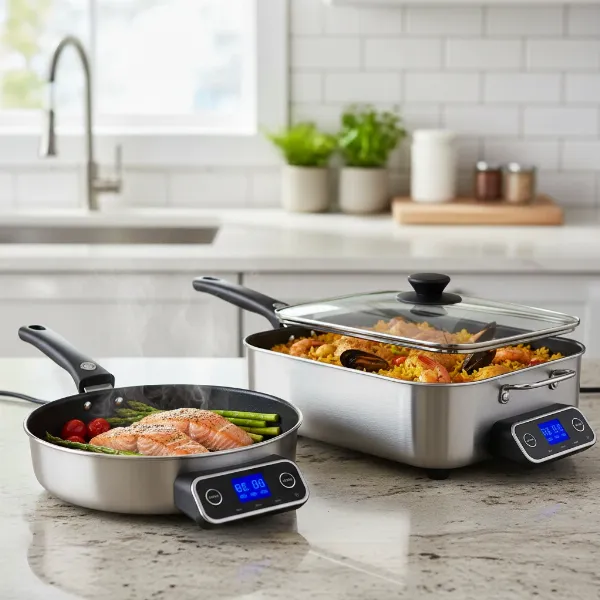 Two electric skillets, 12-inch and 16-inch, side-by-side for comparison.
The 12-Inch Electric Skillet for Couples
The 12-inch electric skillet is frequently recommended as a versatile choice for small households, including couples. It strikes a balance between ample cooking space and manageable size.
- Capacity: A 12-inch skillet is generally ideal for preparing meals for 2-3 people. You can comfortably cook two large steaks, four to six eggs side-by-side, a substantial stir-fry, or a couple of chicken breasts without overcrowding.
- Pros:
- Compact Storage: Its smaller footprint makes it easier to store in cabinets or on limited countertop space.
- Faster Heating: With less surface area to heat, a 12-inch skillet typically reaches desired temperatures more quickly and maintains them efficiently.
- Even Heat Distribution: Smaller cooking surfaces tend to exhibit more uniform heat distribution, reducing the risk of hot spots and ensuring consistent cooking results.
- Easier Handling and Cleaning: Its lighter weight and more compact size make it easier to maneuver, wash by hand, and store.
- Sufficient for Most Daily Meals: For couples who primarily cook daily dinners or breakfasts for two, a 12-inch model offers more than enough space for most recipes.
- Cons:
- Limited for Entertaining: If you frequently host dinner parties or cook larger quantities for guests, a 12-inch skillet can feel cramped, requiring cooking in batches.
- Overcrowding Risk: Attempting to cook too much food at once can lead to overcrowding, which steams food instead of searing it, resulting in less flavorful dishes.
The 16-Inch Electric Skillet for Couples
A 16-inch electric skillet offers a significantly larger cooking area, moving into the “family size” category. For some couples, this extra space can be a distinct advantage.
- Capacity: This size is well-suited for 4-8 servings, making it perfect for larger family meals, entertaining a small group of friends, or preparing bigger batches of food for meal prepping throughout the week. You can easily cook a full breakfast spread, multiple pieces of fried chicken, or a large batch of chili.
- Pros:
- Ample Cooking Space: The generous surface allows you to cook large quantities or multiple meal components simultaneously, ideal for dishes that require spreading out, like whole strips of bacon or several pancakes.
- Great for Entertaining: It doubles as an excellent serving dish, keeping food warm at buffets or potlucks.
- Meal Prep Friendly: For couples who like to cook ahead for the week, the extra capacity is invaluable for batch cooking.
- Versatility for Larger Dishes: Perfect for deep-frying bigger items or preparing expansive one-pan meals.
- Cons:
- Significant Space Requirement: A 16-inch skillet demands considerable counter space during use and substantial storage space when not in operation.
- Heavier and More Awkward to Clean: Its larger size and weight can make it cumbersome to move, wash by hand, and fit into a standard sink.
- Potential for Uneven Heating: While many 16-inch models are designed for even heat, the sheer size can sometimes lead to slightly less uniform heating towards the edges compared to the center, depending on the model’s design.
- Overkill for Daily Meals: For everyday cooking for just two, the large size might feel excessive and inefficient, taking longer to heat up and potentially wasting energy.
Choosing the Right Electric Skillet for Your Couple’s Lifestyle (Buying Guide)
Selecting the perfect electric skillet involves more than just picking a size; it’s about understanding your unique culinary journey together.
Assess Your Cooking Habits
Start by reflecting on how you and your partner cook. Do you prepare simple, quick dinners most nights, or do you enjoy elaborate weekend brunches? How often do you entertain guests, and what kind of meals do you typically serve? If daily meals for two are the norm, a 12-inch skillet might be perfectly adequate. If you frequently host, cook large cuts of meat, or prepare big batches for leftovers, a 16-inch model could be more beneficial.
Consider Kitchen and Storage Space
An electric skillet is a countertop appliance, meaning it will occupy valuable real estate. Measure the available counter space where you intend to use it, and perhaps more importantly, the cabinet space where it will be stored. A 16-inch skillet is a substantial item that requires considerable storage, which might be a deal-breaker for smaller kitchens.
Factor in Future Needs
While you might be a couple now, consider if your cooking needs might evolve. Do you anticipate hosting larger family gatherings in the future, or perhaps expanding your family? Investing in a slightly larger skillet like a 16-inch might offer more longevity and adaptability to changing circumstances, even if it feels a bit large for two right now.
Review Key Features Beyond Size
Beyond dimensions, several features contribute to an electric skillet’s overall performance and user experience. Look for precise temperature control, often indicated by a range of settings rather than just “low,” “medium,” and “high.” Prioritize non-stick coatings that are PFOA and PFAS-free for healthier cooking. A wattage between 1300-1500 watts typically ensures consistent and efficient heating. Finally, consider ease of cleaning; features like dishwasher-safe components and a tempered glass lid for visibility during cooking are always a plus.
Tips for Using and Maintaining Your Electric Skillet
To ensure your electric skillet serves you well for years, proper usage and maintenance are key.
Usage Tips
- Preheating is Essential: Always preheat your electric skillet to the desired temperature before adding food. This ensures even cooking and prevents food from sticking, especially on non-stick surfaces.
- Use Appropriate Utensils: To protect the non-stick coating, always use wooden, silicone, or heat-resistant plastic utensils. Metal utensils can scratch and damage the surface.
- Avoid Overcrowding: While a larger skillet offers more space, it’s still important to avoid overcrowding the pan. Too much food can lower the temperature, leading to steaming instead of proper searing, and result in unevenly cooked meals.
Cleaning and Storage
- Cool Completely Before Cleaning: Always unplug your electric skillet and allow it to cool down completely before attempting to clean it. Submerging a hot pan in water can damage the heating element or warp the cooking surface.
- Hand Washing vs. Dishwasher: Many electric skillets feature removable probes and pans that are dishwasher safe. However, for longevity, hand washing with warm, soapy water and a soft sponge is often recommended for the main cooking surface to protect the non-stick coating.
- Proper Storage: Store your electric skillet in a dry place where it won’t be jostled or have other heavy items placed directly on its cooking surface. If stacking, use a pan protector or a soft cloth to prevent scratches.
Conclusion
Deciding between a 12-inch and a 16-inch electric skillet for your couple’s kitchen ultimately comes down to a careful assessment of your current and future cooking needs, available space, and culinary aspirations. The 12-inch offers a compact, efficient solution perfect for most daily meals for two, while the 16-inch provides expansive space for entertaining, batch cooking, and larger, more ambitious dishes. Consider your lifestyle, the types of meals you love to create, and the practicalities of your kitchen.
What delicious meal will you prepare first in your new Electric Skillet, embarking on your culinary journey together?