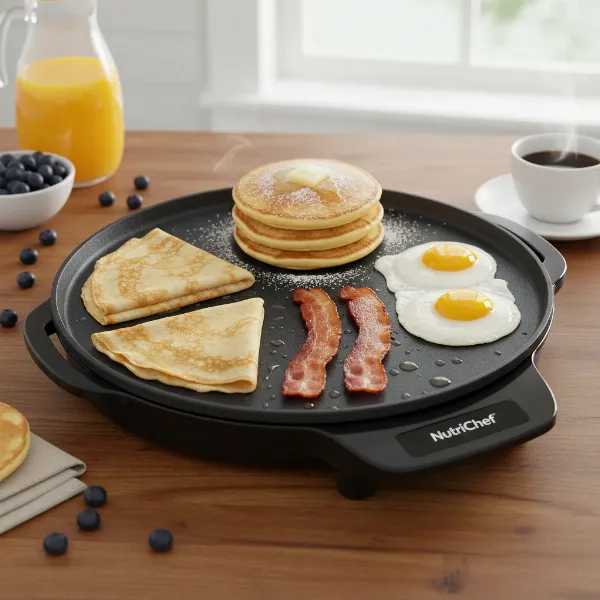
An electric skillet is a versatile and indispensable appliance in many modern kitchens, offering convenience and precise temperature control for a wide array of dishes. While renowned for their easy-release surfaces, non-stick electric skillets require specific care to maintain their integrity and ensure longevity. You might be familiar with “seasoning” cast iron, a process that creates a protective, non-stick layer. For non-stick electric skillets, “seasoning” refers to an initial conditioning and ongoing maintenance routine designed to preserve the factory-applied coating, ensuring it remains smooth, efficient, and truly non-stick for years to come.
What is an Electric Skillet?
An electric skillet, often called an electric fry pan, is a self-contained cooking appliance featuring a heating element integrated into its base. Unlike traditional stovetop pans, an electric skillet plugs directly into an electrical outlet and comes with its own temperature control probe, allowing for precise heat adjustments independent of a stovetop. Its primary purpose is to fry, sauté, roast, simmer, and even bake a variety of foods.
The history of electric skillets dates back to the mid-20th century, evolving from basic heating elements to sophisticated designs incorporating features like non-stick coatings, glass lids, and digital temperature controls. The introduction of non-stick surfaces revolutionized their use, making them incredibly popular for easy cooking and cleanup, particularly for delicate foods like eggs and pancakes. This innovation, while enhancing user experience, also introduced specific care requirements to maintain the coating’s effectiveness.
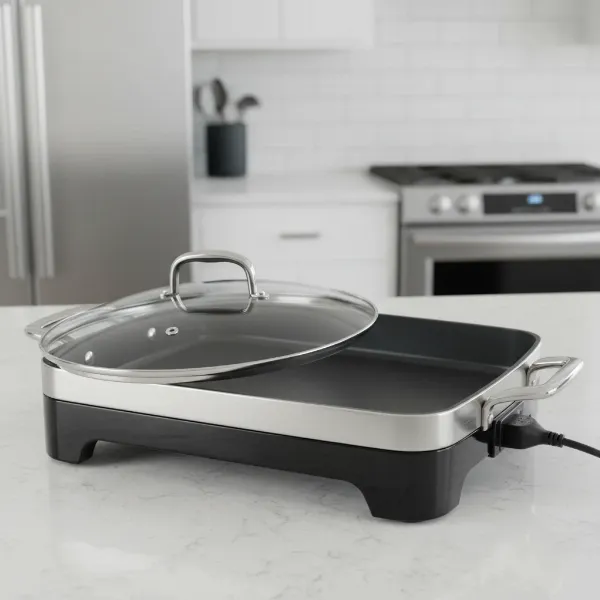 A modern electric skillet with a non-stick surface and a glass lid, ready for various cooking tasks.
Advantages and Disadvantages of Electric Skillets
Electric skillets offer numerous benefits that make them a favorite for many home cooks, but they also come with certain limitations. Understanding these can help you maximize your skillet’s performance and prolong its life.
Advantages
- Flexibility and Convenience: Electric skillets are portable, allowing you to cook virtually anywhere with an electrical outlet, whether it’s on a kitchen counter, a buffet for serving, or even outdoors.
- Easy Temperature Control: With a dedicated temperature probe, electric skillets offer precise heat regulation, crucial for consistent cooking and preventing the non-stick coating from overheating, which can cause damage.
- Space Saving: For those with limited stovetop space or without a full kitchen, an electric skillet can serve as a primary cooking vessel, replacing multiple pans and even some ovens.
- Easy to Clean: Most modern electric skillets feature removable temperature probes, allowing the pan itself to be fully immersed for washing. The non-stick surface generally makes food residue easy to wipe away, provided proper cleaning methods are used.
- Energy Efficiency: They often use less energy than heating an entire stovetop burner or oven for smaller tasks.
|
Our Picks for the Best Electric skillet in 2026
As an Amazon Associate I earn from qualifying purchases.
|
||
| Num | Product | Action |
|---|---|---|
| 1 | Presto 06857 16-inch Electric Foldaway Skillet, Black |

|
| 2 | Elite Gourmet EG808 8” x 8" Non-stick Electric Skillet, Dishwasher Safe with Tempered Glass Vented Lid, Rapid Heat Up, 600W, Black |
|
| 3 | bella Make & Take Electric Skillet, Fits-anywhere™ kitchenware, EverGood™ Ceramic Coating, Adjustable Temperature & Dishwasher-Safe Tempered Glass Lid, Cast Aluminum Base, 1200 Watt, Oatmilk |
|
| 4 | Elite Gourmet EG6201 Extra Deep 12"x12"x3.2" (7.5Qt.) Scratch Resistant Dishwasher Safe, Non-stick Electric Skillet with Glass Vented Lid, Adjustable Temperature, Black |
|
| 5 | Pioneer Woman 3.5L Electric Skillet, Linen Speckle |
|
| 6 | Elite Gourmet 12"x12"x2.15” Ceralast™ PFAS Free Ceramic Electric Skillet, Dishwasher Safe, Rapid Heat Up, 1200W, Dark Grey |
|
| 7 | FOHERE 16-Inch Electric Skillet with Glass Cover, 1500W Rapid Heat, Adjustable Temperature, Multi-Purpose Electric Skillet Fried Chicken, Perfect For Family Gathering Cooking |
|
| 8 | Nuwave Medley XL Digital Electric Skillet, Family Size Griddle w/Glass Lid, 2025 New & Improved Precision Heating, 100°-425°F, PFAS Free G11 Nonstick Ceramic Coating, Portable Hot Plate, 7qt Capacity |
|
| 9 | Blue Diamond 7QT 5-in-1 Extra Large Electric Skillet, Healthy Ceramic Nonstick Interior, Non-Toxic PFAS-Free, Temperature Control, Stay Cool Handles, Easy Clean, Graphite |
|
| 10 | Elite Gourmet EG-6203# Extra Deep 16"x13"x3.2" (10.5Qt.) Scratch Resistant, Easy Pour Spout Dishwasher Safe, Non-stick Electric Skillet with Glass Vented Lid, Adjustable Temperature, Black |
|
Disadvantages
- Limited Mobility: While portable, electric skillets are still tethered to a power source, which can limit placement options during cooking or serving.
- Requires Power Outlet: Their dependency on electricity means they are unusable during power outages, and placement is restricted by outlet availability.
- Not Suitable for All Cooking Methods: While versatile, they may not achieve the searing temperatures of some stovetop pans, nor are they ideal for high-heat wok-style cooking or oven-based baking (unless specified by the manufacturer).
- Non-Stick Coating Vulnerability: The very feature that makes them convenient—the non-stick coating—is susceptible to damage from improper heat, metal utensils, and harsh cleaning agents, underscoring the importance of careful maintenance for longevity.
Popular Types of Electric Skillets on the Market
Electric skillets come in various designs and materials, each suited for different cooking preferences and needs. The type of non-stick coating and its overall construction significantly impact its performance and how effectively it retains its non-stick properties over time.
Classified by Shape
Electric skillets are typically found in a few common shapes, each offering distinct advantages for different cooking tasks. While shape is a functional aspect, the underlying non-stick coating remains a critical factor across all types for ease of use and long-term durability.
- Round Skillets: These are the most traditional and common, ideal for frying, sautéing, and preparing round items like pancakes or omelets.
- Square Skillets: Offering more usable cooking surface area than a round skillet of the same diameter, square designs are excellent for larger batches, fitting more food, or cooking items like grilled cheese sandwiches.
- Rectangular Skillets: Similar to square skillets but elongated, these are perfect for cooking large quantities, such as multiple servings of bacon, or for roasting larger cuts of meat.
Classified by Material
The material of an electric skillet, particularly its non-stick coating, is paramount for both cooking performance and how you “season” and care for it to ensure longevity.
- Non-Stick Coated Skillets: The most popular type, these feature a base material (usually aluminum for even heating) coated with a non-stick layer.
- PTFE (Teflon) Coatings: These are classic non-stick surfaces, known for their excellent food release. Proper “seasoning” (initial oil conditioning) and avoiding high heat and metal utensils are crucial to prevent chipping, scratching, and degradation over time.
- Ceramic Coatings: Marketed as a more “natural” or “green” alternative, ceramic non-stick coatings are often made from silica-based gel. They typically perform well initially but can lose their non-stick properties more quickly than PTFE if not meticulously cared for, particularly regarding overheating.
- Cast Iron Electric Skillets: While less common for their non-stick properties directly, some electric skillets feature cast iron. These require traditional seasoning methods to build up a naturally non-stick patina, offering extreme durability and excellent heat retention. Care for these is distinctly different from coated non-stick skillets.
- Stainless Steel Electric Skillets: These often have a non-stick interior coating. Stainless steel offers durability and a sleek appearance, but the care of the non-stick interior remains the primary concern for longevity.
Classified by Features
Beyond basic function, several features can enhance the utility and prolong the lifespan of your non-stick electric skillet.
- Skillets with Glass Lids: Transparent lids allow you to monitor cooking without lifting, helping to maintain consistent heat and moisture, which can be beneficial for the non-stick surface by preventing excessive drying and potential scorching.
- Skillets with Detachable Temperature Controllers: This feature is almost universal for electric skillets and is essential. It allows the pan to be fully immersed in water for thorough cleaning, which is vital for maintaining the non-stick coating without risking damage to electrical components.
- Skillets with Timer Functions: Some advanced models include timers, providing added convenience and helping to prevent overcooking or burning, both of which can harm the non-stick surface.
Comparing Famous Electric Skillet Brands
When investing in a non-stick electric skillet, brand reputation often correlates with the quality and durability of the non-stick coating, which directly impacts its longevity. Here’s a comparison of some well-known brands that offer reliable non-stick electric skillets:
| Brand | Key Features (Non-Stick Focus) | Price Range (Approx.) | Quality/Durability (Non-Stick) | Maintenance/Care Impact (Longevity) |
|---|---|---|---|---|
| Presto | Dominant in the market, reliable non-stick, often large capacity, easy-to-clean design. | Mid-Low to Mid | Good, but depends on model and proper care. | Generally good with standard non-stick care. |
| Zojirushi | Known for high-quality, durable non-stick surfaces, precise temperature control, often with deep pans. | Mid-High to High | Excellent; coating is usually very resilient. | Designed for longevity with proper non-stick care. |
| Cuisinart | Stylish designs, good performance, often multi-functional with varied non-stick coatings. | Mid-High | Very good; robust coatings in many models. | Requires standard gentle non-stick care. |
| Proctor Silex | Budget-friendly, basic non-stick functionality, lightweight. | Low | Fair to Good; entry-level non-stick. | More susceptible to damage if care is neglected; crucial for longevity. |
| T-fal | Pioneered non-stick, often features Thermo-Spot heat indicator, PFOA-free coatings. | Mid | Good; well-regarded for their non-stick technology. | Benefits significantly from gentle cleaning and proper heat. |
When choosing a brand, consider not only the initial price but also the manufacturer’s warranty on the non-stick coating and user reviews regarding long-term durability, as this reflects how well the “seasoning” and care practices will perform.
Guide to Choosing an Electric Skillet (Buying Guide)
Selecting the perfect non-stick electric skillet involves more than just picking a pretty pan. It’s about finding one that meets your cooking style, ensures lasting performance, and simplifies your kitchen life. Critical considerations revolve around preserving that valuable non-stick coating.
Determine Usage Needs
Start by considering what you’ll primarily use the skillet for. Do you cook for one, a family, or entertain often? This will influence the size and capacity you need. If you frequently cook delicate foods like fish or eggs, a high-quality, durable non-stick coating that can withstand gentle “seasoning” and consistent use is paramount.
Consider Size and Capacity
Electric skillets come in various sizes, from compact 8-inch models to expansive 16-inch versions. A larger skillet provides more surface area for cooking bigger meals or multiple items simultaneously. However, ensure you have adequate storage space for larger models. The depth of the pan also varies; deeper skillets are better for stews, sauces, or deep-frying, while shallower ones are perfect for pancakes and grilling.
Choose the Right Material
While the core of this article focuses on non-stick longevity, understanding the pan’s construction and coating material is vital.
- Non-Stick Coatings (PTFE vs. Ceramic): Most electric skillets feature PTFE (Teflon) or ceramic non-stick coatings. PTFE offers excellent non-stick properties and durability when cared for. Ceramic often boasts a “greener” profile but may degrade faster if overheated. Regardless of the type, look for PFOA-free labels.
- Base Material: Aluminum is common for its excellent heat conductivity, ensuring even cooking. Stainless steel bases with non-stick interiors combine durability with cooking performance.
Check Features
Beyond the basic pan, specific features can enhance your cooking experience and protect your investment.
- Accurate Temperature Control: A precise temperature probe is essential for non-stick surfaces, as consistent, moderate heat helps prevent damage to the coating. Look for clear temperature markings and a reliable indicator light.
- Sturdy, Cool-Touch Handles: Ensure handles are comfortable and remain cool during operation for safe handling.
- Vented Glass Lid: A transparent lid lets you monitor food, and a vent helps release steam, preventing condensation buildup that could affect delicate dishes.
- Dishwasher Safe (Pan Only): While handwashing is often recommended for non-stick longevity, a pan that’s technically dishwasher safe (after removing the probe) can be a convenient option for occasional deep cleaning, though gentle handwashing remains ideal.
Research Brands and Reviews
As highlighted in the brand comparison, reputable manufacturers often invest in better non-stick coatings and overall build quality. Read user reviews to gauge real-world performance and durability, paying close attention to comments about the non-stick surface’s resilience over time. A strong warranty for the non-stick coating is also a good indicator of quality and manufacturer confidence.
Compare Prices
Electric skillets are available at various price points. While budget-friendly options exist, investing a bit more in a higher-quality skillet often translates to a more durable non-stick coating and better overall performance, which saves money in the long run by extending the appliance’s lifespan.
Tips for Using and Maintaining Your Electric Skillet
Proper usage and consistent maintenance are the true “seasoning” for a non-stick electric skillet, crucial for extending its life and preserving its exceptional performance. Without these steps, even the highest quality non-stick coating can quickly degrade.
Usage
The initial preparation and daily cooking habits play a significant role in the longevity of your non-stick coating.
First-Time Use and Initial “Seasoning”
Before its inaugural use, an electric skillet with a non-stick coating benefits from a simple conditioning process that helps reinforce its surface. This is the closest equivalent to “seasoning” for non-stick cookware and is vital for setting the stage for long-term performance.
- Clean Thoroughly: Wash the inside of your new skillet with warm, soapy water to remove any manufacturing residues. Rinse it completely and dry it meticulously with a soft towel or paper towel. Ensure no water remains, especially around the electrical socket.
- Apply Oil: Rub a very thin film of neutral cooking oil, such as vegetable, canola, or grapeseed oil, over the entire non-stick surface. A paper towel is excellent for distributing the oil evenly and removing any excess. The goal is a barely visible sheen, not a thick layer.
- Gentle Heat: Plug in your electric skillet and heat it on a medium setting for approximately 1 to 4 minutes. If your electric skillet is oven-safe (confirm with manufacturer instructions and remove the temperature probe), you could also place it in a preheated oven at 300°F (150°C) for about 20 minutes. This gentle heating helps the oil penetrate any microscopic pores and reinforces the slickness of the coating.
- Cool Down and Wipe: Turn off the skillet and allow it to cool completely. Once cool, wipe away any remaining excess oil with a clean paper towel. Your non-stick electric skillet is now conditioned and ready for use. This initial “seasoning” does not typically need to be repeated unless you notice a decline in performance.
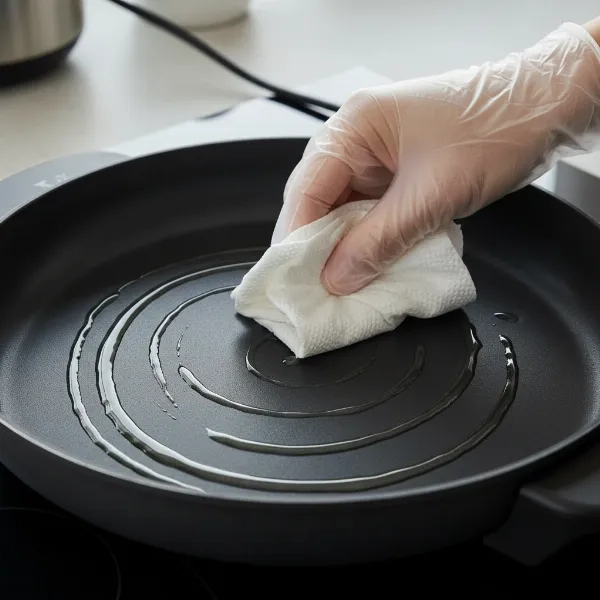 A hand gently rubs a thin layer of cooking oil onto a non-stick electric skillet with a paper towel.
Adjusting Temperature Appropriately
Overheating is one of the quickest ways to damage a non-stick coating. Always use low to medium heat settings for most cooking. Avoid preheating an empty non-stick skillet on high heat. Ensure there is always food, oil, or liquid in the pan to absorb the heat. Gradual temperature increases also prevent thermal shock, which can affect the pan’s layers.
Using Suitable Cooking Utensils
Metal utensils can scratch and gouge non-stick surfaces, leading to peeling and reduced effectiveness. Always opt for utensils made from silicone, wood, or heat-resistant plastic to protect the coating.
Cleaning and Maintenance
Consistent and gentle cleaning is just as important as initial conditioning for preserving your non-stick electric skillet.
Cleaning After Each Use
- Cool Down: Always allow your electric skillet to cool completely before cleaning. Thermal shock from hot-to-cold water can warp the pan and damage the non-stick surface.
- Disconnect: Remove the temperature control probe before washing.
- Hand Wash: Handwashing is generally the best method for non-stick cookware, even if the pan is advertised as dishwasher-safe. Use warm, soapy water and a soft sponge or cloth. For stubborn, stuck-on food, fill the skillet with warm, soapy water and let it soak for 10-15 minutes to loosen residue before gently wiping it clean.
- Avoid Abrasives: Never use steel wool, abrasive scouring pads, or harsh chemical cleaners, as these will scratch and degrade the non-stick coating.
- Dry Thoroughly: After washing, dry the pan completely with a soft towel, paying special attention to the electrical socket area to prevent rust or water damage.
Proper Storage
Store your non-stick electric skillet carefully to prevent scratches. If stacking with other cookware, place a soft cloth, paper towel, or pan protector between the skillet and other items to shield the non-stick surface from accidental damage.
“Many believe non-stick pans are maintenance-free, but a simple oil conditioning and consistent gentle care are paramount. Treating your non-stick electric skillet with the same respect you’d give a delicate instrument will ensure it remains a reliable kitchen workhorse for much longer.” – Admin, electricskilletguide.com
Conclusion
A non-stick electric skillet is an invaluable tool for modern cooking, simplifying everything from breakfast to dinner. However, its convenience and performance are entirely dependent on how well its non-stick coating is preserved. The key to ensuring your non-stick electric skillet stands the test of time lies in understanding that “seasoning” for these appliances is less about creating a non-stick surface and more about diligent initial conditioning and ongoing, gentle care.
By performing a simple oil conditioning before the first use and adopting best practices—such as cooking with appropriate temperatures, using non-metal utensils, and employing gentle cleaning methods—you actively protect the delicate non-stick layer. These mindful habits prevent the common pitfalls of scratching, peeling, and degradation, thereby maximizing the lifespan of your appliance and maintaining its optimal cooking performance. A well-cared-for non-stick electric skillet will continue to be your reliable partner in the kitchen, making every meal a little easier and more enjoyable. What small change will you make today to extend the life of your non-stick electric skillet?
Frequently Asked Questions
Is “seasoning” a non-stick electric skillet the same as seasoning cast iron?
No, the process for “seasoning” a non-stick Electric Skillet is different from cast iron. For non-stick, it involves an initial conditioning with a thin layer of oil and gentle heat to protect and enhance the existing coating, rather than building up a polymerized oil layer like with cast iron.
How often should I “season” my non-stick electric skillet?
Typically, the initial oil conditioning is a one-time process. If you notice a decline in the non-stick performance over time, you can repeat the process, but consistent daily care (proper cooking temperatures, gentle utensils, handwashing) is more critical for ongoing longevity than frequent re-seasoning.
Can I use cooking spray on my non-stick electric skillet?
It is generally recommended to avoid cooking oil sprays. Many sprays contain propellants and additives that can build up a sticky residue on the non-stick surface, which is difficult to remove and can actually degrade the non-stick properties over time. Stick to a thin layer of liquid cooking oil.
What kind of oil is best for “seasoning” a non-stick electric skillet?
A neutral cooking oil with a relatively high smoke point, such as vegetable oil, canola oil, or grapeseed oil, is best for the initial conditioning process. These oils create a protective film without leaving strong flavors or breaking down too quickly.
What should I do if my non-stick electric skillet starts to stick?
If your skillet begins to lose its non-stick properties, first ensure it’s thoroughly clean from any built-up residue. Then, you can try re-doing the initial “seasoning” process (wash, dry, thin oil layer, gentle heat, cool, wipe). If sticking persists, it may indicate the non-stick coating is worn out and the skillet might need replacement.