Dreaming of a vibrant, flavorful paella, complete with that coveted crispy rice crust, but intimidated by traditional methods? If you own a large electric skillet, you’re holding the secret to bringing this Spanish culinary masterpiece right into your home kitchen. Forget the struggle of uneven stovetop heat or the need for a special paella pan; your electric skillet offers precise control and consistent warmth, making it an unexpectedly ideal vessel for crafting an authentic and delicious paella that feeds a crowd.
Why an Electric Skillet is Your Secret Weapon for Paella
Many home cooks shy away from paella, believing it requires specialized equipment or an outdoor fire. However, the often-overlooked electric skillet provides distinct advantages that make it perfect for this iconic dish. Its expansive, flat surface ensures remarkable heat distribution across the entire base, a critical factor for uniformly cooking the rice and achieving the famed “socarrat”—the crispy, caramelized bottom layer of rice that is a hallmark of truly great paella. Furthermore, the precise temperature control inherent in electric skillets allows you to maintain the gentle, steady simmer that paella rice needs, preventing scorching while ensuring all ingredients cook perfectly. This versatility means you can prepare a large-batch paella for 8 to 10 servings without the hassle of multiple smaller pans or struggling with inconsistent burner heat. The portability of an electric skillet also means you can cook and serve your paella right at the table, keeping it warm and making for an impressive presentation.
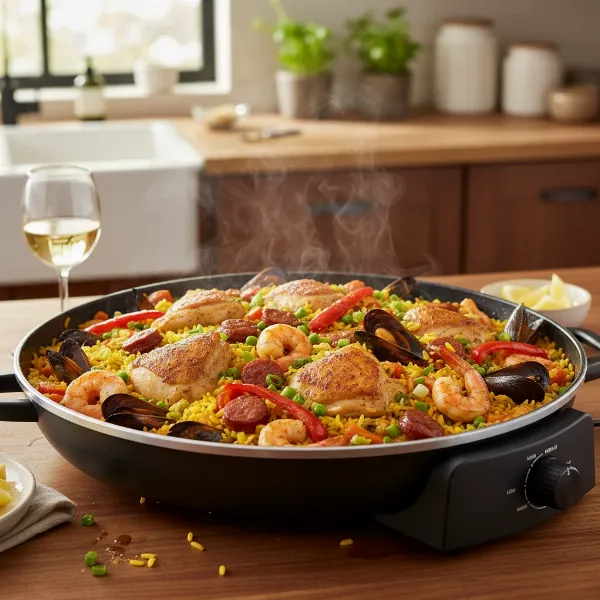 A large, colorful paella cooking evenly in an electric skillet, steam rising.
Understanding Your Electric Skillet for Paella Success
To truly master paella, selecting and understanding the features of your electric skillet is crucial. It’s not just about having an electric skillet, but knowing what makes it “paella-ready.”
Key Features to Look for in a Paella-Ready Electric Skillet
When choosing an electric skillet, or simply assessing the one you have, keep these features in mind for optimal paella preparation:
- Size and Capacity: For a generous paella serving 8 to 10 people, aim for a 15-inch oval or 16-inch round electric skillet. This provides ample surface area for the rice to cook in a thin layer, which is essential for texture and flavor development.
- Lid Type: A tempered glass lid with a secure handle and a steam vent is highly beneficial. The transparent lid allows you to monitor the cooking progress without lifting it (which can disrupt the rice’s cooking), while the vent prevents excessive moisture buildup.
- Temperature Control: A detachable temperature control unit that offers a broad and precise range (typically 225-425°F or similar Celsius equivalents) is ideal. This allows for high heat to sear proteins and create the socarrat, and lower, consistent heat for simmering the rice.
- Handles and Cleanability: Look for a skillet with sturdy, cool-touch handles for easy transport. Many modern electric skillets are also fully submersible once the heating element is removed, making cleanup a breeze—a significant advantage after cooking a saucy dish like paella.
|
Our Picks for the Best Electric skillet in 2026
As an Amazon Associate I earn from qualifying purchases.
|
||
| Num | Product | Action |
|---|---|---|
| 1 | Elite Gourmet EG6201 Extra Deep 12"x12"x3.2" (7.5Qt.) Scratch Resistant Dishwasher Safe, Non-stick Electric Skillet with Glass Vented Lid, Adjustable Temperature, Black |

|
| 2 | Elite Gourmet EG808 8” x 8" Non-stick Electric Skillet, Dishwasher Safe with Tempered Glass Vented Lid, Rapid Heat Up, 600W, Black |
|
| 3 | Presto 06857 16-inch Electric Foldaway Skillet, Black |
|
| 4 | Nuwave Medley XL Digital Electric Skillet, Family Size Griddle w/Glass Lid, 2025 New & Improved Precision Heating, 100°-425°F, PFAS Free G11 Nonstick Ceramic Coating, Portable Hot Plate, 7qt Capacity |
|
| 5 | bella Make & Take Electric Skillet, Fits-anywhere™ kitchenware, EverGood™ Ceramic Coating, Adjustable Temperature & Dishwasher-Safe Tempered Glass Lid, Cast Aluminum Base, 1200 Watt, Oatmilk |
|
| 6 | Elite Gourmet 12"x12"x2.15” Ceralast™ PFAS Free Ceramic Electric Skillet, Dishwasher Safe, Rapid Heat Up, 1200W, Dark Grey |
|
| 7 | FOHERE 16-Inch Electric Skillet with Glass Cover, 1500W Rapid Heat, Adjustable Temperature, Multi-Purpose Electric Skillet Fried Chicken, Perfect For Family Gathering Cooking |
|
| 8 | Pioneer Woman 3.5L Electric Skillet, Linen Speckle |
|
| 9 | Elite Gourmet EG-6203# Extra Deep 16"x13"x3.2" (10.5Qt.) Scratch Resistant, Easy Pour Spout Dishwasher Safe, Non-stick Electric Skillet with Glass Vented Lid, Adjustable Temperature, Black |
|
| 10 | Blue Diamond 7QT 5-in-1 Extra Large Electric Skillet, Healthy Ceramic Nonstick Interior, Non-Toxic PFAS-Free, Temperature Control, Stay Cool Handles, Easy Clean, Graphite |
|
Brief Overview of Electric Skillet Materials
Most electric skillets come with a non-stick coating, which is highly recommended for paella as it helps prevent the rice from sticking and makes achieving the socarrat easier. Some models might feature stainless steel or cast iron surfaces, which also work but may require a bit more oil and careful heat management to prevent sticking.
Essential Ingredients for an Authentic Electric Skillet Paella
A great paella begins with quality ingredients. For a traditional-inspired paella in your electric skillet, gather these essentials:
- Short-Grain Rice: This is non-negotiable. Varieties like Valencia, Arborio, or the traditional Spanish Bomba rice are perfect. They absorb liquid evenly without becoming mushy. Avoid long-grain rice.
- Flavorful Broth: Opt for good quality chicken or seafood broth, preferably homemade or low-sodium store-bought. This forms the foundation of your paella’s taste.
- Saffron Threads: The hallmark of paella, saffron imparts its characteristic golden hue and delicate aroma. Bloom it in a little warm broth before adding.
- Smoked Paprika (Pimentón): Use Spanish smoked paprika (dulce or picante, depending on preference) for a deep, smoky flavor.
- Proteins: A classic combination includes boneless, skinless chicken thighs (cut into bite-sized pieces) and smoked sausage or chorizo, sliced. For seafood paella, medium shrimp (peeled and deveined) and mussels (scrubbed and debearded) are excellent additions.
- Sofrito Elements: Diced yellow onion, sliced red bell pepper, and minced garlic form the aromatic base.
- Tomatoes: Canned diced tomatoes (with their juices) add sweetness and acidity.
- Fresh Garnishes: Frozen peas (added near the end), fresh parsley (chopped), and lemon wedges for serving brighten the dish.
- Olive Oil, Salt, and Black Pepper: These foundational ingredients will bring everything together.
Step-by-Step: Crafting Your Paella in a Large Electric Skillet
Ready to embark on your paella journey? Follow these steps for a perfect electric skillet paella.
Prepare Your Mise en Place
Before you even turn on the skillet, ensure all your ingredients are prepped and measured. This includes chopping vegetables, trimming chicken, preparing seafood, measuring rice and broth, and having your spices ready. Paella cooking moves quickly once it starts, so organization is key.
Sautéing and Searing Proteins
Begin by preheating your electric skillet to medium-high heat (around 350-375°F). Add a tablespoon or two of olive oil. First, season your chicken with salt and pepper, then sauté it until lightly browned on all sides, about 5-7 minutes. Remove the chicken and set it aside. Next, add the sliced smoked sausage or chorizo to the skillet and cook until browned, about 3-4 minutes. Remove and set aside with the chicken. This initial browning builds foundational flavor.
Building the Sofrito Base
Reduce the skillet heat to medium (around 300-325°F). Add the remaining olive oil, then sauté the diced onion, red bell pepper, and minced garlic. Cook until they are soft and fragrant, typically 3-4 minutes. Avoid browning the garlic too much, as it can turn bitter.
Infusing Flavor with Rice and Liquid
Stir the short-grain rice into the softened vegetables, ensuring each grain is coated with the oil and aromatic vegetables. Toast the rice for 2-3 minutes, stirring occasionally. This step helps the rice retain its shape. Next, add the chicken broth, white wine, diced tomatoes (with their juices), saffron threads (pre-bloomed if desired), and paprika. Stir everything gently until well combined, then bring the mixture to a simmer.
The Golden Rule: No Stirring and Achieving the Socarrat
Return the browned chicken and sausage evenly throughout the rice mixture. This is the critical juncture: do not stir the paella once the rice and liquid are added and distributed. Stirring releases starch, leading to a creamy risotto-like texture, not the distinct grains of paella. Cover the skillet and let it cook for 15-20 minutes, or until the rice has absorbed most of the liquid. The consistent heat of your electric skillet is ideal here for promoting the formation of the “socarrat” without intervention. As the liquid reduces, the rice at the bottom will caramelize and crisp up.
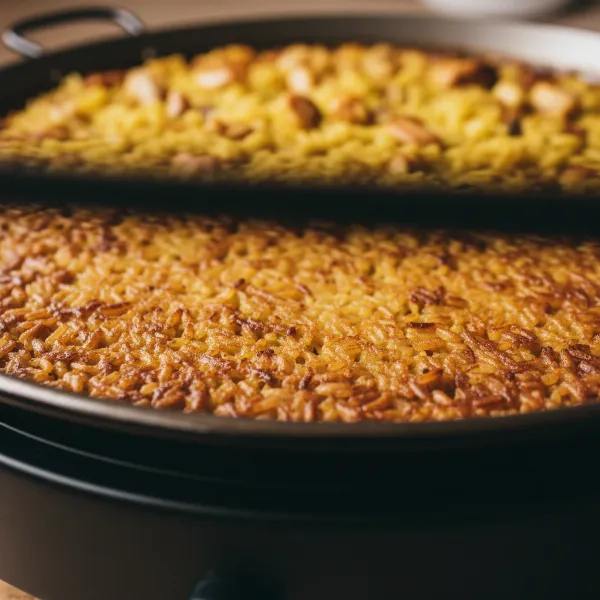 Close-up of paella bottom, showing golden-brown crispy socarrat rice crust.
Adding the Fresh Seafood and Vegetables
Once the rice is partially cooked and most of the liquid absorbed, gently scatter the shrimp and mussels over the top of the paella. Cover the skillet again and continue to cook for an additional 7-10 minutes, or until the shrimp are pink and opaque and the mussels have fully opened. Discard any mussels that remain stubbornly closed. Finally, sprinkle the frozen peas over the top, cover for another 2-3 minutes to warm them through, adding a pop of color and freshness.
The Final Rest and Presentation
Taste the paella and adjust the seasoning with additional salt and pepper if needed. Once cooked, turn off the electric skillet and let the paella rest, covered, for at least 5-10 minutes. This allows the flavors to meld and the rice to fully absorb any remaining moisture. Garnish generously with freshly chopped parsley and serve with lemon wedges on the side for a bright, zesty finish.
Common Paella Pitfalls and How to Avoid Them in an Electric Skillet
Even with the advantages of an electric skillet, a few common mistakes can hinder your paella perfection.
- Overcrowding the Skillet: Too many ingredients, especially rice, will lead to uneven cooking and inhibit socarrat formation. Ensure you use an appropriately sized large skillet.
- Improper Heat Control: If the heat is too high, the liquid will evaporate too quickly, leaving the rice undercooked. If it’s too low, the rice won’t cook properly, and the socarrat won’t form. Your electric skillet’s precise control is a huge asset here; start higher for searing, then find that sweet spot for a gentle simmer.
- Stirring the Rice: As emphasized, stirring paella rice after adding the liquid is a cardinal sin. Resist the urge! The beauty of paella lies in its distinct rice grains and the socarrat.
- Not Achieving Socarrat: This crispy bottom layer is a prize. To encourage it in an electric skillet, ensure your heat is consistent. Towards the end of the cooking time, if the rice seems to be drying out but the bottom isn’t crisp, you can increase the temperature slightly for a few minutes, listening for the distinctive crackling sound. Just be careful not to burn it.
Care and Maintenance for Your Electric Skillet After Paella Night
After enjoying your delicious paella, proper cleaning of your electric skillet ensures its longevity. First, always allow the skillet to cool completely. Detach the temperature control unit. If your skillet is submersible, cleaning is easy: simply wash it by hand with warm, soapy water. For stubborn, stuck-on bits (especially if you achieved a fantastic socarrat!), let it soak for a while, then gently scrub with a non-abrasive sponge. Ensure all components are thoroughly dry before reattaching the control unit and storing.
Conclusion
Making paella in a large electric skillet isn’t just feasible; it’s a surprisingly effective and enjoyable way to create this beloved Spanish dish. The consistent heat, precise temperature control, and generous capacity of an electric skillet simplify many of the challenges associated with traditional paella cooking. By following these steps and paying attention to key details like the “no-stir” rule and even heating, you can achieve a vibrant, flavorful paella, complete with that irresistible socarrat, right in your own kitchen. So why not transform your next gathering with a magnificent paella, effortlessly prepared in your trusted electric skillet?
Frequently Asked Questions
Can I use any electric skillet for paella?
While you can technically use any electric skillet, for best results, opt for a large model (15-16 inches) with a non-stick surface, a tempered glass lid, and precise temperature control. These features greatly aid in even cooking and achieving the desired texture.
How do I get the crispy bottom (socarrat) in an electric skillet?
Achieving the socarrat in an electric skillet relies on even heat distribution and resisting the urge to stir the rice. Towards the end of cooking, after the liquid has mostly absorbed, you can slightly increase the heat for a few minutes to encourage the bottom layer of rice to caramelize and crisp up. Listen for a gentle crackling sound.
What kind of rice is best for paella?
Short-grain rice varieties like Valencia, Arborio, or the traditional Spanish Bomba rice are best for paella. Their starch content and ability to absorb liquid without becoming overly sticky or mushy are crucial for the dish’s characteristic texture.
Can I make vegetarian paella in an electric skillet?
Absolutely! An Electric Skillet is excellent for vegetarian paella. Simply omit the meat and seafood, and instead, load your paella with a colorful array of vegetables like artichoke hearts, asparagus, mushrooms, green beans, and roasted red peppers. Use vegetable broth for the liquid.
What temperature should I cook paella at in an electric skillet?
Start with medium-high heat (around 350-375°F) for browning your proteins. Then, reduce the heat to medium or medium-low (around 275-325°F) for simmering the rice and cooking the remaining ingredients. The key is a consistent, gentle simmer for the rice phase.