Serving delicious, hot food is a hallmark of a successful party. No one enjoys a lukewarm dish, and more importantly, keeping food at the correct temperature is crucial for food safety. While professional warming equipment is available, you can cleverly use a common kitchen item—your skillet—to ensure your party spread stays perfectly warm. This guide explores several ingenious ways to leverage your skillet, alongside other household hacks, to maintain optimal food temperature and delight your guests.
The Importance of Keeping Food Warm
Beyond satisfying hungry guests, maintaining food temperature is vital for two key reasons:
- Food Safety: Bacteria multiply rapidly in the “danger zone” between 40°F and 140°F (approximately 5°C and 60°C). Hot foods should ideally be kept at 140°F (60°C) or above to prevent foodborne illnesses.
- Optimal Taste and Texture: Many dishes lose their appeal when they cool down. Sauces can congeal, fried items become soggy, and meats can dry out. Keeping food warm ensures it retains its intended flavor, moisture, and appetizing texture.
Skillet Solutions for Party Food Warmth
Your trusty skillet can be a surprisingly versatile tool for keeping party dishes warm. Here are several effective methods:
1. The Warm Skillet Base: Passive Warming
A preheated cast-iron skillet, known for its excellent heat retention, can serve as a fantastic warming base.
How to Do It:
- Heat a large cast-iron skillet over a burner until it’s comfortably warm to the touch (but not smoking hot).
- Remove it from the heat and place it on a heat-safe trivet or a folded kitchen towel on your serving surface.
- If you have a smaller pot or oven-safe dish containing food (like mashed potatoes, a creamy dip, or stew), place it directly into the warm skillet. The residual heat from the cast iron will gently warm the bottom of the inner container without burning.
- For individual items such as mini quiches, sliders, or chicken wings, wrap them loosely in aluminum foil and arrange them inside the warm skillet. The foil traps steam and heat, while the skillet provides a consistent, gentle warmth.
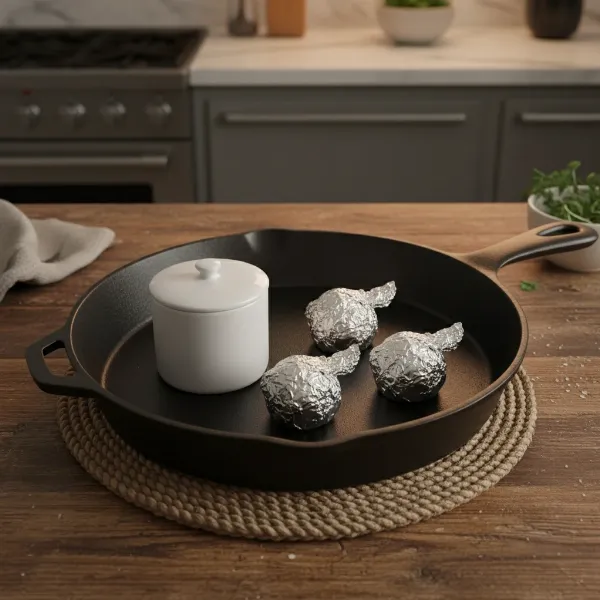 Cast iron skillet warming base with small pot and foil-wrapped items for party food.
|
Our Picks for the Best Electric skillet in 2026
As an Amazon Associate I earn from qualifying purchases.
|
||
| Num | Product | Action |
|---|---|---|
| 1 | Pioneer Woman 3.5L Electric Skillet, Linen Speckle |

|
| 2 | Blue Diamond 7QT 5-in-1 Extra Large Electric Skillet, Healthy Ceramic Nonstick Interior, Non-Toxic PFAS-Free, Temperature Control, Stay Cool Handles, Easy Clean, Graphite |
|
| 3 | Elite Gourmet 12"x12"x2.15” Ceralast™ PFAS Free Ceramic Electric Skillet, Dishwasher Safe, Rapid Heat Up, 1200W, Dark Grey |
|
| 4 | Elite Gourmet EG808 8” x 8" Non-stick Electric Skillet, Dishwasher Safe with Tempered Glass Vented Lid, Rapid Heat Up, 600W, Black |
|
| 5 | Elite Gourmet EG6201 Extra Deep 12"x12"x3.2" (7.5Qt.) Scratch Resistant Dishwasher Safe, Non-stick Electric Skillet with Glass Vented Lid, Adjustable Temperature, Black |
|
| 6 | bella Make & Take Electric Skillet, Fits-anywhere™ kitchenware, EverGood™ Ceramic Coating, Adjustable Temperature & Dishwasher-Safe Tempered Glass Lid, Cast Aluminum Base, 1200 Watt, Oatmilk |
|
| 7 | Presto 06857 16-inch Electric Foldaway Skillet, Black |
|
| 8 | Elite Gourmet EG-6203# Extra Deep 16"x13"x3.2" (10.5Qt.) Scratch Resistant, Easy Pour Spout Dishwasher Safe, Non-stick Electric Skillet with Glass Vented Lid, Adjustable Temperature, Black |
|
| 9 | Nuwave Medley XL Digital Electric Skillet, Family Size Griddle w/Glass Lid, 2025 New & Improved Precision Heating, 100°-425°F, PFAS Free G11 Nonstick Ceramic Coating, Portable Hot Plate, 7qt Capacity |
|
| 10 | FOHERE 16-Inch Electric Skillet with Glass Cover, 1500W Rapid Heat, Adjustable Temperature, Multi-Purpose Electric Skillet Fried Chicken, Perfect For Family Gathering Cooking |
|
2. The DIY Bain-Marie: Skillet Water Bath
Emulate the professional “bain-marie” (or steam table) technique using a large skillet or roasting pan. This method provides moist, even heat, preventing food from drying out.
How to Do It:
- Select a large, deep skillet or roasting pan. Fill it halfway with hot water.
- Place smaller, oven-safe dishes or even other skillets (containing the food you want to keep warm) directly into the water bath. Ensure the water level is high enough to contact the sides of the inner containers but not so high that it overflows or gets into the food.
- If you have a stovetop available, keep the large skillet on a very low burner to maintain the water’s warmth (around 160°F or 71°C).
- Cover the entire setup loosely with aluminum foil. This traps steam and heat, creating a warm, humid environment that keeps food moist and hot. Remember to stir the food occasionally to distribute the heat.
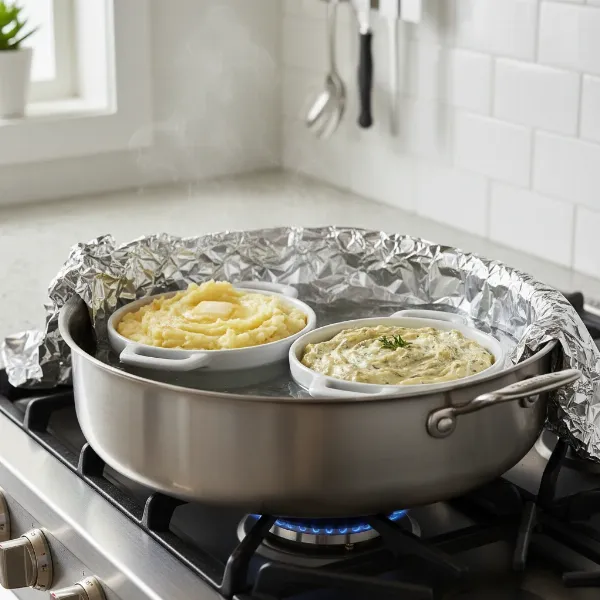 DIY bain-marie using a large skillet with water, holding smaller dishes, covered with foil.
3. Oven-Assisted Skillet Warming (for Oven-Safe Skillets)
If your skillet is oven-safe (most cast iron and some stainless steel skillets are), your oven on a low setting can be a simple solution.
How to Do It:
- Preheat your oven to its lowest setting, typically around 170-200°F (77-93°C). Some ovens even have a dedicated “warm” setting or a warming drawer.
- Transfer your cooked food into the oven-safe skillet.
- Cover the skillet tightly with aluminum foil or a lid to prevent the food from drying out.
- Place the covered skillet in the preheated oven. This method is excellent for longer warming periods, though you should still monitor the food to ensure it doesn’t overcook or become too dry.
4. Insulating Your Skillet: For On-the-Go Warmth
When electricity isn’t an option or you need to transport food, insulation is key.
How to Do It:
- After cooking, transfer your hot food to a skillet with a tight-fitting lid.
- Wrap the entire covered skillet securely in several layers of aluminum foil.
- Next, wrap the foil-covered skillet in thick kitchen towels or even a small blanket.
- For maximum insulation, place the bundled skillet into an insulated cooler. Surprisingly, a cooler works just as well for keeping things hot as it does for keeping them cold. The insulation traps the heat, keeping your food warm for several hours.
Essential Tips for Success
To get the most out of these skillet-warming techniques, keep these general tips in mind:
- Preheat Everything: Always preheat your skillet, oven, or any warming equipment before adding the food. Starting with cold equipment will cause food to cool down initially.
- Use Lids or Foil: Covering your skillet with a tight-fitting lid or aluminum foil is crucial. This traps heat and moisture, preventing food from cooling down quickly or drying out.
- Monitor Temperature: For extended warming, especially if serving vulnerable foods like meats or dairy, use a food thermometer to periodically check that the internal temperature remains above 140°F (60°C).
- Choose Wisely: Some foods hold heat better than others. Soups, stews, casseroles, and moist dishes generally do well. Crispy foods might lose some texture over time in a humid warming environment.
- Avoid Overcooking: While keeping food warm, be mindful of overcooking. Use the lowest possible heat setting to maintain temperature without continuing to cook the food.
By employing these smart skillet strategies, you can effortlessly keep your party food warm, safe, and delicious, ensuring your guests enjoy every bite from start to finish.