Hey there, fellow home cook! Let’s talk about the heart of your kitchen convenience: the electric skillet. I still remember my first one – a gift that I thought was just for pancakes on a lazy Sunday. Little did I know it would become my go-to for everything from weeknight stir-fries to simmering stews. But with great cooking power comes great cleaning responsibility. Knowing exactly How To Clean A Nonstick Skillet is the single most important secret to keeping it performing beautifully for years. It’s the difference between a trusty kitchen sidekick and a frustrating, sticky mess. If you’ve ever watched a perfect nonstick surface turn into a food magnet, you know what I’m talking about. Don’t worry, we’re going to put an end to that today.
Why Proper Cleaning is a Non-Negotiable
Think of your skillet’s nonstick surface as a delicate, high-performance engine. You wouldn’t pour sand in your car’s gas tank, right? In the same way, using the wrong cleaning methods can permanently damage the nonstick coating, causing microscopic scratches and wear that food just loves to cling to.
Proper cleaning isn’t just about hygiene; it’s about:
- Longevity: A well-cared-for nonstick surface can last for years, giving you a fantastic return on your investment.
- Performance: A clean, smooth surface ensures even heating and that signature easy-release that makes nonstick cooking so joyful.
- Food Quality: A buildup of old oil and food residue can burn and smoke, imparting a bitter, unpleasant taste to your fresh meals.
Before You Start: The Golden Rules of What NOT to Do
Sometimes, knowing what not to do is even more important. Before we get into the “how-to,” let’s establish some ground rules. Avoid these common culprits like the plague to protect your skillet’s delicate surface.
- No Metal Utensils, Ever: This is rule number one. Metal spatulas, forks, or knives will scratch and gouge the nonstick coating. Stick to silicone, wood, or nylon tools.
- Avoid Abrasive Scrubbers: Say goodbye to steel wool, scouring pads, and harsh bristle brushes. They are the sworn enemies of your nonstick surface. A soft sponge or cloth is your best friend.
- Skip the Harsh Chemicals: Cleaners like oven cleaner, bleach, or abrasive powders are far too aggressive. They can chemically break down the nonstick coating.
- Beware of “Dishwasher Safe” Claims: Even if the manufacturer says it’s okay, the high heat and harsh detergents in a dishwasher can degrade the nonstick coating over time. Hand-washing is always the superior choice.
- Don’t Shock the Skillet: Never, ever plunge a hot skillet into cold water. This rapid temperature change, known as thermal shock, can cause the pan to warp and can damage the nonstick coating.
“The most common reason for premature nonstick failure is thermal shock and abrasive cleaning,” notes household appliance engineer John Carter. “Allowing the skillet to cool naturally before washing is the single best habit a user can adopt to maximize its lifespan.”
The Simple, Safe Way: How to Clean a Nonstick Skillet Step-by-Step
For 95% of your daily cleaning, this simple, gentle method is all you’ll ever need. It’s quick, effective, and perfectly safe for your skillet.
- Unplug and Cool Down: First things first, always unplug your electric skillet and remove the temperature control probe. Allow the skillet to cool down to a warm, comfortable temperature. It should be cool enough to handle safely but still warm enough that food residue hasn’t completely hardened.
- The Initial Wipe: Take a paper towel or a soft cloth and wipe out any excess oil, grease, and loose food particles. You’ll be amazed at how much comes out with this simple first step.
- Warm Sudsy Water: Add a few drops of mild dish soap into the skillet and fill it with warm water. Let it sit for a few minutes to allow the soap to do its work, loosening any remaining residue.
- Gentle Does It: Using a soft sponge, dishcloth, or a non-abrasive nylon scrubber, gently wash the interior surface. Use circular motions. For most everyday messes, this is all the pressure you’ll need.
- Rinse and Dry Thoroughly: Rinse the skillet completely with warm water, ensuring no soap residue is left behind. Dry it immediately and thoroughly with a soft towel. Air drying can sometimes lead to water spots.
That’s it! This simple routine after every use will keep your skillet in fighting shape.
What About Tackling Stubborn, Stuck-On Messes?
We’ve all been there. You get distracted, the sauce reduces a little too much, and now you have a stubborn, burnt-on layer that a gentle wash won’t budge. Don’t panic, and definitely don’t reach for that steel wool. Here are two safe and effective methods.
The Baking Soda Paste Trick
Baking soda is a fantastic, gentle abrasive that can lift stubborn grime without scratching the surface.
- Create a paste using a few tablespoons of baking soda and enough water to form a thick, spreadable consistency.
- Apply the paste directly to the burnt-on areas of your cooled skillet.
- Let it sit for 15-30 minutes.
- Using a soft sponge or cloth, gently scrub the area in a circular motion. The baking soda will act as a mild abrasive, lifting the residue.
- Rinse thoroughly and wash with mild soap and water as usual.
The Gentle Simmer Solution
For really tough, widespread residue, a little bit of heat can work wonders.
- Fill the skillet with about an inch of water.
- Place it on its base (without the probe attached yet) and add a tablespoon of baking soda or a few drops of mild dish soap.
- Plug in the temperature probe and set the skillet to a very low heat, just enough to bring the water to a gentle simmer.
- Let it simmer for 10-15 minutes. This will soften and lift the burnt-on food.
- Carefully unplug the skillet, let the water cool, and then discard it. You should now be able to easily wipe away the residue with a soft sponge.
- Finish by washing, rinsing, and drying as normal.
|
Our Picks for the Best Electric Skillet in 2026
As an Amazon Associate, we earn from qualifying purchases.
|
||
| Num | Product | Action |
|---|---|---|
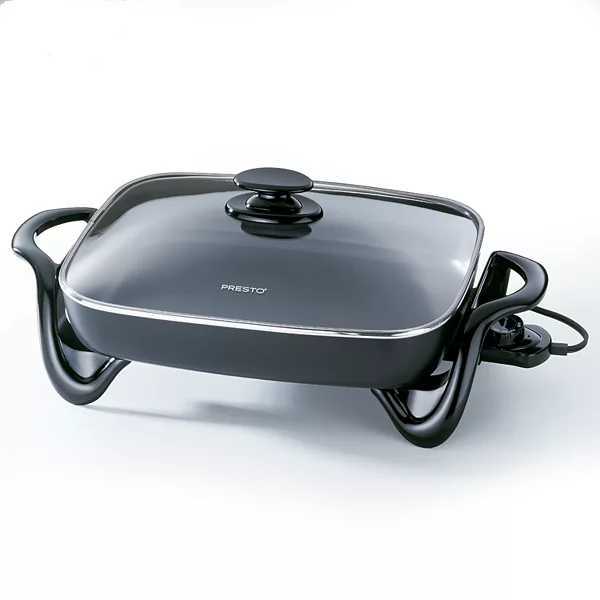
| 1 | Presto 07117 12\" Electric Skillet with glass cover |

|
| 2 | Elite Gourmet 12\" x 12\" x 3” Ceralast™ Ceramic Non-stick PFAS Free, Dishwasher Safe Electric Skillet, Xtra Deep Dish, Rapid Heat 1200W, Black |
|
| 3 | bella Make & Take Electric Skillet, Fits-anywhere™ kitchenware, EverGood™ Ceramic Coating, Adjustable Temperature & Dishwasher-Safe Tempered Glass Lid, Cast Aluminum Base, 1200 Watt, Surf |
|
| 4 | Elite Gourmet EG808 8” x 8\" Non-stick Electric Skillet, Dishwasher Safe with Tempered Glass Vented Lid, Rapid Heat Up, 600W, Black |
|
| 5 | BLACK+DECKER Electric Skillet, Variable Temperature Control, Nonstick Cooking Surface, Dishwasher Safe, Tempered Glass Lid, 12\"x15\" |
|
| 6 | Crux Extra Deep Nonstick Scratch Resistant Electric Skillet with Removeable Temperature Probe, 12\" x 12\", silver (14620) |
|
| 7 | Elite Gourmet EG-6203# Extra Deep 16\"x13\"x3.2\" (10.5Qt.) Scratch Resistant, Easy Pour Spout Dishwasher Safe, Non-stick Electric Skillet with Glass Vented Lid, Adjustable Temperature, Black |
|
| 8 | Presto 06857 16-inch Electric Foldaway Skillet, Black |
|
| 9 | Presto 06852 16-Inch Electric Skillet with Glass Cover |
|
| 10 | Chefman XL Electric Griddle with Removable Temperature Control, Immersible Flat Top Grill, Burger, Eggs, Pancake Griddle, Nonstick Extra Large Cooking Surface, Slide Out Drip Tray, 10 x 20 Inch |
|
Don’t Forget the Rest of Your Electric Skillet
Cleaning the nonstick surface is crucial, but it’s only part of the job.
- The Temperature Probe: Never immerse the temperature probe in water. Simply wipe it clean with a damp cloth and dry it completely before storing.
- The Exterior and Base: The outside of your skillet can get splattered with grease, too. Wipe it down with a damp, soapy cloth, then rinse with a clean damp cloth and dry.
- The Lid: Most electric skillet lids are made of glass and are quite durable. You can wash the lid by hand in warm, soapy water. Pay special attention to the rim and the vent hole where grime can accumulate.
Frequently Asked Questions (FAQ)
Q: Can I use cooking spray on my nonstick electric skillet?
A: It’s best to avoid it. The emulsifiers and propellants in cooking sprays can build up on the nonstick surface and create a gummy residue over time that is very difficult to remove and can interfere with the nonstick properties. A small amount of oil or butter is a much better choice.
Q: Why is my nonstick skillet starting to stick?
A: This usually happens for two reasons: either the nonstick surface has been damaged by scratches from metal utensils or harsh cleaning, or there is a nearly invisible buildup of polymerized oil residue. Try the gentle simmer or baking soda paste method to deep clean the surface. If it’s still sticking, the coating may be worn out.
Q: How do I get rid of the sticky film on my skillet?
A: That sticky film is likely polymerized oil. The baking soda paste method is excellent for this. Apply the paste, let it sit, and gently scrub. It might take a bit of elbow grease, but it’s the safest way to remove that residue without harming the coating.
Q: Can I “season” a nonstick skillet like a cast iron one?
A: Not in the same way. Modern nonstick surfaces don’t require seasoning. However, after a deep clean, some users like to wipe a very thin layer of cooking oil onto the surface with a paper towel. This can help condition the surface, but it’s not a required step for performance.
Q: How often should I deep clean my skillet with baking soda?
A: You don’t need to do it after every use. Reserve the deep cleaning methods for when you have stubborn, stuck-on food or if you notice the skillet’s performance declining. For daily use, the simple soap and water method is perfect.
A Clean Skillet is a Happy Skillet
Mastering how to clean a nonstick skillet is your ticket to countless effortless, delicious meals. It’s a simple act of care that pays huge dividends in the performance and longevity of this incredibly versatile kitchen appliance. By treating its surface with a gentle touch and avoiding the harsh methods that send so many skillets to an early grave, you ensure that your electric skillet remains a reliable partner in your culinary adventures for years to come. Now, go on and cook something amazing—you’ve got the cleanup covered.