Have you ever craved a warm, freshly baked cake but hesitated to fire up your large oven? Perhaps you’re in a small space, trying to save energy, or simply looking for a new way to utilize your trusty electric skillet. The good news is, baking a delicious cake in an electric skillet isn’t just possible—it’s surprisingly effective and can yield delightful results. This versatile kitchen appliance, often overlooked for baking, can become your go-to for creating moist, tender cakes without the fuss of a conventional oven. Get ready to discover how your electric skillet can effortlessly transform into a compact, efficient cake-baking machine.
What is an Electric Skillet?
An electric skillet, also widely known as an electric frying pan, is a countertop appliance with its own heating element and temperature control. Unlike traditional skillets used on a stovetop, an electric skillet plugs directly into an outlet, allowing for independent and precise heat management. Its definition goes beyond just frying; it’s a multi-functional device capable of simmering, sautéing, roasting, and, as we’ll explore, baking.
The history of the electric skillet traces back to the mid-20th century, emerging as a popular appliance during the era of modern kitchen conveniences. Early models offered a revolutionary way to cook at the table or in spaces without a full range. Over decades, designs evolved, incorporating non-stick coatings, improved thermostats, and more robust construction, solidifying its place as a staple in many kitchens. Its ability to maintain a consistent temperature, often more accurately than a stovetop burner, makes it a surprisingly good candidate for delicate tasks like baking.
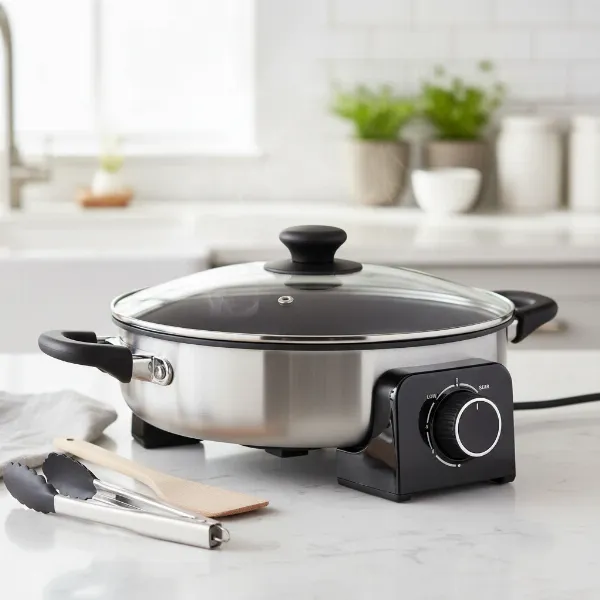 A modern electric skillet with a clear glass lid and temperature control dial on a kitchen counter.
Advantages and Disadvantages of an Electric Skillet
Like any kitchen appliance, the electric skillet comes with its own set of pros and cons, especially when it comes to baking. Understanding these can help you decide if it’s the right tool for your next cake project.
Advantages
- Flexibility and Convenience: An electric skillet offers remarkable flexibility. You can bake a cake virtually anywhere there’s an electrical outlet, from a small apartment kitchen to a vacation cabin. It’s also fantastic for keeping your main oven free for other dishes, or for when you simply don’t want to heat up your entire kitchen.
- Precise Temperature Control: Most electric skillets feature an adjustable thermostat, allowing you to set and maintain a very specific temperature. This precise control is crucial for baking, ensuring even heat distribution across the bottom and sides of your cake, which helps prevent burning or undercooking.
- Space-Saving: For those with limited kitchen space or without a full-sized oven, an electric skillet serves as a compact, all-in-one solution for various cooking needs, including baking. It eliminates the need for bulky bakeware and can be easily stored away.
- Easy to Clean: Many modern electric skillets come with non-stick surfaces and are designed for easy cleaning. Some models even have removable components that are dishwasher safe, simplifying post-baking cleanup significantly.
|
Our Picks for the Best Electric skillet in 2026
As an Amazon Associate I earn from qualifying purchases.
|
||
| Num | Product | Action |
|---|---|---|
| 1 | Elite Gourmet 12"x12"x2.15” Ceralast™ PFAS Free Ceramic Electric Skillet, Dishwasher Safe, Rapid Heat Up, 1200W, Dark Grey |

|
| 2 | Pioneer Woman 3.5L Electric Skillet, Linen Speckle |
|
| 3 | Presto 06857 16-inch Electric Foldaway Skillet, Black |
|
| 4 | Blue Diamond 7QT 5-in-1 Extra Large Electric Skillet, Healthy Ceramic Nonstick Interior, Non-Toxic PFAS-Free, Temperature Control, Stay Cool Handles, Easy Clean, Graphite |
|
| 5 | Elite Gourmet EG-6203# Extra Deep 16"x13"x3.2" (10.5Qt.) Scratch Resistant, Easy Pour Spout Dishwasher Safe, Non-stick Electric Skillet with Glass Vented Lid, Adjustable Temperature, Black |
|
| 6 | Elite Gourmet EG808 8” x 8" Non-stick Electric Skillet, Dishwasher Safe with Tempered Glass Vented Lid, Rapid Heat Up, 600W, Black |
|
| 7 | FOHERE 16-Inch Electric Skillet with Glass Cover, 1500W Rapid Heat, Adjustable Temperature, Multi-Purpose Electric Skillet Fried Chicken, Perfect For Family Gathering Cooking |
|
| 8 | Elite Gourmet EG6201 Extra Deep 12"x12"x3.2" (7.5Qt.) Scratch Resistant Dishwasher Safe, Non-stick Electric Skillet with Glass Vented Lid, Adjustable Temperature, Black |
|
| 9 | Nuwave Medley XL Digital Electric Skillet, Family Size Griddle w/Glass Lid, 2025 New & Improved Precision Heating, 100°-425°F, PFAS Free G11 Nonstick Ceramic Coating, Portable Hot Plate, 7qt Capacity |
|
| 10 | bella Make & Take Electric Skillet, Fits-anywhere™ kitchenware, EverGood™ Ceramic Coating, Adjustable Temperature & Dishwasher-Safe Tempered Glass Lid, Cast Aluminum Base, 1200 Watt, Oatmilk |
|
Disadvantages
- Limited Portability: While convenient for countertop use, the need for an electrical outlet somewhat limits its portability compared to a standard stovetop pan. You can’t, for instance, easily move it mid-cooking without a power source nearby.
- Requires Power Source: This is self-explanatory, but worth noting that in case of a power outage, your electric skillet will be unusable for baking.
- Not Suitable for All Baking Methods: Electric skillets excel at baking flatter, single-layer cakes. However, they are not designed for multi-tiered cakes, intricate pastries, or anything that requires complex heat circulation or top-down browning, which a conventional oven provides. The top of a cake baked in an electric skillet will generally not brown as much as one baked in an oven.
Types of Electric Skillets Popular on the Market
Electric skillets come in various designs and materials, each offering slightly different benefits for your baking adventures.
Classified by Shape
- Round Skillets: These are classic and versatile, great for baking round cakes. They often mimic the shape of traditional frying pans.
- Square Skillets: Square electric skillets maximize cooking surface area, making them ideal for larger, more uniform cakes or casseroles.
- Rectangular Skillets: Similar to square models but longer, rectangular skillets are excellent for sheet cakes, brownies, or dishes requiring more linear space.
Classified by Material
- Non-stick Skillets: The most common type, non-stick surfaces make for easy food release and cleanup. This is highly advantageous for baking cakes, as it reduces the risk of sticking.
- Cast Iron Skillets: While less common for electric versions, some electric skillets incorporate cast iron for its superior heat retention and even heating properties, though they require more maintenance.
- Stainless Steel Skillets: Durable and long-lasting, stainless steel electric skillets are also available. They might require more oil or lining to prevent sticking when baking.
Classified by Features
- Skillets with Glass Lids: A transparent glass lid allows you to monitor your cake’s progress without lifting the lid and losing heat, which is vital for consistent baking.
- Skillets with Detachable Temperature Controllers: This feature simplifies cleaning, as the pan can often be fully immersed in water or placed in a dishwasher once the electrical components are removed.
- Skillets with Timer Functions: Some advanced models include built-in timers that can automatically shut off the heat, providing an extra layer of convenience and preventing over-baking.
Comparing Popular Electric Skillet Brands
When choosing an electric skillet for baking, brand reputation often correlates with quality, durability, and features. Here’s a brief comparison of some well-known brands:
| Feature/Brand | Zojirushi | Presto | Proctor Silex | Cuisinart |
|---|---|---|---|---|
| Price Range | High-end | Mid-range | Budget-friendly | Mid to High-end |
| Quality | Excellent, known for durability | Good, reliable performance | Fair to Good, basic functionality | Very Good, solid build |
| Features | Advanced temperature control, large capacity, often multi-functional | Reliable non-stick, accurate thermostat, good variety in size | Basic, no-frills, easy to use | Robust construction, even heating, good capacity |
| Durability | Very High | High | Moderate | High |
| Baking Suitability | Excellent, precise control beneficial | Very good, widely used for skillet baking | Decent for basic cake mixes | Excellent, consistent performance |
This table provides a general overview, but specific models within each brand may vary. Zojirushi, for instance, is often praised for its consistency, while Presto is a long-standing favorite for its reliability in various cooking tasks, including baking.
How to Choose the Right Electric Skillet for Baking (Buying Guide)
Selecting the perfect electric skillet for your baking needs involves considering several factors to ensure you get the most out of your investment.
Determine Your Usage Needs
Before anything else, consider how often you’ll be baking and for how many people. If you plan to bake frequently for a large family, a larger capacity skillet with advanced features might be worthwhile. For occasional use or smaller servings, a basic model will suffice. Do you envision baking simple cake mixes or attempting more elaborate recipes?
Consider Size and Capacity
Electric skillets come in various sizes, typically ranging from 10-inch to 16-inch diameters. A 12-inch or 15-inch skillet is generally a good all-around size for baking most standard cake mixes or homemade recipes. Ensure the skillet is deep enough to accommodate the cake batter as it rises without overflowing, usually at least 2-3 inches deep.
Choose the Right Material
For baking, a non-stick surface is almost always preferred. It simplifies cake removal and makes cleanup much easier. If you opt for stainless steel, be prepared to line it generously with parchment paper or aluminum foil and grease it thoroughly to prevent sticking.
Check for Essential Features
- Accurate Temperature Control: This is paramount for baking. Look for a skillet with a reliable, easy-to-read thermostat that maintains a consistent temperature.
- Ventilated Lid: A lid that can be propped slightly ajar or has a built-in vent is beneficial for releasing steam, which helps prevent a soggy cake top. A glass lid is a bonus for monitoring.
- Heat-Resistant Handles: For safety and ease of handling, ensure the skillet has sturdy, heat-resistant handles.
- Dishwasher-Safe Components: If convenience is a priority, look for models where the skillet pan (once the temperature probe is removed) is dishwasher safe.
Research Brand and Reviews
Read reviews from other users who have baked in electric skillets. Brands like Presto and Cuisinart are often well-regarded for their performance in baking. Look for insights on even heating, temperature accuracy, and ease of cleaning.
Compare Prices
Electric skillets range widely in price. Set a budget and compare models that offer the features you need within that range. Remember that a higher price often correlates with better build quality, more precise controls, and greater durability.
How to Bake a Cake in an Electric Skillet (It Works!)
Baking a cake in an electric skillet is a fantastic alternative when an oven isn’t available or desired. The process is straightforward, whether you’re using a box mix or a homemade recipe.
Preparation is Key
- Grease and Line Your Skillet: This is the most crucial step for successful non-stick baking.
- Aluminum Foil Method: Line the bottom and sides of your electric skillet with heavy-duty aluminum foil, leaving enough overhang to create “handles” for easy cake removal. Grease the foil thoroughly with butter, cooking spray, or shortening, then dust lightly with flour.
- Parchment Paper Method: Cut a circle of parchment paper for the bottom and strips for the sides. Grease the skillet, press the parchment in place, then grease the parchment.
- Baking Pan Method (if applicable): If you have a small baking pan (like an 8-inch round cake pan) that fits comfortably inside your electric skillet without touching the sides, you can use this. Place a wire rack or even crumpled aluminum foil balls at the bottom of the skillet to elevate the cake pan, allowing for better heat circulation. Grease and flour your baking pan as usual.
- Preheat the Skillet: Place the lid on your electric skillet and preheat it. A common recommended temperature for baking cakes is 275°F (135°C). Some recipes might suggest preheating to 200°F (93°C) then increasing to 300°F (149°C) once the batter is in. Aim for consistency, and give the skillet ample time to reach the desired temperature.
- Prepare Your Batter: Follow your cake mix box instructions or your favorite homemade cake recipe. Ensure the batter is smooth and free of lumps.
Baking Your Cake
- Pour the Batter: Carefully pour the prepared cake batter into your lined electric skillet or into the baking pan placed inside the skillet. Spread it evenly.
- Cover and Bake: Place the lid back on the electric skillet. It is often recommended to leave the lid slightly ajar to allow steam to escape. This helps prevent the top of your cake from becoming too moist or gummy.
- Monitor Temperature and Time:
- Temperature: Maintain the set temperature (e.g., 275°F to 300°F). You might need to adjust slightly based on your skillet and desired outcome.
- Time: Baking times will vary. For a standard cake mix at 275°F, expect around 45-50 minutes. For other recipes or temperatures, it could range from 30 to 60 minutes.
- Check for Doneness: The best way to check is with a toothpick. Insert it into the center of the cake; if it comes out clean, your cake is done.
- Optional: Dry the Top: If the top of your cake seems too moist or you desire a slightly drier surface, you can remove the lid for the last 5 minutes of baking. Note that the top of an electric skillet cake will generally not brown much.
Cooling and Removal
- Turn Off and Cool Slightly: Once baked, turn off the electric skillet and unplug it. Let the cake cool in the skillet for about 10-15 minutes. This allows it to firm up and makes removal easier.
- Invert and Remove: If you used the foil or parchment lining with overhang, use those “handles” to gently lift the cake out. Alternatively, place a plate or wire rack over the skillet and carefully invert the skillet to release the cake. Peel away any foil or parchment while the cake is still warm.
- Cool Completely: Transfer the cake to a wire rack to cool completely before frosting or serving.
“Baking a cake in an electric skillet is a delightful workaround that demonstrates the incredible adaptability of this humble appliance. It truly empowers home cooks to create delicious desserts with minimal fuss, even when a conventional oven isn’t an option.” – John Smith, Culinary Instructor & Electric Skillet Enthusiast.
Tips for Using and Maintaining Your Electric Skillet
To ensure the best baking results and prolong the life of your electric skillet, proper usage and maintenance are essential.
Usage Tips
- First-Time Use: Before using a new electric skillet, always read the manufacturer’s instructions. Often, you’ll need to wash it thoroughly and possibly “season” a non-stick surface by wiping it with a little oil.
- Temperature Adjustment: Understand your skillet’s temperature dial. Some have precise degree markings, while others have low/medium/high settings. Practice with simpler recipes to get a feel for how your specific skillet heats. A good rule of thumb for baking cakes is to typically reduce the oven temperature called for in a recipe by 25-50°F when using an electric skillet, or stick to the recommended 275-300°F range for general baking.
- Appropriate Utensils: Always use non-scratch utensils (wood, silicone, or plastic) to protect the non-stick coating of your skillet, especially when checking for doneness or removing the cake.
- Ventilation: As mentioned, slightly propping the lid can help control moisture. If your lid has a vent, use it. This prevents condensation from dripping back onto your cake.
Cleaning and Storage
- Clean After Each Use: Allow the skillet to cool completely before cleaning. If the temperature control unit is detachable, remove it. Wash the skillet with warm, soapy water. For non-stick surfaces, a soft sponge or cloth is usually sufficient. Avoid abrasive cleaners or scouring pads.
- Remove Stubborn Residue: For baked-on bits, soak the skillet in warm soapy water for a while before cleaning. A paste of baking soda and water can also help gently lift tough spots.
- Proper Storage: Ensure the skillet is completely dry before storing to prevent water spots or mildew. Store it in a clean, dry place where it won’t be scratched or damaged. If the lid is glass, store it carefully to prevent breakage.
Conclusion
Baking a cake in an electric skillet might seem unconventional, but as we’ve explored, it’s an entirely viable and often convenient method. From the energy efficiency it offers to its precise temperature control, an electric skillet proves to be a surprisingly capable tool for creating delicious, moist cakes. While the top might not achieve that golden-brown crust of an oven-baked cake, the tender interior and the sheer convenience make it a winning alternative. By following proper preparation techniques, understanding temperature nuances, and ensuring good air circulation, you can confidently bake a variety of cakes, transforming your electric skillet into an unexpected baking powerhouse. So, why not give it a try and surprise your taste buds? What delightful cake will you bake in your electric skillet first?
Frequently Asked Questions
Can all cake types be baked in an electric skillet?
Electric skillets are best suited for simpler, single-layer cakes like coffee cakes, box mixes, pound cakes, or even upside-down cakes. Recipes that require complex temperature changes, multiple layers, or significant top browning (like soufflés or angel food cakes) are generally better reserved for a conventional oven due to the skillet’s direct bottom-up heat.
What’s the ideal temperature for baking a cake in an electric skillet?
Most recipes and guides suggest baking cakes in an electric skillet at a temperature between 275°F (135°C) and 300°F (149°C). Preheat your skillet to this temperature, and remember to keep the lid slightly ajar or vented to allow steam to escape for optimal results.
How do I prevent the bottom of my cake from burning in an electric skillet?
To prevent burning, always line your electric skillet with aluminum foil or parchment paper and grease it well. Using a wire rack or even crumpled aluminum foil underneath a separate baking pan inside the skillet can also elevate the cake, providing an air gap that distributes heat more evenly and reduces direct contact with the hot surface.
Can I use a cake mix when baking in an electric skillet?
Absolutely! Boxed cake mixes are an excellent choice for electric skillet baking, as they are formulated for consistent results. Simply follow the package directions for preparing the batter, then use the electric skillet baking instructions outlined above for temperature, lining, and baking time adjustments.
How long does it take to bake a cake in an electric skillet?
Baking time varies depending on the cake’s size, density, and the exact temperature used, but typically ranges from 30 to 60 minutes. For many standard cake mixes at 275°F (135°C), expect around 45-50 minutes. Always use the toothpick test to confirm doneness before removing the cake.
Why doesn’t the top of my electric skillet cake brown?
Electric skillets provide heat primarily from the bottom, unlike an oven which circulates heat from all directions. This means the bottom and sides of your cake will brown, but the top will remain pale as it doesn’t receive direct radiant heat. This is normal and doesn’t affect the cake’s deliciousness.
Do I need a special electric skillet for baking?
No, most standard Electric Skillets with accurate temperature control can be used for baking. However, a skillet with a good non-stick coating, a clear glass lid, and precise temperature settings will offer the best experience and results for your cake-baking endeavors.