Ever stood in your kitchen, staring at your electric skillet and wondering if it has the oomph to really sear a steak or get that perfect, crispy skin on chicken thighs? You’re not alone. It’s one of the most common questions we get here at Electric Skillet Guide. So, How Hot Does An Electric Skillet Get, and what do those numbers on the dial actually mean for your cooking? Let’s dive in and turn up the heat on this topic.
The short answer is that most modern electric skillets have a temperature range from a “Warm” setting, typically around 175-200°F (about 80-95°C), all the way up to a sizzling 400-450°F (205-230°C). Some high-performance models can even push 500°F (260°C). But honestly, the maximum number is only half the story. The real magic of an electric skillet lies in its incredible temperature control and consistency, something your stovetop often struggles with.
Understanding the Heart of Your Electric Skillet: The Thermostat
Before we break down the temperatures, let’s talk about the unsung hero of your appliance: the thermostat. This little device is the brain of the operation. You set a temperature, and the thermostat constantly measures the heat of the cooking surface. When it drops below your setting, it tells the heating element to kick on. When it reaches the right temp, it cycles off.
This constant on-and-off cycling is why an electric skillet is a champion of consistent heat. Unlike a gas or electric stovetop burner that can have hot spots, the heating element in an electric skillet is designed to distribute heat evenly across the entire surface. This means no more pancakes that are burnt on one side and raw on the other.
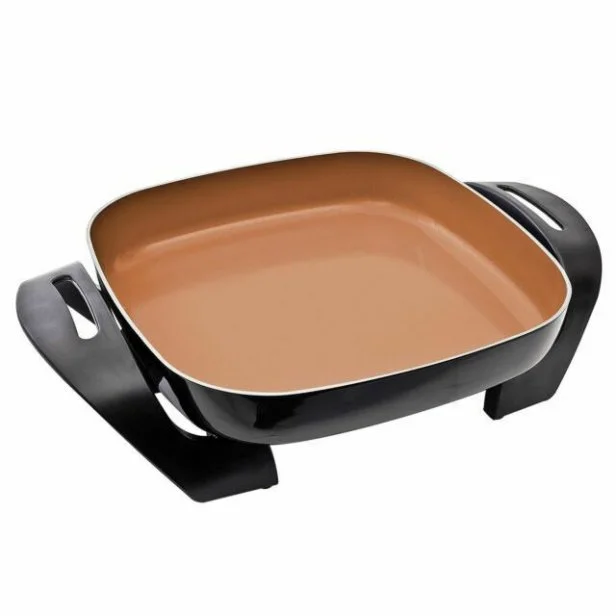
So, How Hot Does an Electric Skillet Get for Different Tasks?
That dial on your skillet isn’t just for show. Each setting is designed for specific cooking methods. Let’s translate those numbers into delicious results.
The “Warm” Setting: Your Buffet’s Best Friend (175°F – 200°F)
This low-and-slow setting is perfect for keeping food at a safe, servable temperature without overcooking it. Think of it for:
- Keeping chili or stew warm during a party.
- Holding mashed potatoes at the perfect temperature for Thanksgiving dinner.
- Serving as a makeshift proofing box for bread dough on a cold day.
Low Heat: The Simmer and Slow-Cook Zone (200°F – 275°F)
When you need gentle, sustained heat, this is your go-to range. It’s ideal for tasks where you don’t want a hard boil or aggressive sizzle. Use it for:
- Gently simmering pasta sauces or soups.
- Braising tough cuts of meat until they are fall-apart tender.
- Melting chocolate without scorching it.
- Slow-cooking pulled pork or chicken.
Medium Heat: The All-Purpose Workhorse (300°F – 375°F)
This is where your electric skillet will spend most of its time. It’s the sweet spot for a huge variety of everyday cooking tasks. It’s the answer to how hot does an electric skillet get for your daily meals.
- Frying bacon and eggs for a classic breakfast.
- Grilling sandwiches to golden-brown perfection.
- Sautéing vegetables like onions, peppers, and mushrooms.
- Cooking pancakes and French toast evenly.
High Heat: The Searing & Frying Powerhouse (400°F+)
Alright, this is the moment of truth. Can it really get hot enough? Absolutely. The high end of your skillet’s temperature range is designed for those high-heat jobs that create incredible flavor and texture.
- Searing Steaks and Chops: Cranking it to 425°F or 450°F will give you that beautiful Maillard reaction—the deep brown crust you crave.
- Crispy Fried Chicken: Maintaining a consistent 350°F-375°F is the key to perfectly fried chicken, and an electric skillet makes this a breeze.
- Stir-Frying: The large, flat surface and consistent high heat are perfect for getting that signature “wok hei” flavor at home.
According to home appliance engineer Sarah Jenkins, “The biggest mistake users make is not preheating their skillet properly. For a great sear, set your skillet to at least 425°F and wait for the indicator light to turn off before adding your oil or food. This ensures the entire surface is at the target temperature.”
What Factors Can Affect Your Skillet’s Temperature?
If you feel like your skillet isn’t performing as expected, a few things could be at play.
- Wattage: Higher wattage (typically 1500 watts or more) means the skillet can heat up faster and maintain high temperatures more effectively, especially when you add cold food to it.
- Lid Usage: Cooking with the lid on traps heat and moisture, which can increase the internal temperature and speed up cooking. For searing or frying, you’ll usually want the lid off.
- Material: The material of the cooking surface—whether it’s non-stick, ceramic, or stainless steel—can affect heat distribution and retention. We have a great [internal link: guide to electric skillet materials] that breaks this down further.
- Age and Wear: Over time, the thermostat can lose some of its accuracy, or the heating element can become less efficient. If your old reliable skillet isn’t getting as hot as it used to, it might be time for an upgrade.
|
Our Picks for the Best Electric Skillet in 2026
As an Amazon Associate, we earn from qualifying purchases.
|
||
| Num | Product | Action |
|---|---|---|
| 1 | Presto 06857 16-inch Electric Foldaway Skillet, Black |

|
| 2 | Presto 06852 16-Inch Electric Skillet with Glass Cover |
|
| 3 | Presto 07117 12\" Electric Skillet with glass cover |
|
| 4 | bella Make & Take Electric Skillet, Fits-anywhere™ kitchenware, EverGood™ Ceramic Coating, Adjustable Temperature & Dishwasher-Safe Tempered Glass Lid, Cast Aluminum Base, 1200 Watt, Surf |
|
| 5 | BLACK+DECKER Electric Skillet, Variable Temperature Control, Nonstick Cooking Surface, Dishwasher Safe, Tempered Glass Lid, 12\"x15\" |
|
| 6 | Elite Gourmet EG808 8” x 8\" Non-stick Electric Skillet, Dishwasher Safe with Tempered Glass Vented Lid, Rapid Heat Up, 600W, Black |
|
| 7 | Crux Extra Deep Nonstick Scratch Resistant Electric Skillet with Removeable Temperature Probe, 12\" x 12\", silver (14620) |
|
| 8 | Elite Gourmet EG-6203# Extra Deep 16\"x13\"x3.2\" (10.5Qt.) Scratch Resistant, Easy Pour Spout Dishwasher Safe, Non-stick Electric Skillet with Glass Vented Lid, Adjustable Temperature, Black |
|
| 9 | Chefman XL Electric Griddle with Removable Temperature Control, Immersible Flat Top Grill, Burger, Eggs, Pancake Griddle, Nonstick Extra Large Cooking Surface, Slide Out Drip Tray, 10 x 20 Inch |
|
| 10 | Elite Gourmet 12\" x 12\" x 3” Ceralast™ Ceramic Non-stick PFAS Free, Dishwasher Safe Electric Skillet, Xtra Deep Dish, Rapid Heat 1200W, Black |
|
Electric Skillet vs. Stovetop Pan: A Heat Showdown
So, how does an electric skillet’s heat compare to a traditional pan on the stove?
A cast-iron pan on a powerful gas burner can technically reach higher temperatures in its center (well over 500°F). However, that heat is often concentrated in one spot, leading to uneven cooking.
The electric skillet’s superpower isn’t its absolute maximum temperature; it’s the precision and evenness of that heat. Dialing in 350°F on an electric skillet means the entire cooking surface will hover right around 350°F. This control is invaluable for delicate tasks like frying donuts or cooking fish, where a few degrees can make all the difference.
Frequently Asked Questions (FAQ)
We’ve compiled some of the most common questions our readers ask about electric skillet heat.
Can an electric skillet get hot enough to sear a steak?
Yes, absolutely! Most quality electric skillets can reach 425°F to 450°F, which is plenty of heat to achieve a fantastic, deep-brown crust on a steak. The key is to preheat the skillet fully before adding the meat.
How accurate are the temperature dials on an electric skillet?
Generally, they are quite accurate for home-cooking purposes. There might be a slight variance of 10-25 degrees, but they are far more precise than the “low-medium-high” settings on a stovetop. For perfect results, get to know your specific model’s quirks.
Why does my electric skillet cycle on and off?
This is completely normal! It’s the thermostat doing its job. It turns the heating element on to reach the set temperature and then turns it off to prevent overheating, cycling back on as needed to maintain that temperature.
Is it safe to leave an electric skillet set to high for a long time?
While they are designed with safety features, you should never leave any cooking appliance unattended, especially on high heat. Use high heat for active cooking tasks like searing and frying, then reduce the heat for longer cooking.
What is the best temperature for deep frying in an electric skillet?
For most deep-frying recipes, like French fries or fried chicken, a consistent temperature between 350°F and 375°F (175°C – 190°C) is ideal. The electric skillet’s ability to hold this temperature steady makes it an excellent tool for frying.
The Final Word: It’s All About Control
So, let’s circle back to our main question: how hot does an electric skillet get? It gets more than hot enough for nearly any cooking task you can throw at it, from a gentle simmer to a fiery sear.
But the true value isn’t just in the heat; it’s in the control. It transforms cooking from a guessing game into a precise science. Understanding the temperature capabilities of your skillet is the first step toward unlocking its full potential and making it one of the most versatile and reliable tools in your kitchen arsenal. Now go ahead, preheat that skillet, and get cooking! We’d love to hear about your culinary creations in the comments below.