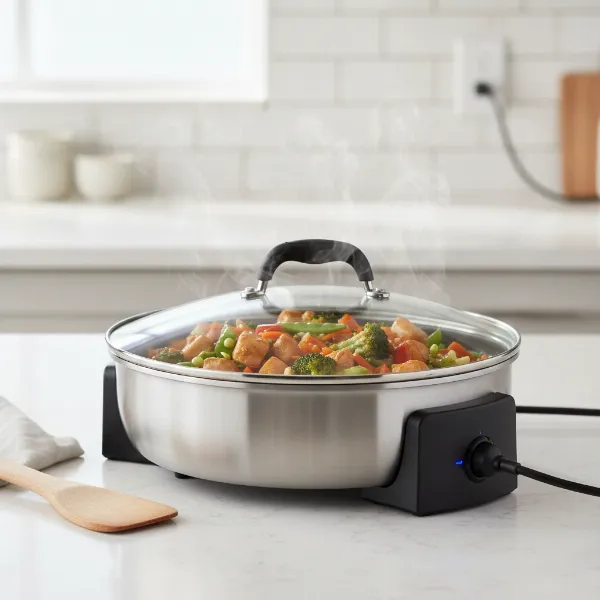
In today’s world, where every penny counts and environmental consciousness is on the rise, many home cooks are scrutinizing the energy consumption of their kitchen appliances. The electric skillet, a versatile and beloved countertop companion, often comes under this spotlight. You might wonder, “Does my electric skillet consume a significant amount of electricity?” or “Is it truly an energy-efficient choice compared to my conventional stove?” This article will address these critical questions, providing a deep dive into the power usage of electric skillets, comparing them to other cooking methods, and offering practical tips to help you cook more efficiently and save on your electricity bills.
What is an Electric Skillet?
An electric skillet, also widely known as an electric frying pan, is a self-contained cooking appliance that operates by plugging directly into an electrical outlet. Unlike a traditional frying pan, which relies on a stovetop burner for heat, an electric skillet has a built-in heating element and its own temperature control system. This design allows for consistent, even heat distribution across the cooking surface, making it ideal for a wide array of culinary tasks.
Initially gaining popularity for their convenience and portability, electric skillets have evolved from basic frying pans to sophisticated kitchen tools capable of much more. Early models were often simple and functional, designed primarily for frying. Over time, advancements in materials and technology have transformed them into multi-purpose appliances, able to roast, stew, bake, and simmer with remarkable precision. Their self-regulating temperature control, often a dial on a detachable probe, is a hallmark feature, ensuring your food cooks exactly as intended without constant monitoring.
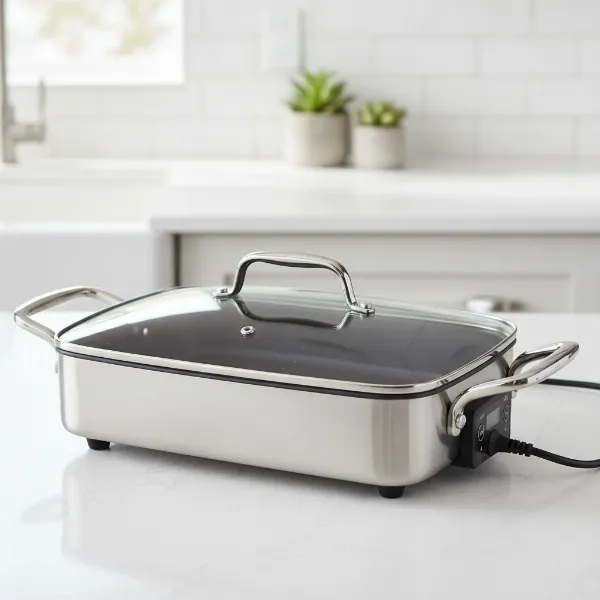 A modern electric skillet with a non-stick surface, glass lid, and temperature control probe.
Advantages and Disadvantages of Electric Skillets
Every kitchen appliance comes with its own set of pros and cons, and the electric skillet is no exception. Understanding these can help you decide if it’s the right fit for your cooking style and energy-saving goals.
Advantages
Electric skillets offer numerous benefits that make them a favorite in many households:
- Flexibility and Convenience: An electric skillet is incredibly versatile, capable of everything from searing meats and frying eggs to simmering stews and even baking small cakes. Its portability means you can cook almost anywhere there’s an outlet, freeing up stovetop space and making it perfect for potlucks, dorm rooms, or RVs.
- Precise Temperature Control: Most electric skillets feature an adjustable thermostat that allows you to set and maintain an exact cooking temperature. This precision is invaluable for delicate dishes that require consistent heat, preventing burning or undercooking, and often leading to better results than a conventional stovetop.
- Space-Saving: For those with smaller kitchens or limited counter space, an electric skillet can be a godsend. It consolidates multiple cooking functions into one compact appliance, reducing the need for numerous pots and pans or even an extra burner.
- Ease of Cleaning: Many modern electric skillets come with non-stick surfaces and are designed for easy cleaning. Some even have removable, dishwasher-safe components, simplifying the post-meal cleanup process significantly. For many, this makes the cooking experience far more enjoyable.
- Energy Efficiency: When used strategically, an electric skillet can be more energy-efficient than a large electric oven or multiple stovetop burners, especially for smaller meals. Its direct heating mechanism and enclosed cooking environment minimize heat loss, meaning less electricity is wasted.
|
Our Picks for the Best Electric skillet in 2026
As an Amazon Associate I earn from qualifying purchases.
|
||
| Num | Product | Action |
|---|---|---|
| 1 | FOHERE 16-Inch Electric Skillet with Glass Cover, 1500W Rapid Heat, Adjustable Temperature, Multi-Purpose Electric Skillet Fried Chicken, Perfect For Family Gathering Cooking |

|
| 2 | Elite Gourmet 12"x12"x2.15” Ceralast™ PFAS Free Ceramic Electric Skillet, Dishwasher Safe, Rapid Heat Up, 1200W, Dark Grey |
|
| 3 | Elite Gourmet EG-6203# Extra Deep 16"x13"x3.2" (10.5Qt.) Scratch Resistant, Easy Pour Spout Dishwasher Safe, Non-stick Electric Skillet with Glass Vented Lid, Adjustable Temperature, Black |
|
| 4 | Pioneer Woman 3.5L Electric Skillet, Linen Speckle |
|
| 5 | Nuwave Medley XL Digital Electric Skillet, Family Size Griddle w/Glass Lid, 2025 New & Improved Precision Heating, 100°-425°F, PFAS Free G11 Nonstick Ceramic Coating, Portable Hot Plate, 7qt Capacity |
|
| 6 | bella Make & Take Electric Skillet, Fits-anywhere™ kitchenware, EverGood™ Ceramic Coating, Adjustable Temperature & Dishwasher-Safe Tempered Glass Lid, Cast Aluminum Base, 1200 Watt, Oatmilk |
|
| 7 | Blue Diamond 7QT 5-in-1 Extra Large Electric Skillet, Healthy Ceramic Nonstick Interior, Non-Toxic PFAS-Free, Temperature Control, Stay Cool Handles, Easy Clean, Graphite |
|
| 8 | Elite Gourmet EG6201 Extra Deep 12"x12"x3.2" (7.5Qt.) Scratch Resistant Dishwasher Safe, Non-stick Electric Skillet with Glass Vented Lid, Adjustable Temperature, Black |
|
| 9 | Presto 06857 16-inch Electric Foldaway Skillet, Black |
|
| 10 | Elite Gourmet EG808 8” x 8" Non-stick Electric Skillet, Dishwasher Safe with Tempered Glass Vented Lid, Rapid Heat Up, 600W, Black |
|
Disadvantages
Despite their many benefits, electric skillets do have a few drawbacks:
- Limited Mobility: While portable in terms of location, an electric skillet is always tethered to a power outlet. This limits where you can use it, and you’ll need to ensure you have a suitable electrical supply wherever you plan to cook.
- Requires Electrical Power: Unlike gas ranges, an electric skillet is useless during a power outage. This dependency on electricity means it might not be the primary cooking solution for every situation or household.
- Not Suitable for All Cooking Methods: While versatile, an electric skillet isn’t ideal for every culinary technique. Deep frying, for example, might be better handled by a dedicated deep fryer, and methods requiring very high, open flames are not possible. Its heating elements are typically designed for surface-level cooking, not intense, high-temperature roasting that an oven excels at.
Common Types of Electric Skillets on the Market
Electric skillets come in various designs and configurations, each catering to different cooking needs and preferences. Understanding these types can help you choose the best model for your kitchen.
Phân loại theo hình dạng (Classification by Shape)
The shape of an electric skillet often dictates its primary use and how well it fits into your kitchen setup.
- Round Skillets: These are perhaps the most traditional form, resembling a classic frying pan. Round skillets are excellent for one-pan meals, stir-fries, and dishes that benefit from circular stirring. They are often a good choice for smaller households.
- Square Skillets: Square electric skillets offer a larger cooking surface area compared to round skillets of the same diameter, making them highly efficient for cooking larger quantities of food, such as pancakes, bacon, or multiple chicken breasts. Their corners allow for more usable space.
- Rectangular Skillets: Even larger than square models, rectangular electric skillets are perfect for preparing family-sized meals, casseroles, or roasting larger cuts of meat. They are particularly useful for entertaining or batch cooking.
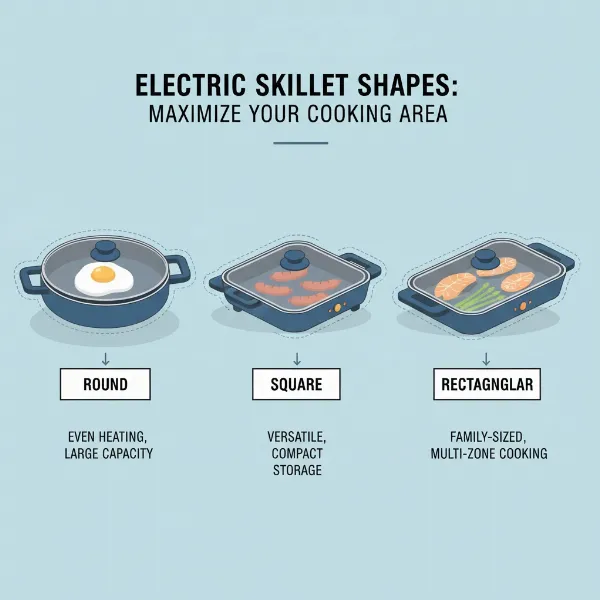 Various shapes of electric skillets including round, square, and rectangular models side-by-side.
Phân loại theo chất liệu (Classification by Material)
The material of an electric skillet’s cooking surface greatly influences its durability, heat retention, and non-stick properties.
- Non-stick Skillets: The most common type, non-stick electric skillets feature a special coating (often ceramic or PTFE-based) that prevents food from sticking, making cooking and cleanup effortless. They typically require less oil or fat for cooking, promoting healthier meals.
- Cast Iron Skillets: While less common for fully electric models, some electric skillets incorporate a cast iron cooking surface. Known for their exceptional heat retention and even heating, cast iron skillets are durable and can achieve a superior sear. They often require seasoning and more careful maintenance.
- Stainless Steel Skillets: Stainless steel electric skillets are prized for their durability, corrosion resistance, and sleek appearance. They are generally non-reactive with acidic foods and offer good heat distribution, although they may not be as naturally non-stick as coated alternatives.
Phân loại theo tính năng (Classification by Features)
Modern electric skillets often come with a range of features designed to enhance convenience and cooking performance.
- Skillets with Glass Lids: A transparent glass lid allows you to monitor your food as it cooks without lifting the lid and losing heat, contributing to more consistent results and greater energy efficiency.
- Skillets with Detachable Temperature Controls: Many electric skillets feature a control probe that can be removed. This makes the skillet immersion-safe for washing, greatly simplifying the cleaning process.
- Skillets with Timer Functions: Some advanced models include integrated timers, allowing for precise cooking durations. This feature is particularly useful for slow cooking or for recipes that require specific timing, preventing overcooking and offering added convenience.
Energy Consumption: Do Electric Skillets Use a Lot of Power?
This is the question on many people’s minds, and the simple answer is: it depends, but often less than you might think for many common cooking tasks. Electric skillets are generally designed to be quite efficient, especially when compared to larger kitchen appliances.
The wattage of an electric skillet typically ranges from 1,000 to 1,500 watts, though some high-end or larger models can draw up to 1,800 watts. This means that for every hour of use, a standard electric skillet consumes approximately 1 to 1.5 kilowatt-hours (kWh) of electricity. To put this into perspective, consider that a typical electric oven can demand up to 5,000 watts, making an electric skillet a significantly more energy-efficient option for many everyday meals that don’t require the full capacity of an oven.
To calculate the cost of using your electric skillet, you can use a simple formula:
(Appliance Wattage / 1,000) * Hours of Use * Your Electricity Rate (per kWh).
For instance, if you use a 1,200-watt electric skillet for one hour and your electricity rate is $0.15 per kWh, the cost for that hour of cooking would be $0.18. This illustrates that for many quick meals, the cost is relatively low.
When comparing to gas stoves, electric skillets offer a more efficient direct transfer of heat to the cooking surface. While gas stoves directly burn fuel, a significant portion of that heat escapes into the surrounding air, with efficiency often around 40%. Electric skillets, by contrast, are highly efficient at heating the pan itself, minimizing wasted energy. This localized and controlled heating means that for many tasks, you’ll use less energy overall with an electric skillet than with a traditional gas burner or a full electric range element.
Several factors directly influence how much energy your electric skillet consumes:
- Cooking Temperature: Higher temperatures demand more energy. Opting for lower settings when appropriate can significantly reduce consumption.
- Cooking Time: Longer cooking durations naturally require more electricity. Shorter cooking times, achieved through proper technique and ingredients, are key to energy saving.
- Preheating: While often quick, preheating still adds to total energy use. For some dishes, starting with a cold skillet can be effective, minimizing this initial energy draw.
- Use of a Lid: Covering your electric skillet with a lid helps trap heat and moisture, allowing food to cook faster and at lower temperatures. This simple habit drastically reduces the energy needed.
- Cookware Type and Quantity: Using the correct size of skillet for the amount of food, and ensuring good contact with the heating surface, improves efficiency. Cookware materials that retain heat well also play a role.
“Smart use of your electric skillet can genuinely transform your cooking habits and even contribute to a greener kitchen.”
Comparing Popular Electric Skillet Brands
When it comes to electric skillets, several brands have established themselves in the market, each offering different combinations of features, quality, and price points. Here’s a general comparison to help you navigate the options:
| Brand | Typical Price Range | Key Features | Quality/Durability | Target User |
|---|---|---|---|---|
| Zojirushi | High | Advanced temperature control, non-stick, large capacity, often multi-functional with steaming plates | Excellent | Serious home cooks, those seeking premium features |
| Presto | Mid | Versatile, large cooking surfaces, easy to clean, many models with pouring spouts | Good | Everyday cooking, families, budget-conscious |
| Proctor Silex | Low | Basic functionality, affordability, compact design | Standard | Students, small households, occasional users |
| Cuisinart | Mid to High | Durable construction, precise temperature, sometimes with integrated probes or lids | Very Good | Those valuing reliability and design |
| Hamilton Beach | Low to Mid | Wide range of sizes, non-stick, often with cool-touch handles | Good | General household use, value for money |
This table provides a snapshot, but individual models within each brand can vary. When making a choice, consider specific wattage, material, and user reviews for the particular model you are interested in.
Guide to Choosing the Right Electric Skillet (Buying Guide)
Selecting the perfect electric skillet involves more than just picking the first one you see. By considering a few key factors, you can ensure your new appliance meets your culinary needs and lifestyle.
Determine Your Usage Needs
Before anything else, think about how you’ll primarily use the skillet. Are you cooking for one or a large family? Will it be a daily workhorse or an occasional helper? Knowing this will guide your choices on size, features, and wattage. If you often prepare large meals, a larger capacity and higher wattage model will be more suitable. For smaller, quick dishes, a compact skillet might be ideal.
Consider Size and Capacity
Electric skillets come in various sizes, typically ranging from 10 to 16 inches in diameter or side length. A 10-inch skillet is often sufficient for one or two people, while a 12 to 16-inch model is better for families or when cooking larger batches. Also, consider the depth of the pan, as deeper skillets are better for stews, braises, and roasts.
Choose the Right Material
The cooking surface material impacts performance and maintenance.
- Non-stick coatings (like ceramic or PTFE-based) are popular for easy food release and cleanup. Ensure it’s a durable, PFOA-free non-stick if that’s a concern for you.
- Stainless steel offers durability and is non-reactive, though it may require more oil to prevent sticking.
- Cast iron (if available in an electric model) provides excellent heat retention and even cooking but can be heavier and require specific care.
Check Essential Features
Look for features that enhance usability and cooking results.
- Accurate temperature control: A precise thermostat is crucial for consistent cooking.
- Detachable probe: This allows for easier cleaning of the skillet body.
- Vented glass lid: Helps you monitor cooking without losing heat and prevents condensation buildup.
- Cool-touch handles: Essential for safety and portability.
- Pouring spout: Convenient for draining liquids or pouring sauces.
Research Brands and Reviews
Reputable brands often signify better quality, durability, and customer support. Look for established names and read user reviews for specific models. Pay attention to comments about heating consistency, ease of cleaning, and long-term performance. Online reviews can offer valuable insights into real-world usage.
Compare Prices
Electric skillets are available across a wide price spectrum. While higher prices often correlate with more features and premium materials, excellent value can be found in mid-range options. Set a budget, but be willing to invest a little more for features or durability that genuinely enhance your cooking experience and energy efficiency. Remember, a slightly more expensive, durable, and efficient model might save you money in the long run.
Tips for Using and Maintaining Your Electric Skillet Efficiently
Maximizing the performance and lifespan of your electric skillet, while also keeping energy consumption in check, comes down to smart usage and diligent care. Here’s how you can make the most of your appliance.
Usage Tips
Optimizing how you use your electric skillet can significantly impact both your cooking results and your energy bill.
- First-Time Use: Before its inaugural culinary adventure, always refer to your specific model’s manual. Generally, this involves washing the skillet thoroughly, drying it, and possibly seasoning the surface, especially if it’s cast iron or a new non-stick type, to prepare it for optimal performance.
- Adjusting Temperature Appropriately: Resist the urge to crank the heat to the maximum for every dish. Use the lowest effective temperature setting required for your recipe. The precise temperature control of an electric skillet is one of its greatest assets; leverage it to simmer gently, sauté at a medium heat, or sear quickly without excess energy. For instance, cooking scrambled eggs doesn’t need the same high heat as searing a steak.
- Using Appropriate Cooking Utensils: Always use utensils made from wood, silicone, or heat-resistant plastic. Metal utensils can scratch non-stick surfaces, compromising their effectiveness and potentially shortening the skillet’s life.
- Embrace the Lid: This is a simple yet powerful energy-saving tip. Covering your electric skillet with its lid traps heat and moisture, allowing food to cook faster and more evenly. This means you can often cook at a lower temperature or for a shorter duration, directly reducing electricity usage.
- Minimize Preheating: While some recipes call for preheating, many dishes can start in a cold or warm skillet. Avoid lengthy preheating times unless absolutely necessary, as this contributes to overall energy consumption.
- Cook Smart, Cook More: When possible, cook larger quantities or multiple items at once. Using the skillet for one extended session to prepare several meals or components can be more energy-efficient than using it for several short periods throughout the day.
Cleaning and Maintenance
Proper cleaning and storage are vital for maintaining your electric skillet’s condition and ensuring its longevity.
- Clean After Each Use: Allow the skillet to cool completely before cleaning. For non-stick surfaces, warm soapy water and a soft sponge are usually sufficient. Avoid abrasive cleaners or scouring pads, which can damage the surface.
- Proper Storage: Once clean and thoroughly dry, store your electric skillet in a place where it won’t be scratched or damaged. If stacking other items on top, place a soft cloth or paper towel over the cooking surface to protect it. Ensure the detachable temperature probe is also clean and stored safely.
By adopting these simple practices, you’ll not only enjoy superior cooking results but also contribute to a more energy-efficient kitchen, extending the life of your valuable electric skillet.
Conclusion
Electric skillets are undeniably versatile and convenient additions to any kitchen. Far from being significant energy hogs, they offer a surprisingly efficient cooking solution for a multitude of dishes, often consuming less power than larger appliances like conventional ovens or multiple stovetop burners. Their precise temperature control and direct heating mechanism mean that, when used thoughtfully, they can be a smart choice for managing your household’s energy consumption. By selecting the right model for your needs and adopting energy-saving cooking habits, you can harness the full potential of your electric skillet, enjoying delicious meals without worrying about excessive electricity bills.
What culinary creations will you bring to life with your efficiently utilized electric skillet?
Frequently Asked Questions
Are electric skillets more energy-efficient than conventional stovetops?
For many cooking tasks, especially smaller meals, electric skillets can be more energy-efficient. They offer direct, controlled heating and minimal heat loss compared to traditional stovetop burners, which can waste a significant amount of heat into the surrounding air.
How much electricity does a typical electric skillet use per hour?
On average, an electric skillet uses between 1,000 to 1,500 watts, translating to approximately 1 to 1.5 kilowatt-hours (kWh) for every hour of active use. This power consumption can vary based on the skillet’s size, model, and the cooking temperature selected.
Can using an electric skillet really save money on my electricity bill?
Yes, it can. By opting for an Electric Skillet for smaller meals instead of a large electric oven (which can use up to 5,000 watts), you can reduce your overall electricity consumption. Consistent use with efficient cooking practices will lead to noticeable savings.
What factors impact an electric skillet’s energy consumption the most?
The main factors are the cooking temperature you set, the duration of cooking, whether you use a lid to trap heat, and the size of the skillet relative to the food. Using lower temperatures and lids, and minimizing cooking time, significantly reduces power usage.
Is a higher wattage electric skillet less energy-efficient?
Not necessarily. While a higher wattage skillet draws more power, it also heats up faster and maintains higher temperatures more effectively. This can mean shorter cooking times, potentially offsetting the higher wattage by reducing the total operational time, thus maintaining efficiency for demanding tasks.