Choosing the right electric skillet can dramatically elevate your cooking experience, turning everyday meals into culinary triumphs. As a seasoned technician with over a decade dedicated to electric skillets, I’ve seen how the very material of a pan can influence everything from a perfectly seared steak to fluffy pancakes. When it comes to heat retention, two materials often stand out: cast iron and aluminum. Understanding their unique thermal properties is key to unlocking your electric skillet’s full potential and achieving consistent, delicious results every time.
What is an Electric Skillet?
An electric skillet is a versatile, self-contained countertop appliance designed to provide precise and consistent heat for a wide range of cooking tasks. Unlike traditional stovetop pans, electric skillets feature an integrated heating element and a thermostat, allowing you to set and maintain an exact temperature. This built-in control eliminates the guesswork often associated with stovetop burners, ensuring even cooking and reducing the likelihood of hot spots or fluctuating temperatures. From frying and sautéing to stewing and even baking, an electric skillet offers unparalleled convenience and reliability in the kitchen.
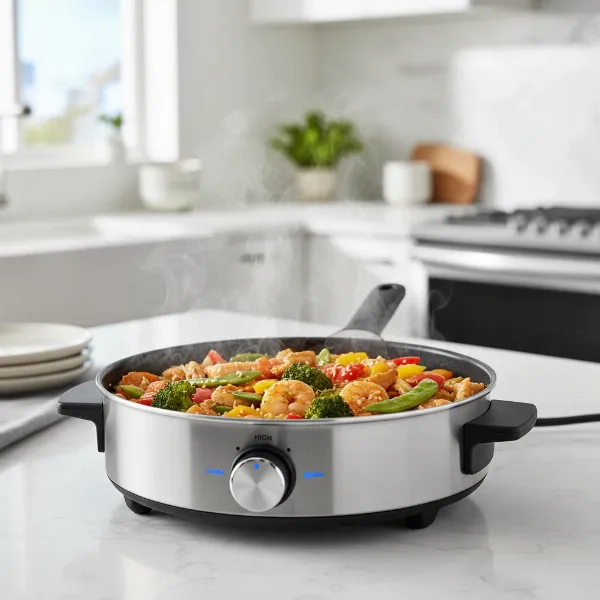 A modern electric skillet actively cooking a stir-fry on a kitchen countertop
Understanding Heat Dynamics in Cookware
To truly appreciate the differences between cast iron and aluminum electric skillets, it’s essential to grasp two fundamental concepts: heat conductivity and heat retention. Heat conductivity refers to how quickly and efficiently a material transfers heat from the source across its surface. A highly conductive material will heat up rapidly and spread warmth evenly. On the other hand, heat retention describes a material’s ability to store heat and maintain a consistent temperature over time, even when ingredients are added or the heat source is adjusted. A material with excellent heat retention will resist temperature drops, ensuring a steady cooking environment. These two properties play critical roles in how your electric skillet performs, influencing everything from searing to slow simmering.
Cast Iron Electric Skillets: The Champion of Sustained Heat
Cast iron electric skillets embody a rich culinary heritage, known for their robust construction and impressive thermal capabilities. They are a favored choice for cooks who prioritize stability and deep, consistent heat.
Advantages of Cast Iron Electric Skillets
|
Our Picks for the Best Electric skillet in 2026
As an Amazon Associate I earn from qualifying purchases.
|
||
| Num | Product | Action |
|---|---|---|
| 1 | Presto 06857 16-inch Electric Foldaway Skillet, Black |

|
| 2 | Nuwave Medley XL Digital Electric Skillet, Family Size Griddle w/Glass Lid, 2025 New & Improved Precision Heating, 100°-425°F, PFAS Free G11 Nonstick Ceramic Coating, Portable Hot Plate, 7qt Capacity |
|
| 3 | FOHERE 16-Inch Electric Skillet with Glass Cover, 1500W Rapid Heat, Adjustable Temperature, Multi-Purpose Electric Skillet Fried Chicken, Perfect For Family Gathering Cooking |
|
| 4 | Blue Diamond 7QT 5-in-1 Extra Large Electric Skillet, Healthy Ceramic Nonstick Interior, Non-Toxic PFAS-Free, Temperature Control, Stay Cool Handles, Easy Clean, Graphite |
|
| 5 | Elite Gourmet EG808 8” x 8" Non-stick Electric Skillet, Dishwasher Safe with Tempered Glass Vented Lid, Rapid Heat Up, 600W, Black |
|
| 6 | Elite Gourmet EG-6203# Extra Deep 16"x13"x3.2" (10.5Qt.) Scratch Resistant, Easy Pour Spout Dishwasher Safe, Non-stick Electric Skillet with Glass Vented Lid, Adjustable Temperature, Black |
|
| 7 | bella Make & Take Electric Skillet, Fits-anywhere™ kitchenware, EverGood™ Ceramic Coating, Adjustable Temperature & Dishwasher-Safe Tempered Glass Lid, Cast Aluminum Base, 1200 Watt, Oatmilk |
|
| 8 | Elite Gourmet 12"x12"x2.15” Ceralast™ PFAS Free Ceramic Electric Skillet, Dishwasher Safe, Rapid Heat Up, 1200W, Dark Grey |
|
| 9 | Elite Gourmet EG6201 Extra Deep 12"x12"x3.2" (7.5Qt.) Scratch Resistant Dishwasher Safe, Non-stick Electric Skillet with Glass Vented Lid, Adjustable Temperature, Black |
|
| 10 | Pioneer Woman 3.5L Electric Skillet, Linen Speckle |
|
Cast iron truly shines in its ability to hold heat. Once a cast iron electric skillet reaches its desired temperature, it maintains that heat exceptionally well, making it ideal for tasks that demand steady warmth. This superior heat retention means that when you add colder ingredients, the pan’s temperature won’t drop significantly, allowing for a consistent cooking environment. This characteristic makes cast iron electric skillets perfect for achieving a perfect, crispy sear on meats, deep frying without drastic temperature fluctuations, and long, slow-cooking stews that require sustained, gentle heat. Beyond its thermal prowess, cast iron is incredibly durable and can last for generations with proper care, becoming a cherished kitchen heirloom.
Disadvantages of Cast Iron Electric Skillets
Despite its strengths, cast iron has certain drawbacks. It is a poor heat conductor, meaning it takes a considerable amount of time to heat up initially and to cool down once cooking is complete. This slower conductivity can lead to hot spots if the pan isn’t given ample time to preheat thoroughly, or if the heating element isn’t designed to distribute heat broadly across the heavy material. Another notable characteristic is its substantial weight, which can make it cumbersome to maneuver and clean. Furthermore, cast iron requires regular seasoning to maintain its non-stick properties and prevent rust, adding a layer of maintenance that some cooks might find demanding.
Aluminum Electric Skillets: Agile Heating for Culinary Precision
Aluminum electric skillets are a modern staple, prized for their responsiveness and user-friendly attributes. They offer a different set of advantages, particularly for quick and dynamic cooking styles.
Advantages of Aluminum Electric Skillets
Aluminum is an outstanding heat conductor, meaning aluminum electric skillets heat up very quickly and distribute heat rapidly and evenly across the cooking surface. This quick response time is invaluable for recipes that require immediate temperature adjustments, such as sautéing vegetables or preparing delicate sauces. The even heat distribution helps prevent localized burning, ensuring that food cooks uniformly. Moreover, aluminum is significantly lighter than cast iron, making these skillets much easier to lift, move, and clean. Many aluminum electric skillets also come with non-stick coatings, further enhancing their ease of use and simplifying cleanup.
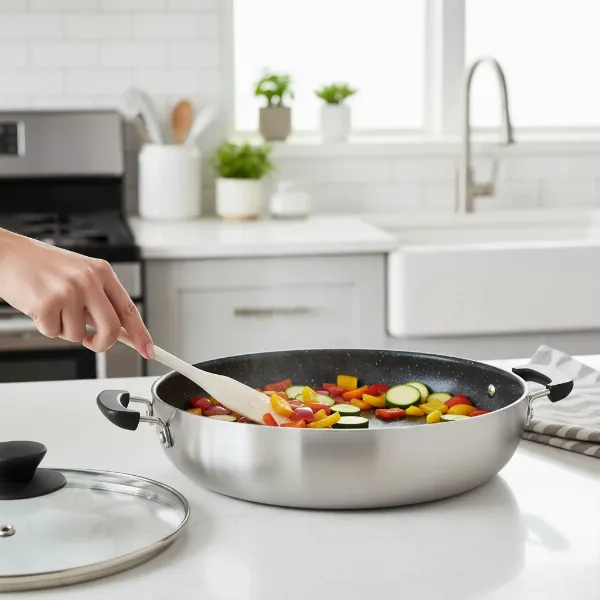 A lightweight, non-stick aluminum electric skillet sautéing vegetables quickly
Disadvantages of Aluminum Electric Skillets
While aluminum excels at heat distribution, its heat retention is generally lower compared to cast iron. This means that adding a large quantity of cold food can cause a more noticeable drop in temperature, potentially impacting searing or browning quality. However, it’s worth noting that thicker, high-quality cast aluminum can offer heat retention properties comparable to cast iron, challenging the common perception often derived from thinner aluminum cookware. Another consideration is that bare aluminum can react with acidic foods, potentially imparting a metallic taste or causing discoloration, which is why most aluminum electric skillets feature protective coatings. Thinner aluminum models can also be prone to warping over time, affecting their longevity and even heating capabilities.
Electric Skillets: A Material-Agnostic Approach to Temperature Control
One of the greatest advantages of an electric skillet, regardless of whether it’s made from cast iron or aluminum, is its built-in temperature control system. This integrated thermostat and heating element work in tandem to maintain a consistent cooking temperature, actively mitigating some of the inherent thermal weaknesses of the pan material. For instance, the precise temperature regulation in an electric skillet can help compensate for cast iron’s slower heat conductivity, ensuring the entire surface eventually reaches and holds the set temperature more uniformly than it might on a variable stovetop burner. Similarly, for aluminum skillets, the continuous, controlled heat input from the electric element helps to stabilize temperatures, minimizing the drops that might occur in a non-electric aluminum pan on a traditional burner. This consistent heating capability is the hallmark of electric skillets, providing a reliable cooking surface that often outperforms conventional stovetop pans in terms of evenness and control.
Choosing Your Ideal Electric Skillet: Cast Iron or Aluminum?
The decision between a cast iron and an aluminum electric skillet ultimately comes down to your primary cooking needs and personal preferences. Both materials offer distinct benefits, and understanding these can guide you to the perfect choice for your kitchen.
Your Cooking Style Dictates the Choice
If your culinary pursuits often involve high-heat searing, deep frying, or extended slow-cooking where a stable, unyielding temperature is paramount, a cast iron electric skillet would be an excellent choice. Its ability to retain a consistent, deep heat is unmatched for developing rich crusts and tender interiors. Conversely, if you frequently prepare dishes that demand quick heating, rapid temperature adjustments, or delicate sautéing, an aluminum electric skillet with its superior heat conductivity and responsiveness might be more suitable. It excels at tasks where agility and even spread are more critical than prolonged, intense heat retention.
Considering Weight and Care
Beyond cooking performance, consider the practical aspects of owning each type of skillet. A cast iron model will be significantly heavier and require more dedicated maintenance, including regular seasoning, to prevent rust and ensure a naturally non-stick surface. If ease of handling, quick cleanup, and minimal maintenance are high priorities, a lightweight, non-stick aluminum electric skillet will likely offer a more convenient experience. Evaluate how often you plan to use the skillet, your comfort with its weight, and your willingness to commit to its upkeep.
Maximizing Performance: Tips for Your Electric Skillet
Regardless of whether you choose cast iron or aluminum, a few key practices can help you get the most out of your electric skillet and ensure optimal heat performance.
Optimal Preheating and Cooking Practices
Proper preheating is crucial for both materials, especially for cast iron, which benefits from a slower, more gradual heat-up to ensure even temperature across its surface. Always allow your electric skillet to fully reach the set temperature before adding food. You can test this by adding a small drop of water; it should sizzle gently. To prevent significant temperature drops, especially in aluminum skillets, avoid overcrowding the pan. Cooking in smaller batches allows the skillet to maintain its heat more effectively, leading to better browning and more evenly cooked food. Use cooking utensils appropriate for your skillet’s surface to prevent scratches, particularly if it has a non-stick coating.
Post-Cooking Care and Longevity
After cooking, allow your skillet to cool down sufficiently before cleaning. For non-stick aluminum skillets, gentle washing with soap and water is typically sufficient. For cast iron, avoid harsh soaps, and ensure it is thoroughly dried immediately after washing to prevent rust, followed by a light re-seasoning with oil. Detachable temperature probes and power cords on many electric skillets make both cleaning and storage significantly easier. Consistent care will not only extend the lifespan of your electric skillet but also ensure its continued performance in heat retention and distribution.
Conclusion
Choosing between a cast iron and an aluminum electric skillet involves weighing the unique heat retention and distribution properties of each material against your personal cooking style and practical needs. Cast iron offers unparalleled heat retention for deep, sustained cooking and perfect searing, while aluminum provides rapid, even heating and lightweight convenience. The built-in thermostat of an electric skillet inherently offers a level of consistent temperature control that helps both materials shine in their respective roles. By considering what you cook most often, your preference for weight, and your commitment to maintenance, you can select the electric skillet that will become your trusted partner in creating countless delicious meals. Which material resonates most with your culinary aspirations?
Frequently Asked Questions
Which material holds heat longer, cast iron or aluminum?
Cast iron generally holds heat longer than aluminum. Once heated, cast iron retains its temperature remarkably well, making it ideal for dishes requiring sustained, consistent heat. While aluminum heats up faster due to its superior conductivity, it tends to lose heat more quickly when cold ingredients are introduced.
Does a heavier electric skillet retain heat better?
Yes, typically a heavier electric skillet, especially one made from cast iron, will retain heat better. The greater mass and density of the material allow it to store more thermal energy, which helps maintain a stable cooking temperature even when food is added to the pan.
Are aluminum electric skillets prone to hot spots?
Aluminum is an excellent heat conductor, meaning it distributes heat quickly and evenly, so it is generally less prone to hot spots than materials like cast iron, particularly on a consistent electric heating element. However, thinner aluminum pans might show more temperature fluctuations and hot spots compared to thicker, high-quality cast aluminum.
Can I deep fry in an aluminum electric skillet?
Yes, you can deep fry in an aluminum electric skillet. Its efficient heat distribution helps the oil heat up quickly and relatively evenly. However, because aluminum’s heat retention isn’t as high as cast iron, you might experience slight temperature drops when adding larger batches of food. The consistent temperature control of an Electric Skillet helps manage this.
How does the electric element affect heat retention in a skillet?
The electric element significantly enhances heat management in any skillet material. Its built-in thermostat continuously monitors and adjusts heat, ensuring a consistent temperature is maintained across the cooking surface. This active regulation helps to mitigate the natural heat retention differences between materials, providing a more stable cooking environment than a non-electric pan on a traditional stovetop.