Let’s be honest, we’ve all been there. You’re standing over a stovetop, frantically fiddling with the dial. One second your chicken is barely sizzling, the next it’s threatening to set off the smoke alarm. This constant battle with hot spots and fluctuating temperatures is a common kitchen frustration. It’s the exact reason many home cooks wonder about alternatives, asking, Can You Control The Heat Precisely with an electric skillet?
The short answer is a resounding yes. In fact, precise temperature control is the electric skillet’s superpower. It’s the very feature that elevates it from a simple frying pan to a versatile, indispensable kitchen workhorse. But how it achieves this is where the real magic happens. Forget the guesswork of a gas flame or an electric coil stovetop; we’re about to dive into the world of thermostats, heating elements, and perfectly consistent cooking.
The Secret to Precision: How an Electric Skillet Works
To understand its incredible control, you have to look under the hood. Unlike a traditional pan that relies on an external, often inconsistent heat source, an electric skillet has its entire heating system built-in.
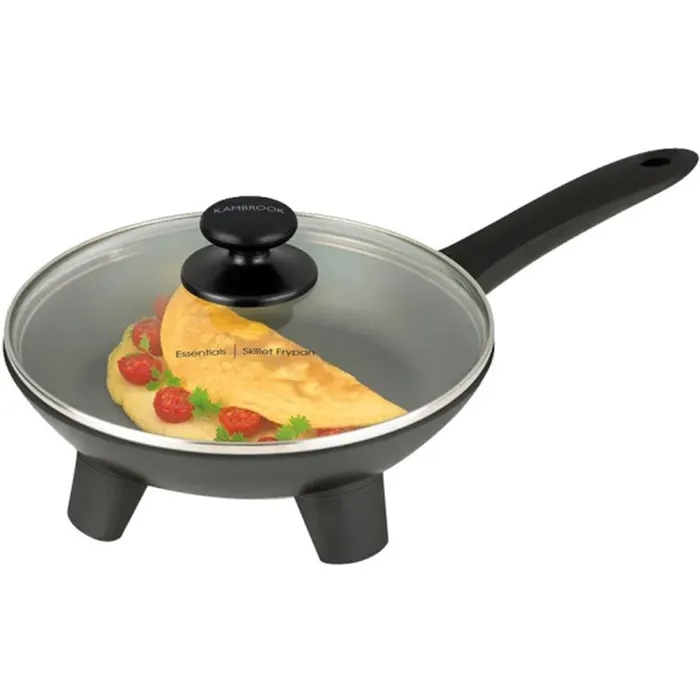
The Brains of the Operation: The Temperature Probe
The heart of the system is the removable temperature probe, which also houses the power cord. This isn’t just a plug; it’s a sophisticated thermostat. Here’s the breakdown:
- You set the dial: You choose your desired temperature, say 350°F for frying chicken.
- The probe measures: A sensor inside the probe constantly measures the actual temperature of the skillet’s cooking surface.
- It communicates: The probe tells the heating element to either turn on to generate more heat or cycle off when the target temperature is reached.
This constant feedback loop is what makes all the difference. The skillet isn’t just blasting heat continuously; it’s intelligently cycling on and off to maintain a specific temperature, often within a very narrow range. This eliminates the wild temperature swings that plague stovetop cooking.
According to appliance engineer Sarah Jenkins, “The modern electric skillet thermostat is a marvel of simplicity and effectiveness. It works on the same principle as your home’s central heating system, constantly monitoring and adjusting to create a stable environment. For cooking, this stability means predictable, repeatable results every single time.”
The Unsung Hero: The Embedded Heating Element
Woven into the base of the skillet is a heating element. In quality models, this element is designed to cover the majority of the base, which is key to eliminating another common kitchen villain: the hot spot. Because the heat is generated across a wide surface area and managed by the thermostat, the entire cooking surface heats up and stays remarkably even.
This means you can lay down five pancakes and trust that the one in the middle will cook at the same rate as the ones on the edges. That’s a level of consistency that even some expensive stovetop pans struggle to achieve.
Mastering Your Electric Skillet: A Step-by-Step Guide
So, now that you know how it works, how do you leverage this power? Gaining precise heat control is easy when you follow a few simple steps.
- Always Preheat: This is non-negotiable. Plug in the probe, set your desired temperature, and wait for the indicator light to turn off. This signals that the entire surface has reached the target temperature. Putting food in a cold skillet is a recipe for soggy, unevenly cooked results.
- Trust the Dial, Not Your Eyes: Your electric skillet’s temperature settings are surprisingly accurate. If a recipe calls for 375°F, set it to 375°F. There’s no need to guess if “medium-high” on your stove is the right temperature today.
- Give It Space: Don’t overcrowd the pan. While the heat is even, cramming too much food in at once will cause the overall temperature to drop significantly. The skillet will work to bring it back up, but your food may steam instead of sear. Cook in batches if necessary for the best results.
- Use the Lid Strategically: The lid is essential for trapping heat and moisture, making the skillet perfect for braising, simmering, and even “baking.” Using the lid helps the skillet maintain its temperature more efficiently, meaning the heating element cycles on less frequently.
|
Our Picks for the Best Electric Skillet in 2026
As an Amazon Associate, we earn from qualifying purchases.
|
||
| Num | Product | Action |
|---|---|---|
| 1 | Crux Extra Deep Nonstick Scratch Resistant Electric Skillet with Removeable Temperature Probe, 12\" x 12\", silver (14620) |

|
| 2 | bella Make & Take Electric Skillet, Fits-anywhere™ kitchenware, EverGood™ Ceramic Coating, Adjustable Temperature & Dishwasher-Safe Tempered Glass Lid, Cast Aluminum Base, 1200 Watt, Surf |
|
| 3 | Elite Gourmet EG808 8” x 8\" Non-stick Electric Skillet, Dishwasher Safe with Tempered Glass Vented Lid, Rapid Heat Up, 600W, Black |
|
| 4 | BLACK+DECKER Electric Skillet, Variable Temperature Control, Nonstick Cooking Surface, Dishwasher Safe, Tempered Glass Lid, 12\"x15\" |
|
| 5 | Presto 07117 12\" Electric Skillet with glass cover |
|
| 6 | Elite Gourmet EG-6203# Extra Deep 16\"x13\"x3.2\" (10.5Qt.) Scratch Resistant, Easy Pour Spout Dishwasher Safe, Non-stick Electric Skillet with Glass Vented Lid, Adjustable Temperature, Black |
|
| 7 | Presto 06852 16-Inch Electric Skillet with Glass Cover |
|
| 8 | Presto 06857 16-inch Electric Foldaway Skillet, Black |
|
| 9 | Elite Gourmet 12\" x 12\" x 3” Ceralast™ Ceramic Non-stick PFAS Free, Dishwasher Safe Electric Skillet, Xtra Deep Dish, Rapid Heat 1200W, Black |
|
| 10 | Chefman XL Electric Griddle with Removable Temperature Control, Immersible Flat Top Grill, Burger, Eggs, Pancake Griddle, Nonstick Extra Large Cooking Surface, Slide Out Drip Tray, 10 x 20 Inch |
|
Why This Level of Heat Control Matters
You might be thinking, “Okay, it’s precise, but why is that such a big deal?” The benefits of being able to control the heat precisely are game-changers for everyday cooking.
- Perfect Browning and Searing: Achieving that beautiful, golden-brown crust on a steak or piece of fish requires consistent, high heat. An electric skillet can hold a steady 400-425°F without fluctuation, giving you a perfect sear without burning.
- Flawless Deep-Frying: Deep-frying is all about temperature. Too low, and your food gets greasy. Too high, and it burns on the outside while staying raw inside. An electric skillet acts like a dedicated deep fryer, holding the oil at the perfect 350-375°F for crispy, delicious results.
- Gentle Simmering: Holding a delicate sauce at a bare simmer on a stovetop can be a nightmare. With an electric skillet, you can set it to a low temperature (around 200-225°F) and trust it to hold your chili, stew, or pasta sauce at a gentle bubble for hours.
- Use it as a Buffet Server: The “Warm” setting (typically 150-175°F) is perfect for keeping food at a safe and pleasant temperature for serving, making it an essential tool for parties and family gatherings.
What Can You Cook with Such Precise Heat?
The better question is, what can’t you cook? The ability to dial in a specific temperature opens up a world of culinary possibilities far beyond simple frying.
Breakfast Favorites:
- Pancakes and French Toast: Set to 375°F for perfectly golden, evenly cooked results every single time.
- Bacon and Sausage: A steady 325°F renders the fat beautifully for crispy bacon without the splattering mess of a stovetop.
- Scrambled Eggs: A gentle 250°F allows you to cook them low and slow for a creamy, custardy texture.
Dinners and Main Courses:
- Pan-Seared Salmon: Get that crispy skin with a steady 400°F heat.
- Braised Short Ribs: Sear at 425°F, then add your liquid, reduce heat to 225°F, cover, and let it simmer for hours.
- One-Pan Pasta Dishes: Sauté your aromatics, add pasta and liquid, and simmer until cooked through. Check out [our favorite one-pan electric skillet meals] for inspiration.
Creative and Unexpected Uses:
- Shallow “Baking”: You can bake cornbread, biscuits, and even some cakes right in the skillet. The even, contained heat works like a mini oven.
- Pizza: Place your dough in the preheated skillet to get a crispy crust, then add toppings, cover with the lid, and let the cheese melt.
- As a Slow Cooker: Many slow cooker recipes can be adapted. Just use the lowest temperature settings (200-250°F) for several hours.
Frequently Asked Questions (FAQ)
Q1: My electric skillet seems to have hot spots. Can you control the heat precisely in older models?
A: While modern electric skillets are exceptionally good at even heating, some older or lower-quality models might have minor variations. The key is thorough preheating. Give it a good 5-10 minutes to let the heat fully distribute across the surface before adding your food.
Q2: What is the best temperature for frying chicken in an electric skillet?
A: For perfectly crispy and juicy fried chicken, the ideal temperature is between 350°F and 365°F. The skillet’s ability to maintain this temperature is crucial for preventing greasy or burnt results.
Q3: Can I use my electric skillet without the temperature probe?
A: No, the temperature probe is essential. It acts as both the power cord and the thermostat that regulates the heat. The skillet will not function without it properly and securely plugged in.
Q4: How do I know if my electric skillet has reached the right temperature?
A: Almost all electric skillets have an indicator light on the temperature probe. When you first plug it in and set the temperature, this light will turn on. Once the skillet has reached the selected temperature, the light will turn off. It will then cycle on and off as the skillet works to maintain that temperature.
Q5: Are the temperature markings on the dial accurate?
A: For most reputable brands, yes, the markings are quite accurate. There might be a slight variance of a few degrees, but they are far more reliable than the vague “low, medium, high” settings on a stovetop. For tasks requiring extreme precision, you can always double-check with an infrared thermometer.
The Final Verdict
So, let’s circle back to our original question: can you control the heat precisely in an electric skillet? The answer is an unequivocal yes. This single appliance offers a level of thermal stability and user control that can truly transform your cooking. It takes the guesswork out of the equation, empowering you to achieve consistent, delicious results whether you’re searing a steak, simmering a stew, or frying up a batch of doughnuts. By understanding and trusting its simple yet brilliant technology, you unlock a tool that is not just convenient, but genuinely superior for a huge range of culinary tasks.