Have you ever considered upgrading your kitchen appliances to embrace healthier cooking without compromising convenience? For many home chefs, the desire to avoid non-stick coatings like Teflon is a top priority. While traditional electric skillets often feature these surfaces, a growing number of culinary enthusiasts are discovering the unparalleled benefits of stainless steel electric skillets. This article will guide you through the world of genuine stainless steel electric skillets, exploring their unique advantages, helping you choose the perfect model, and offering expert tips for their use and care, ensuring a healthier and more durable cooking experience.
What is an Electric Skillet?
An electric skillet, also commonly known as an electric frying pan, is a versatile countertop appliance designed to provide consistent, controlled heat for a wide array of cooking tasks. Unlike a traditional stovetop skillet that relies on an external heat source, an electric skillet integrates its own heating element and a thermostat, allowing for precise temperature regulation. This self-contained design makes it incredibly flexible, enabling you to cook anywhere with a power outlet – from your kitchen counter to a buffet line or even an RV.
The history of the electric skillet traces back to the mid-20th century, evolving from a simple heated pan into a sophisticated culinary tool. Early models offered basic heating, but modern electric skillets boast advanced features like precise temperature dials, various shapes and sizes, and diverse material options. Their inherent portability and consistent heating capabilities have cemented their place as a favorite for everything from searing meats and simmering stews to frying breakfast foods and keeping dishes warm for serving.
Advantages and Disadvantages of Stainless Steel Electric Skillets (No Teflon Options)
Opting for an electric skillet with a pure stainless steel cooking surface, devoid of any non-stick coatings like Teflon (PTFE), presents a distinct set of benefits and considerations for your kitchen.
Advantages
Choosing a stainless steel electric skillet means embracing a durable and health-conscious approach to cooking.
- Versatility and Convenience: Electric skillets are incredibly versatile, capable of everything from frying, sautéing, and searing to simmering, baking, and even stewing. Their self-contained heating means you can cook anywhere a power outlet is available, freeing up stovetop space and making them ideal for entertaining or small kitchens.
- Easy Temperature Control: Equipped with an integrated heating element and a thermostat, electric skillets offer precise temperature control. You can set and maintain a specific heat level, which is crucial for achieving consistent results, whether you’re gently warming food or bringing it to a rolling boil.
- Space Saving: For those with limited kitchen space, an electric skillet can act as a multi-functional cooking station, reducing the need for multiple pots and pans on your stovetop. It’s also easily stored when not in use.
- Durability and Longevity: Stainless steel is renowned for its robustness. Unlike coated non-stick pans that can chip, scratch, or degrade over time, a true stainless steel cooking surface is incredibly resistant to wear and tear. It can withstand high temperatures, metal utensils, and vigorous cleaning, promising many years of reliable use.
- Health and Safety: One of the primary reasons many chefs choose stainless steel is to avoid potentially harmful chemicals associated with certain non-stick coatings. With a pure stainless steel electric skillet, you eliminate concerns about PFOA, PTFE, and other compounds, ensuring a non-reactive cooking surface that won’t leach substances into your food.
- Metal Utensil Friendly: Say goodbye to worrying about scratching your cooking surface. Stainless steel is robust enough to handle metal spatulas, tongs, and whisks without damage, offering greater freedom in your cooking technique.
- Easy to Clean (with proper technique): While food can stick if not cooked correctly, stainless steel itself is very hygienic and easy to clean. Many electric skillet bases are immersible and dishwasher safe once the temperature probe is removed, simplifying cleanup.
|
Our Picks for the Best Electric skillet in 2026
As an Amazon Associate I earn from qualifying purchases.
|
||
| Num | Product | Action |
|---|---|---|
| 1 | Elite Gourmet EG-6203# Extra Deep 16"x13"x3.2" (10.5Qt.) Scratch Resistant, Easy Pour Spout Dishwasher Safe, Non-stick Electric Skillet with Glass Vented Lid, Adjustable Temperature, Black |

|
| 2 | bella Make & Take Electric Skillet, Fits-anywhere™ kitchenware, EverGood™ Ceramic Coating, Adjustable Temperature & Dishwasher-Safe Tempered Glass Lid, Cast Aluminum Base, 1200 Watt, Oatmilk |
|
| 3 | Elite Gourmet EG808 8” x 8" Non-stick Electric Skillet, Dishwasher Safe with Tempered Glass Vented Lid, Rapid Heat Up, 600W, Black |
|
| 4 | Pioneer Woman 3.5L Electric Skillet, Linen Speckle |
|
| 5 | Elite Gourmet EG6201 Extra Deep 12"x12"x3.2" (7.5Qt.) Scratch Resistant Dishwasher Safe, Non-stick Electric Skillet with Glass Vented Lid, Adjustable Temperature, Black |
|
| 6 | Nuwave Medley XL Digital Electric Skillet, Family Size Griddle w/Glass Lid, 2025 New & Improved Precision Heating, 100°-425°F, PFAS Free G11 Nonstick Ceramic Coating, Portable Hot Plate, 7qt Capacity |
|
| 7 | FOHERE 16-Inch Electric Skillet with Glass Cover, 1500W Rapid Heat, Adjustable Temperature, Multi-Purpose Electric Skillet Fried Chicken, Perfect For Family Gathering Cooking |
|
| 8 | Elite Gourmet 12"x12"x2.15” Ceralast™ PFAS Free Ceramic Electric Skillet, Dishwasher Safe, Rapid Heat Up, 1200W, Dark Grey |
|
| 9 | Presto 06857 16-inch Electric Foldaway Skillet, Black |
|
| 10 | Blue Diamond 7QT 5-in-1 Extra Large Electric Skillet, Healthy Ceramic Nonstick Interior, Non-Toxic PFAS-Free, Temperature Control, Stay Cool Handles, Easy Clean, Graphite |
|
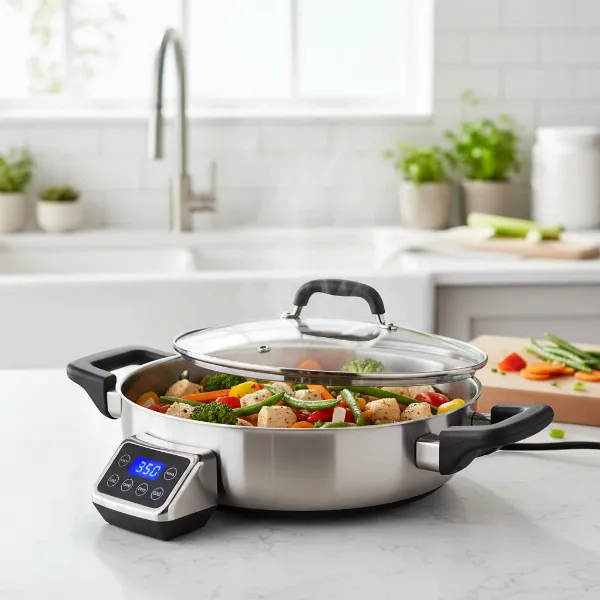 An elegant stainless steel electric skillet with a glass lid cooking a healthy meal.
Disadvantages
While offering significant benefits, pure stainless steel electric skillets do come with a few trade-offs.
- Limited Mobility (Compared to stovetop): Although portable within the home, they still require an electrical outlet, limiting their use in off-grid situations or where power access is restricted.
- Power Requirement: They draw electricity, which can be a consideration for energy consumption, though generally, they are energy-efficient for their task.
- Not Naturally Non-Stick: This is the most significant difference from traditional electric skillets. Without a non-stick coating, you must rely on proper heating techniques and the judicious use of cooking oils or fats to prevent food from sticking. There is a learning curve involved in mastering cooking on stainless steel.
- Initial Learning Curve: Achieving perfect results, especially with delicate foods like eggs or fish, requires understanding how stainless steel interacts with heat and food. Proper preheating and lubrication are key.
- Weight: Some higher-quality, multi-ply stainless steel electric skillets can be heavier than their non-stick counterparts, making them slightly less convenient to move or store.
- Potential for Hot Spots: While good quality stainless steel aims for even heat distribution, some electric skillets may exhibit slight temperature variations, though often negligible in practical cooking.
Popular Types of Electric Skillets on the Market
Electric skillets come in various configurations, but when seeking options without Teflon or similar coatings, the material of the cooking surface becomes paramount.
Classification by Shape
The shape of an electric skillet primarily impacts its capacity and usability for different dishes.
- Round Skillets: These are excellent for dishes that benefit from even circular browning, such as pizzas, omelets, or individual pancakes.
- Square Skillets: Offering slightly more surface area than a round skillet of similar diameter, square skillets are practical for larger batches of food like stir-fries or multiple sandwiches.
- Rectangular Skillets: These provide the largest cooking surface, making them ideal for cooking for big families, preparing large cuts of meat, or keeping numerous items warm for a buffet.
Classification by Material
This category is crucial for those avoiding Teflon. Many “stainless steel electric skillets” refer to the exterior housing, while the cooking surface might still be coated.
- True Stainless Steel Cooking Surface: These are the focus for a Teflon-free kitchen. Skillets like the Cucina Pro Stainless Steel Electric Skillet feature an 18/10 stainless steel interior, meaning you cook directly on the metal. These require proper preheating and oiling techniques to prevent sticking but offer unparalleled durability and a non-reactive cooking environment. They are metal-utensil safe and can withstand high temperatures.
- Stainless Steel Exterior with Non-Stick Interior: This is a common design where the skillet body is made of stainless steel for aesthetics and durability, but the actual cooking surface has a non-stick coating (often ceramic, PTFE, or other materials). While some ceramic coatings claim to be PFOA/PTFE-free, if your goal is no coatings at all, these options are not suitable. It’s essential to read product descriptions carefully to distinguish between a stainless steel exterior and a stainless steel cooking surface.
- Other Materials (Briefly mentioned for context): Electric skillets can also be found with ceramic-coated surfaces (which aim for non-stick without PFOA/PTFE, but are still a coating), cast iron (heavy and slow to heat, but excellent heat retention), or aluminum with various coatings. However, these fall outside the scope of “no Teflon” pure stainless steel options.
Classification by Features
Modern electric skillets offer a range of features that enhance their usability.
- Glass Lids: These allow you to monitor your food as it cooks without lifting the lid, preserving heat and moisture.
- Detachable Temperature Controls: A removable temperature probe and cord often mean the skillet body itself is fully immersible or dishwasher safe, greatly simplifying cleanup.
- Stay-Cool Handles: Ergonomically designed handles that remain cool to the touch during operation enhance safety and ease of transport.
- Pour Spouts/Steam Vents: Minor features that can improve functionality, such as draining excess liquids or preventing boil-overs.
- Wattage: Higher wattage (e.g., 1500-1800W) generally indicates faster heating and better heat recovery.
Comparing Notable Stainless Steel Electric Skillets (No Teflon Focus)
Finding an electric skillet with a truly uncoated stainless steel cooking surface can be challenging, as many models marketed as “stainless steel” refer to their exterior finish and still feature a non-stick interior. However, discerning cooks can find exceptional options.
The Cucina Pro Stainless Steel Electric Skillet stands out as a prime example of an electric skillet designed with an 18/10 stainless steel cooking surface, making it an excellent choice for those seeking to avoid all non-stick coatings.
| Feature | Cucina Pro Stainless Steel Electric Skillet (18/10 Stainless Steel) | Common Stainless Steel Electric Skillets (with non-stick coating) |
|---|---|---|
| Cooking Surface | Pure 18/10 Stainless Steel | Non-stick coating (PTFE, ceramic, etc.) over stainless steel base |
| Durability | Highly durable, resistant to scratches and peeling | Coating can scratch, chip, or degrade over time |
| Health Focus | Completely free from PFOA/PTFE/Teflon concerns | Depends on coating; some claim PFOA/PTFE-free, but still a coating |
| Utensil Use | Metal utensil safe | Typically requires nylon, silicone, or wooden utensils |
| Heat Range | 200°F to 400°F (approximate) | Varies, often similar, but coating limits max safe temperature |
| Sizes Available | 12″, 16″ round | Various shapes and sizes |
| Cleaning | Dishwasher safe base (immersible without probe) | Often hand-wash recommended for coated surfaces |
| Price Point | Mid-range to higher-end for quality stainless steel | Varies widely based on brand and coating quality |
| Cooking Style | Requires oil/fat and proper preheating for non-stick performance | Naturally non-stick, less fat often needed |
The Cucina Pro is praised for its robust 18/10 stainless steel construction, offering a durable and non-reactive cooking environment. Its even heating and ability to sear effectively make it a workhorse for various recipes. While it demands a slightly different cooking approach than coated pans, its longevity and health benefits make it a worthy investment for discerning chefs. The tempered glass lid allows for easy monitoring, and the immersible base simplifies cleanup. It’s a testament to quality craftsmanship for those who prioritize a pure stainless steel cooking experience.
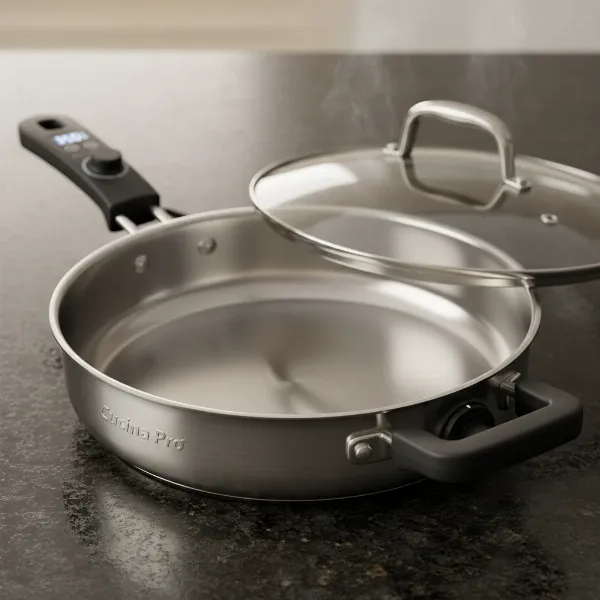 Detailed view of a Cucina Pro stainless steel electric skillet with its features highlighted.
Buying Guide: How to Choose the Right Stainless Steel Electric Skillet
Selecting the ideal stainless steel electric skillet, especially when avoiding Teflon, involves careful consideration of several factors.
Determine Your Needs
Start by evaluating your cooking habits and household size.
- What will you cook most often? Searing steaks demands high, even heat, while simmering stews requires good heat retention.
- How many people do you typically cook for? This will dictate the necessary size and capacity.
- Do you need portability? If you plan to use it beyond the kitchen, easy transport and a reliable power cord are important.
Quan Tâm Đến Kích Thước và Dung Tích
Skillets typically range from 10 to 16 inches in diameter or side length, with varying depths.
- Smaller sizes (10-12 inches): Perfect for individuals, couples, or small side dishes.
- Larger sizes (14-16 inches): Ideal for families, batch cooking, or entertaining guests. A deeper skillet is better for liquids, stews, or deep frying. Consider the overall footprint on your countertop and storage space.
Chọn Chất Liệu Phù Hợp
This is paramount for the “no Teflon” requirement.
- Verify the cooking surface: Look for clear descriptions stating “18/10 stainless steel cooking surface” or similar, explicitly indicating no non-stick coating. Be wary of terms like “stainless steel exterior” if it doesn’t specify the interior. 18/10 stainless steel (composed of 18% chromium and 10% nickel) offers excellent corrosion resistance and durability.
- Construction: Some high-end stainless steel cookware features “clad” construction (multiple layers of metals like aluminum and stainless steel bonded together). This design promotes superior and even heat distribution.
Kiểm Tra Các Tính Năng
Consider features that enhance usability and convenience.
- Temperature Range and Control: Look for a wide temperature range (e.g., 200°F to 400°F or higher) and a precise dial with clear markings (numbers are better than “low/medium/high”).
- Lid Type: A tempered glass lid allows you to monitor cooking, while a stainless steel lid offers better heat retention. Some lids include steam vents to prevent boil-overs.
- Handles: Opt for “stay-cool” handles for safety and comfort. Ensure they are securely riveted, not just screwed on.
- Immersibility: A skillet with a detachable temperature probe that allows the main pan to be fully immersed in water or placed in a dishwasher greatly simplifies cleaning.
- Wattage: Higher wattage (e.g., 1500W-1800W) generally translates to quicker preheating and more stable temperature maintenance, especially when adding cold food.
Tìm Hiểu Về Thương Hiệu và Đánh Giá
Research brands known for producing quality stainless steel cookware. Brands with a history of durable products and good customer service are generally reliable. Read user reviews specifically for the model you are considering, paying attention to comments on heat distribution, actual non-stick performance (if applicable, but irrelevant for pure stainless steel), and ease of cleaning.
So Sánh Giá Cả
Stainless steel electric skillets, especially those of high quality and without coatings, can be a significant investment. Compare prices across different retailers, but remember that a higher upfront cost often translates to greater durability and longevity, making it a more economical choice in the long run. Balance your budget with the features and quality you desire.
Tips for Using and Maintaining Your Stainless Steel Electric Skillet
Mastering cooking on a pure stainless steel electric skillet is incredibly rewarding, offering a healthier alternative to coated pans. Here’s how to get the best performance and ensure longevity.
Usage
Proper technique is key to success with stainless steel, especially for preventing food from sticking.
- First Use and Optional Seasoning: Before first use, wash the skillet with warm, soapy water, rinse thoroughly, and dry completely. While not strictly necessary for performance, some users choose to “season” their stainless steel. To do this, lightly coat the interior with a high smoke point oil (like peanut or grapeseed oil), heat the skillet to medium until the oil just begins to smoke, then turn off the heat and let it cool. Wipe out any excess oil. This creates a thin, polymerized layer that can slightly improve non-stick properties.
- The Golden Rule: Preheat Properly: This is perhaps the most crucial tip. Always preheat your stainless steel skillet before adding food or oil. A simple test: heat the skillet to your desired temperature, then sprinkle a few drops of water into the pan. If the water forms small, shimmering “mercury balls” that glide around the pan before evaporating, it’s perfectly preheated and ready. If it immediately evaporates or breaks into many tiny bubbles, it’s either too cold or too hot.
- Use Enough Oil or Fat: On a properly preheated stainless steel surface, a moderate amount of oil or butter is essential to create a barrier between the food and the pan, preventing sticking. Add your oil after the pan is preheated, allowing it to shimmer slightly before adding food.
- Don’t Overcrowd the Pan: Overcrowding lowers the pan’s temperature and steams food instead of searing it, increasing the likelihood of sticking. Cook in batches if necessary.
- Let Food Release Naturally: When searing, avoid trying to move food too soon. Stainless steel naturally releases food once a crust has formed. If it’s sticking, it likely needs more time to cook and develop that crust.
- Adjust Temperature Appropriately: Utilize your electric skillet’s precise temperature control. Searing requires higher heat, while simmering demands lower, more consistent settings.
Cleaning and Care
With proper cleaning, your stainless steel electric skillet will maintain its shine and performance for years.
- Clean After Each Use (Once Cooled): Always allow the skillet to cool down before washing. Sudden temperature changes can warp metal. Once cool, wipe out any excess oil or food debris with a paper towel.
- Hand Washing is Best: For basic cleaning, wash with warm, soapy water and a non-abrasive sponge or cloth. For skillets with detachable probes, if the base is specified as immersible or dishwasher-safe, follow the manufacturer’s instructions.
- Tackling Stuck-On Food:
- Deglazing: For minor sticking, while the pan is still warm, add a small amount of water or broth, scrape with a wooden or metal spatula, and let it simmer for a minute. The stuck bits should lift easily.
- Baking Soda Paste: For more stubborn residue, create a paste with baking soda and a little water. Apply it to the affected areas, let it sit for 15-30 minutes, then scrub with a non-abrasive pad.
- Stainless Steel Cleaner: For tough stains or discoloration, a specialized stainless steel cleaner can restore its luster. Follow product instructions carefully.
- Preventing Water Spots: To avoid unsightly water spots, dry your skillet immediately and thoroughly after washing.
- Storage: Store your skillet in a dry place. If stacking, place a cloth or paper towel between pans to prevent scratches.
“A well-cared-for stainless steel skillet is a lifelong companion in the kitchen. Its durability and non-reactive surface make it truly stand apart from other cookware materials.” – Admin, electricskilletguide.com
Conclusion
Choosing a stainless steel electric skillet, particularly one with a pure, uncoated cooking surface, is a commitment to durability, health-conscious cooking, and culinary versatility. While it may involve a slight learning curve to master the art of cooking without a non-stick coating, the benefits are undeniable: a non-reactive cooking environment free from Teflon, the freedom to use metal utensils, and a pan built to last for generations. By understanding its unique properties, selecting a quality model like the Cucina Pro, and practicing proper usage and maintenance, you equip your kitchen with a robust appliance that empowers you to create delicious, healthy meals with confidence. Invest in a stainless steel electric skillet and elevate your cooking experience today.
What healthy and flavorful dish will you embark on preparing first in your new, Teflon-free stainless steel electric skillet?
Frequently Asked Questions
Are stainless steel electric skillets naturally non-stick?
No, pure stainless steel electric skillets are not naturally non-stick like those with coated surfaces. They require proper preheating and the use of cooking oil or fat to prevent food from sticking. This technique, once mastered, allows food to release naturally once a crust has formed.
Can I use metal utensils in a stainless steel electric skillet?
Yes, one of the significant advantages of a true stainless steel electric skillet is that it is safe to use with metal utensils. Unlike non-stick coated pans, you don’t have to worry about scratching or damaging the cooking surface, offering greater flexibility during cooking.
How do I prevent food from sticking in my stainless steel electric skillet?
To prevent food from sticking, always preheat your stainless steel electric skillet thoroughly before adding any oil or food. Use the water droplet test to ensure optimal temperature. Then, add a sufficient amount of high smoke point oil or fat, allowing it to shimmer before introducing your ingredients.
How do I clean burnt food from a stainless steel electric skillet?
For burnt-on food, let the skillet cool completely. You can then deglaze it with water or broth while warm, or create a paste with baking soda and water, applying it to the stubborn areas. Let the paste sit before gently scrubbing with a non-abrasive pad to lift the residue.
What’s the best temperature for searing in an electric skillet?
The best temperature for searing in an Electric Skillet typically ranges from 375°F to 425°F (190°C to 220°C). Always preheat the skillet to the desired temperature and use the water droplet test to confirm readiness before adding your protein or vegetables for a perfect crust.