In today’s kitchens, every cooking choice can impact not only the quality of your meal but also your energy bill. As you decide between the steady convenience of an electric skillet and the familiar territory of a stovetop pan, the question of energy efficiency often comes to mind. Understanding which appliance consumes less power is crucial for cost-conscious cooks and anyone aiming for a greener kitchen. Let’s delve into the energy dynamics of these two popular cooking methods to determine which truly offers the better deal for your wallet and the environment.
Understanding Electric Skillets
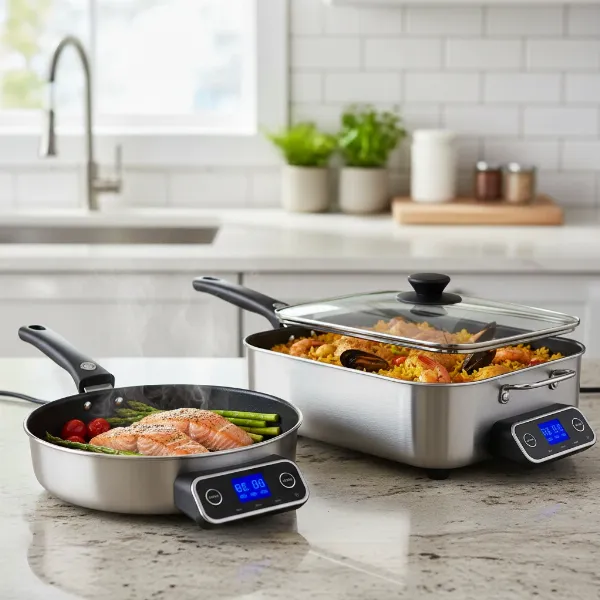
An electric skillet is a versatile, self-contained countertop appliance designed for uniform cooking. Unlike a traditional pan that relies on an external heat source, an electric skillet features a built-in heating element and an adjustable thermostat. This integrated design allows for precise temperature control, distributing heat evenly across its cooking surface. From frying and simmering to braising and even baking, an electric skillet offers a wide array of cooking possibilities without needing to occupy a burner on your main stove. This makes it a popular choice for everything from preparing large family meals to crafting individual dishes with consistent results.
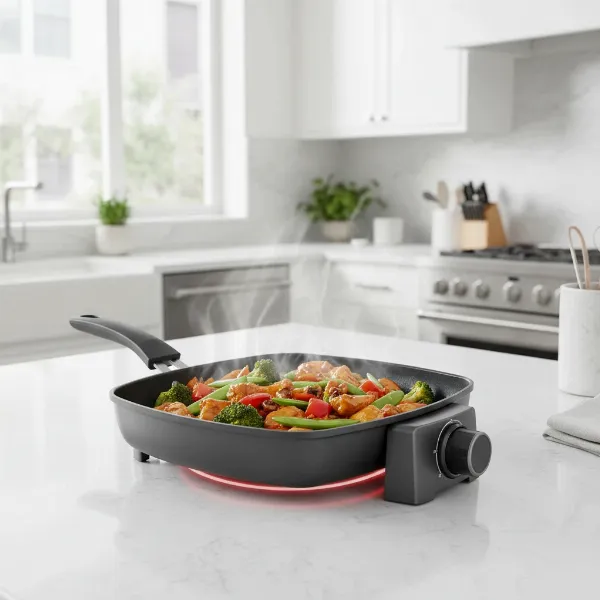 Electric skillet cooking food with precise temperature control and even heat distribution.
The Traditional Stovetop Pan
Traditional stovetop pans, in contrast, depend entirely on the external heat source of a cooktop, whether gas or electric. Each type of stovetop has its own method of heat generation and transfer.
Gas Stovetops
|
Our Picks for the Best Electric skillet in 2026
As an Amazon Associate I earn from qualifying purchases.
|
||
| Num | Product | Action |
|---|---|---|
| 1 | bella Make & Take Electric Skillet, Fits-anywhere™ kitchenware, EverGood™ Ceramic Coating, Adjustable Temperature & Dishwasher-Safe Tempered Glass Lid, Cast Aluminum Base, 1200 Watt, Oatmilk |

|
| 2 | FOHERE 16-Inch Electric Skillet with Glass Cover, 1500W Rapid Heat, Adjustable Temperature, Multi-Purpose Electric Skillet Fried Chicken, Perfect For Family Gathering Cooking |
|
| 3 | Pioneer Woman 3.5L Electric Skillet, Linen Speckle |
|
| 4 | Blue Diamond 7QT 5-in-1 Extra Large Electric Skillet, Healthy Ceramic Nonstick Interior, Non-Toxic PFAS-Free, Temperature Control, Stay Cool Handles, Easy Clean, Graphite |
|
| 5 | Nuwave Medley XL Digital Electric Skillet, Family Size Griddle w/Glass Lid, 2025 New & Improved Precision Heating, 100°-425°F, PFAS Free G11 Nonstick Ceramic Coating, Portable Hot Plate, 7qt Capacity |
|
| 6 | Elite Gourmet 12"x12"x2.15” Ceralast™ PFAS Free Ceramic Electric Skillet, Dishwasher Safe, Rapid Heat Up, 1200W, Dark Grey |
|
| 7 | Elite Gourmet EG6201 Extra Deep 12"x12"x3.2" (7.5Qt.) Scratch Resistant Dishwasher Safe, Non-stick Electric Skillet with Glass Vented Lid, Adjustable Temperature, Black |
|
| 8 | Presto 06857 16-inch Electric Foldaway Skillet, Black |
|
| 9 | Elite Gourmet EG808 8” x 8" Non-stick Electric Skillet, Dishwasher Safe with Tempered Glass Vented Lid, Rapid Heat Up, 600W, Black |
|
| 10 | Elite Gourmet EG-6203# Extra Deep 16"x13"x3.2" (10.5Qt.) Scratch Resistant, Easy Pour Spout Dishwasher Safe, Non-stick Electric Skillet with Glass Vented Lid, Adjustable Temperature, Black |
|
Gas stovetops operate by burning natural gas to create an open flame that directly heats the bottom of your pan. While many cooks appreciate the instant visual feedback and fine-tuned control over heat that a gas flame provides, this method is inherently less energy-efficient. A significant portion of the heat generated by the flame escapes into the surrounding air, warming your kitchen rather than directly cooking your food.
Electric Coil/Ceramic Stovetops
Electric stovetops, including radiant coil and smooth ceramic glass models, use electric heating elements to generate heat. These elements warm up and then transfer that heat to your pan through conduction and radiant energy. While more contained than an open gas flame, electric stovetops still experience considerable heat loss. The burner itself heats up, and some of that energy radiates into the kitchen before it ever reaches your cookware, leading to inefficiencies in the cooking process.
Energy Efficiency: A Direct Comparison
When comparing the energy efficiency of an electric skillet and a stovetop pan, the distinction lies largely in how heat is generated and transferred.
Electric Skillet Efficiency
Electric skillets are remarkably efficient due to their design. Typically, they operate within a wattage range of 1,000 to 1,500 watts, translating to about 1 to 1.5 kilowatt-hours (kWh) of energy per hour of use. These appliances can be up to 98% efficient at heating the pan directly, making them highly effective at converting electrical energy into cooking heat. This high efficiency is primarily due to the integrated heating element which is often embedded directly into the base of the cooking surface, allowing for direct and contained heat transfer to your food. Furthermore, the precise temperature control afforded by an electric skillet’s thermostat prevents overheating and maintains a consistent cooking temperature, minimizing wasted energy.
Stovetop Pan Efficiency
The efficiency of stovetop pans varies significantly depending on the heat source.
- Gas Stovetops: Gas stoves are generally the least efficient option. Studies suggest that only about 40% to 53% of the heat generated by a gas burner actually reaches the pan and its contents. The rest of the heat dissipates into the air around the pan, warming the kitchen but not contributing to cooking your meal.
- Electric Stovetops: Conventional electric stovetops are more efficient than gas, typically converting 70% to 75% of their energy into usable cooking heat. While better than gas, they still lose a notable amount of energy through radiant heat from the burner itself before it makes contact with the pan.
Why the Difference?
The core difference in efficiency stems from the heating mechanism and heat containment. An electric skillet features a direct, enclosed heating element that ensures most of the generated heat is focused on the cooking surface. In contrast, stovetops—especially gas—have a more open system where heat is produced externally and must travel to the pan, inevitably losing energy to the surroundings. This direct-heat approach gives the electric skillet a clear advantage in energy conservation for many common cooking tasks.
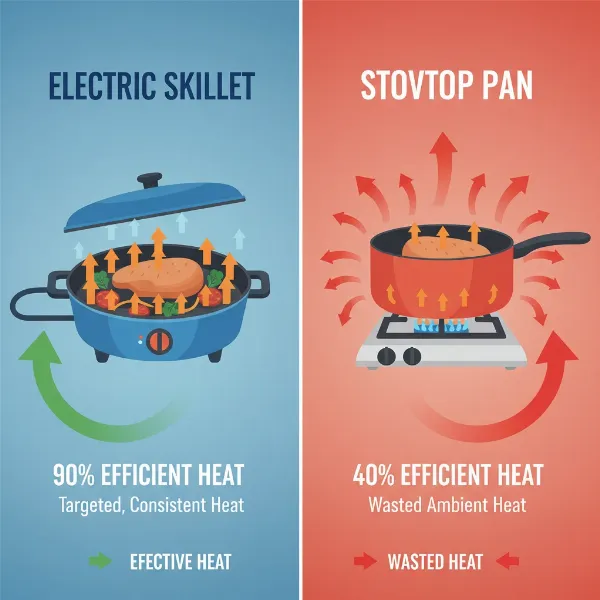 Visual comparison of heat efficiency: electric skillet with contained heat versus stovetop pan with significant heat loss.
Beyond Efficiency: Operational Costs
While energy efficiency refers to how well an appliance converts power into usable heat, operational cost factors in the price of that power. The actual expense of running an electric skillet versus a stovetop pan can fluctuate based on local utility rates for electricity and natural gas. In some regions, electricity might be more expensive per unit than natural gas, even if the electric skillet is more efficient. However, because electric skillets use less total energy, they often result in lower energy bills compared to ovens or traditional stovetops for similar cooking tasks. For instance, an electric skillet running at 1,200 watts for an hour consumes 1.2 kWh. If electricity costs $0.15 per kWh, that’s just $0.18 for the hour. Comparing this to the higher wattage of a full electric oven (up to 5,000 watts) or the inherent inefficiencies of a gas stovetop, the electric skillet often presents a more economical choice for many daily cooking needs.
Advantages of Electric Skillets for Energy Savings
Electric skillets offer several compelling advantages that contribute to energy conservation in the kitchen:
- Precise Temperature Management: The built-in thermostat allows you to set and maintain an exact cooking temperature, preventing unnecessary energy consumption from overheating or constant adjustments. This precise control means no wasted energy on excessive heat.
- Faster Cooking Times: Because electric skillets transfer heat directly and efficiently to the food, many dishes cook faster than on a traditional stovetop. Research indicates that meals prepared in electric skillets can save up to 30% in cooking time due to their superior heating efficiency. Less cooking time directly translates to less energy consumed.
- Reduced Ambient Heat in Kitchen: Unlike stovetops that radiate significant heat into the surrounding air, electric skillets keep more heat contained within the cooking vessel. This is particularly beneficial during warmer months, as it helps keep your kitchen cooler and reduces the burden on your air conditioning system, leading to further energy savings.
- Portability and Versatility for Smaller Meals: For small meals, sides, or single servings, using a large stovetop burner or oven can be overkill. An electric skillet provides a perfectly sized, portable cooking surface that uses only the energy required for the task at hand, avoiding the energy expenditure of heating a larger, less efficient appliance.
When a Stovetop Pan Might Be Preferred
Despite the energy-saving benefits of an electric skillet, there are specific scenarios where a traditional stovetop pan remains the preferred choice:
- Large-Scale Cooking: When preparing elaborate meals that require multiple pots and pans simultaneously, a multi-burner stovetop offers the necessary cooking capacity. An electric skillet, being a single unit, might not suffice for such extensive tasks.
- Specific Cooking Techniques: Certain cooking methods, such as wok stir-frying, aggressive searing that requires extremely high, sustained heat, or canning that necessitates large volume boiling, often benefit from the power and specific heat distribution profiles of a dedicated stovetop burner.
- Power Outages: For gas stovetops, the ability to operate during a power outage (often by manually lighting the burners) is a significant advantage, providing cooking capabilities when electricity is unavailable.
Tips for Maximizing Energy Savings in the Kitchen
Regardless of your chosen cooking method, adopting energy-saving habits can significantly reduce your household’s overall consumption:
- Use Lids: Always use a lid on pots and pans whenever possible. Lids trap heat and moisture, allowing food to cook faster and requiring less energy.
- Match Pan Size to Burner: When using a stovetop, ensure your pan’s diameter matches the size of the burner. A small pan on a large burner wastes heat around the edges, while a large pan on a small burner heats inefficiently.
- Preheat Efficiently: Only preheat your electric skillet or stovetop for the time necessary. Many dishes don’t require extensive preheating.
- Proper Maintenance: Keep your cooking appliances clean and well-maintained. A clean electric skillet or stovetop burner will transfer heat more efficiently than one covered in grease or food residue.
Conclusion
In the perennial debate between an electric skillet and a stovetop pan, the electric skillet consistently emerges as the more energy-efficient option for a wide range of everyday cooking tasks. Its integrated heating element, direct heat transfer, and precise temperature control minimize wasted energy, often leading to lower operational costs and faster cooking times. While traditional stovetop pans have their place, particularly for large meals or specific culinary techniques, embracing an electric skillet can be a smart move for those looking to cook smarter and reduce their energy footprint. By understanding the advantages of each and adopting mindful cooking practices, you can make informed decisions that benefit both your kitchen and your utility bill. Have you considered how much an electric skillet could change your daily cooking routine and energy savings?
Frequently Asked Questions
How many watts does an electric skillet use?
Most electric skillets typically use between 1,000 and 1,500 watts of power. This wattage translates to an energy consumption of approximately 1 to 1.5 kilowatt-hours (kWh) for every hour the appliance is in use, depending on the model and cooking temperature.
Is an electric skillet cheaper to run than a gas stove?
For many common cooking tasks, an electric skillet is often cheaper to run than a gas stove. While gas prices vary, electric skillets are significantly more energy-efficient, converting a higher percentage of energy directly into cooking heat compared to the substantial heat loss from an open gas flame.
Do electric skillets heat up faster than stovetop pans?
Yes, electric skillets generally heat up faster than conventional stovetop pans. Their built-in heating elements and direct heat transfer ensure rapid preheating and more efficient heat application to the cooking surface, reducing overall cooking time compared to many stovetop methods.
Can using an electric skillet reduce kitchen heat?
Absolutely. One of the notable benefits of an electric skillet is its ability to keep more heat contained within the cooking vessel, rather than radiating it into the kitchen. This helps maintain a cooler kitchen environment, especially important during warmer weather, and can reduce the need for air conditioning, contributing to further energy savings.