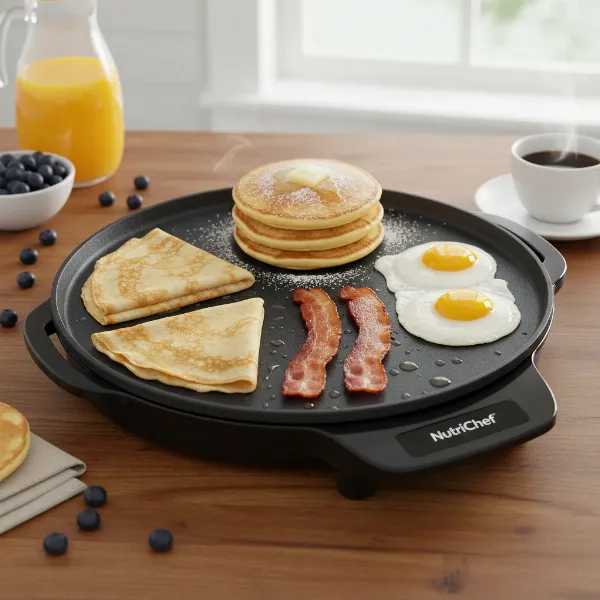
Are you tired of cluttered stovetops, uneven cooking, or juggling multiple pans to feed your family? An electric skillet could be the transformative kitchen appliance you’ve been searching for. More than just a frying pan, these versatile units offer precise temperature control and ample cooking space, making everything from searing steaks to simmering stews a breeze. Whether you’re a seasoned home chef or just starting your culinary journey, finding the perfect electric skillet can dramatically enhance your cooking experience, offering convenience, efficiency, and consistent results.
What is an Electric Skillet?
An electric skillet, often referred to as an electric frying pan, is a countertop appliance designed for cooking a wide variety of foods with independent temperature control. Unlike traditional skillets that rely on a stovetop burner, electric skillets have their own integrated heating element, allowing for consistent and adjustable heat across the entire cooking surface. They typically come with a lid, making them suitable for frying, sautéing, simmering, braising, steaming, and even baking.
The concept of portable cooking appliances has been around for decades, evolving from basic heating elements to sophisticated units with advanced nonstick coatings and precise digital controls. Modern electric skillets embody this evolution, providing a convenient solution for extending cooking capacity, maintaining food temperatures for serving, or serving as a primary cooking tool in smaller living spaces.
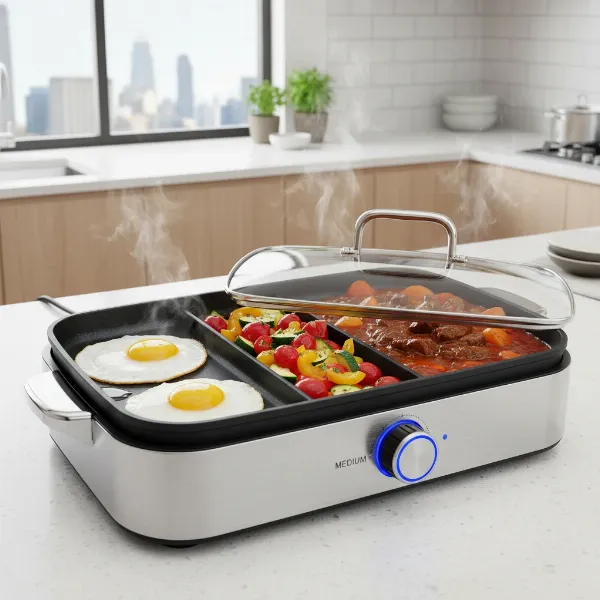 A modern electric skillet cooking a variety of dishes simultaneously, showcasing versatility.
Advantages and Disadvantages of Electric Skillets
Electric skillets offer a unique blend of benefits and a few limitations worth considering before you buy. Understanding these can help you determine if this appliance is the right fit for your kitchen needs.
Advantages
- Flexibility and Convenience: Electric skillets function as an additional cooktop, perfect when your stove burners are full or if you need to cook away from the main kitchen. They are also excellent for buffet-style serving, keeping food warm at a consistent temperature. Many models are fully immersible (with the heat probe removed) for hassle-free cleanup.
- Easy Temperature Adjustment: Equipped with removable temperature probes, these skillets allow for precise heat control, often ranging from “warm” settings to over 450 degrees Fahrenheit. This accuracy is crucial for delicate dishes and for ensuring even cooking across the pan.
- Space-Saving Potential: For those with limited kitchen space or in dorms and RVs, an electric skillet can act as a multi-purpose cooking station, replacing several other pots and pans. Some even feature foldaway designs for compact storage.
- Effortless Cleaning: Most modern electric skillets boast durable nonstick coatings, ensuring food releases easily and cleanup is quick. Many pans are dishwasher safe once the electrical components are removed, simplifying post-meal chores.
|
Our Picks for the Best Electric skillet in 2026
As an Amazon Associate I earn from qualifying purchases.
|
||
| Num | Product | Action |
|---|---|---|
| 1 | Elite Gourmet EG808 8” x 8" Non-stick Electric Skillet, Dishwasher Safe with Tempered Glass Vented Lid, Rapid Heat Up, 600W, Black |

|
| 2 | bella Make & Take Electric Skillet, Fits-anywhere™ kitchenware, EverGood™ Ceramic Coating, Adjustable Temperature & Dishwasher-Safe Tempered Glass Lid, Cast Aluminum Base, 1200 Watt, Oatmilk |
|
| 3 | Elite Gourmet 12"x12"x2.15” Ceralast™ PFAS Free Ceramic Electric Skillet, Dishwasher Safe, Rapid Heat Up, 1200W, Dark Grey |
|
| 4 | Presto 06857 16-inch Electric Foldaway Skillet, Black |
|
| 5 | Elite Gourmet EG6201 Extra Deep 12"x12"x3.2" (7.5Qt.) Scratch Resistant Dishwasher Safe, Non-stick Electric Skillet with Glass Vented Lid, Adjustable Temperature, Black |
|
| 6 | Pioneer Woman 3.5L Electric Skillet, Linen Speckle |
|
| 7 | Nuwave Medley XL Digital Electric Skillet, Family Size Griddle w/Glass Lid, 2025 New & Improved Precision Heating, 100°-425°F, PFAS Free G11 Nonstick Ceramic Coating, Portable Hot Plate, 7qt Capacity |
|
| 8 | Blue Diamond 7QT 5-in-1 Extra Large Electric Skillet, Healthy Ceramic Nonstick Interior, Non-Toxic PFAS-Free, Temperature Control, Stay Cool Handles, Easy Clean, Graphite |
|
| 9 | FOHERE 16-Inch Electric Skillet with Glass Cover, 1500W Rapid Heat, Adjustable Temperature, Multi-Purpose Electric Skillet Fried Chicken, Perfect For Family Gathering Cooking |
|
| 10 | Elite Gourmet EG-6203# Extra Deep 16"x13"x3.2" (10.5Qt.) Scratch Resistant, Easy Pour Spout Dishwasher Safe, Non-stick Electric Skillet with Glass Vented Lid, Adjustable Temperature, Black |
|
Disadvantages
- Limited Mobility: While portable in theory, electric skillets require a power source, limiting their use to areas with accessible electrical outlets. Their size, especially larger models, can also make them somewhat cumbersome to move frequently.
- Power Requirement: Operating on electricity means they draw power, which might be a consideration for energy consumption, although many are designed to be energy-efficient for their size.
- Not Ideal for All Cooking Methods: While highly versatile, electric skillets might not replace all traditional cookware. For instance, while some can deep-fry, their capacity and design might not be optimal for very large quantities or certain specialized frying needs.
- Storage Considerations: Although some are designed for compact storage, larger or deeper models can still be bulky, requiring dedicated cabinet space when not in use.
Popular Types of Electric Skillets on the Market
Electric skillets come in various configurations, each designed to cater to different cooking styles and kitchen setups. Understanding these types can help narrow down your choices.
Classification by Shape
The shape of an electric skillet often dictates its primary use and how it fits into your kitchen.
- Round Skillets: These are common and often mimic traditional frying pans, making them ideal for dishes like pancakes, eggs, or smaller stir-fries. They are typically compact and can be a good choice for smaller households. The DASH Rapid Heat Electric Skillet is a popular round option.
- Square Skillets: Offering slightly more usable cooking surface than a round pan of the same diameter, square electric skillets are excellent for browning larger cuts of meat, making casseroles, or preparing family-sized meals. Many budget-friendly options come in this shape.
- Rectangular Skillets: These provide the largest cooking area, making them perfect for cooking for crowds, hosting buffets, or preparing large batches of food like multiple chicken pieces or bacon strips. The Presto 16-inch Electric Skillet is a prime example of a popular rectangular model.
- Oval Skillets: Less common but highly practical, oval electric skillets are specifically designed to accommodate longer foods like whole fish, roasts, or larger cuts of meat that might not fit comfortably in a square or round pan. Cuisinart offers a notable nonstick oval electric skillet.
Classification by Material
The cooking surface material significantly impacts performance, durability, and cleaning.
- Nonstick Skillets (Aluminum or Stainless Steel Base): The vast majority of electric skillets feature a nonstick coating, often applied to a heavy-gauge aluminum or stainless steel base. This ensures easy food release and straightforward cleanup. While highly convenient, the durability of nonstick coatings can vary, with some being more prone to wear over time.
- Ceramic-Coated Skillets: These skillets offer an alternative to traditional PTFE-based nonstick coatings. Ceramic coatings are often marketed as being more “natural” and durable, though care is still needed to prevent scratching.
- Cast Iron Skillets (Less Common for Electric): While traditional cast iron skillets are highly valued for their heat retention and durability, electric skillets with true cast iron cooking surfaces are less common due to weight and integrated heating requirements. Some models may mimic the look or performance with heavy-duty coated metal.
Classification by Features
Modern electric skillets come with a range of features that add to their functionality and user convenience.
- Skillets with Glass Lids: Most electric skillets include a tempered glass lid. This allows you to monitor your cooking progress without lifting the lid, helping to retain heat and moisture.
- Skillets with Removable Temperature Controls: A standard feature, the removable temperature probe is crucial for adjusting heat and often makes the pan immersible for washing. Some offer precise digital readouts, while others use a dial from “warm” to a maximum temperature.
- Skillets with Timer Functions: While not universally present, some advanced models may include integrated timers for more precise cooking control, particularly useful for slow-cooking or stewing.
- Foldaway or Compact Designs: For those prioritizing storage, certain electric skillets, like the Presto Foldaway, are designed with collapsing handles or removable bases to reduce their footprint when not in use.
- Deep Dish Skillets: Skillets with higher sidewalls are ideal for larger capacities, deep-frying, braising, and preparing dishes with more liquid, like soups and casseroles.
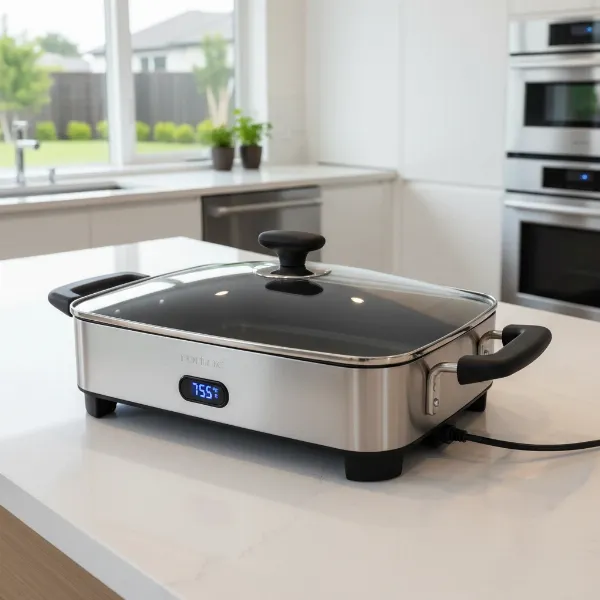 A deep rectangular electric skillet with a glass lid, digital control, and cool-touch handles.
Comparison of Famous Electric Skillet Brands
When navigating the market, several brands consistently appear in top reviews, each with its own strengths. Here’s a comparison of some popular electric skillet brands:
| Brand | Key Models Mentioned | Price Range (Approx.) | Quality/Features Highlights | Durability/Considerations |
|---|---|---|---|---|
| Presto | 16-inch, 11-inch (Budget), Foldaway | Budget to Mid-Range | Versatile shapes, large capacities, fully immersible (most models), cool-touch handles, excellent heat distribution. | Nonstick coating durability can vary; some units get hot on the countertop. |
| Zojirushi | Gourmet d’Expert | High-End | High-quality construction, wide temperature range (176-480°F), deep inner pan, multi-height steaming plate, multi-functional. | Hand wash only; higher price point. |
| Cuisinart | Nonstick Oval | Mid-Range to High-End | Attractive design (brushed stainless exterior), fast cooking (1500 watts), generous capacity, dishwasher safe pan. | Can be pricey; some users report inconsistent performance. |
| All-Clad | Electric Nonstick (7-Quart) | High-End | Very large capacity, quick and constant heat (1800 watts), great for searing, tall sides for braising, aesthetically pleasing. | Expensive; bulky to store; large size can be awkward for dishwasher. |
| DASH | Rapid Heat (Family Size) | Budget to Mid-Range | Large round cooking surface (20-cup capacity), cool-touch handles, attractive color options. | Hand wash only; pan not removable from base. |
| Starfrit | The Rock | Budget | Durable RocTec nonstick coating, even heating, easy release, Bakelite cool-touch handles. | A little shallow; hand wash only; should not be immersed in water. |
| Continental | 6-inch Electric Skillet | Budget | Compact, lightweight, easy to store (removable handle), ideal for singles or small portions. | Lower wattage (600W), variable heat control (no exact temps), hand wash only. |
Note: Prices are approximate and can vary based on retailer and promotions.
Guide to Choosing the Right Electric Skillet (Buying Guide)
Selecting the best electric skillet involves considering your specific cooking habits, household size, and kitchen limitations. Here’s what to look for:
Determine Your Usage Needs
Before diving into models, think about how you’ll primarily use the electric skillet. Do you need it for everyday meals, entertaining large groups, or simply as an extra burner? Your answer will guide decisions on size, features, and budget. For example, if you plan to deep-fry, ensure the model has deep enough sides and consistent heat control.
Consider Size and Capacity
Electric skillets range from compact 6-inch models perfect for single servings to expansive 16-inch or 7-quart options ideal for feeding a crowd.
- Small households (1-2 people): 6 to 10-inch skillets
- Medium households (3-4 people): 11 to 14-inch skillets
- Large households/entertaining: 15-inch and up, or deep-dish models
Also, consider your storage space. Some large skillets can be bulky, while foldaway designs offer a compact solution.
Choose the Right Material
Most electric skillets feature a nonstick coating on an aluminum or stainless steel base.
- Traditional Nonstick: Offers excellent food release and easy cleaning. Look for heavy-duty coatings for better longevity.
- Ceramic Nonstick: Often a popular alternative, marketed for durability and being PFOA/PTFE-free.
Remember, regardless of the coating, always use wooden or silicone utensils to protect the surface from scratches.
Check the Features
Beyond the basic cooking function, several features contribute to an electric skillet’s overall utility:
- Temperature Range and Accuracy: A wide temperature range (from warm to 400°F+) and precise control are essential for versatile cooking.
- Lid Design: A tempered glass lid allows you to monitor food without releasing heat. Ensure it fits snugly.
- Handles: Look for cool-touch handles for safe handling, especially when moving the skillet while hot.
- Cleaning Convenience: Many skillets are fully immersible (with the probe removed) or dishwasher safe, which greatly simplifies cleanup.
- Wattage: Higher wattage (e.g., 1500-1800 watts) generally means faster heating and better heat recovery.
Research Brands and Reviews
Reputable brands like Presto, Cuisinart, Zojirushi, and All-Clad consistently produce quality electric skillets. Read reviews from other users to get real-world insights into performance, durability, and any potential drawbacks. Trustworthy reviews often highlight aspects like how evenly the skillet heats or the longevity of its nonstick surface.
Compare Prices
Electric skillets vary widely in price, from budget-friendly options under $50 to premium models exceeding $200. While a higher price often correlates with better quality, durability, and advanced features, excellent value can be found across all price points. Balance your budget with the features and performance you need.
Tips for Using and Maintaining Your Electric Skillet
To ensure your electric skillet performs optimally and lasts for years, proper usage and maintenance are key.
Usage
- First-Time Use: Always read the manufacturer’s instructions. Typically, you’ll need to wash the pan thoroughly before first use. Some nonstick pans might benefit from a light seasoning with cooking oil before the initial cook.
- Adjusting Temperature: The precise temperature control is a major advantage. Start with a medium setting and adjust as needed. Remember that “warm” settings are perfect for keeping food hot for serving without overcooking.
- Using Appropriate Utensils: To protect the nonstick coating, always use wooden, silicone, or heat-resistant plastic utensils. Metal utensils can scratch and damage the surface, reducing its effectiveness and lifespan.
- Safe Placement: Always place your electric skillet on a stable, heat-resistant surface, away from the edge of the counter. Ensure the power cord is not dangling where it can be pulled or tripped over.
Cleaning and Storage
- Clean After Each Use: Allow the skillet to cool completely before cleaning. If the pan is dishwasher safe (after removing the heat probe), scrape off any food debris and place it in the dishwasher. If hand washing, use warm, soapy water and a non-abrasive sponge or cloth. Avoid harsh scourers that can damage the nonstick surface.
- Proper Storage: Once clean and thoroughly dry, store your electric skillet in a designated space. For models that are not foldable, try to place soft cloths or paper towels between the pan and any other stored items to prevent scratches to the nonstick interior. Store the heat probe separately to avoid damage.
“An electric skillet is more than just a convenience; it’s a versatile workhorse that brings precision and expanded cooking capacity to any kitchen, big or small. Treat it well, and it will be your culinary partner for years.” – Donna Currie, Food Writer & Kitchen Gadget Expert
Conclusion
The electric skillet remains an invaluable asset in the modern kitchen, offering unmatched versatility, precise temperature control, and the flexibility to cook virtually anywhere with an outlet. From quickly whipping up a weeknight meal to keeping dishes warm for a holiday gathering, the convenience it provides is undeniable. As we look at the top models of 2026, it’s clear that brands continue to innovate, offering enhanced features, durable materials, and designs that cater to every cooking style and storage need. By considering your personal cooking habits, desired features, and household size, you can confidently select one of the best electric skillets to simplify your kitchen tasks and elevate your home cooking.
What culinary creations are you most excited to prepare with your new electric skillet?
Frequently Asked Questions
Can you bake in an electric skillet?
Yes, you can surprisingly bake in an electric skillet, provided it has accurate temperature control and a lid. You can line the pan with foil for cakes, or even use it as a mini-oven by placing a wire rack and baking pan inside. It might take some experimentation to get the temperatures just right, but it’s a feasible option for many baked goods.
How is an electric skillet different from a griddle?
While both feature temperature controls for even heating, an electric griddle is typically shallower and wider, designed for dry heat cooking like pancakes or grilled cheese. Electric skillets, however, have higher sides and usually come with a lid, making them suitable for moist cooking methods such as sautéing, stir-frying, steaming, and braising, in addition to frying.
Do you need oil in an electric skillet?
Most electric skillets have a nonstick surface, allowing you to cook with little to no oil. However, it’s generally advised to avoid nonstick cooking sprays, as they can damage the coating over time. Instead, use a small amount of butter or cooking oil as you would with any other nonstick pan to ensure food doesn’t stick and to enhance flavor.