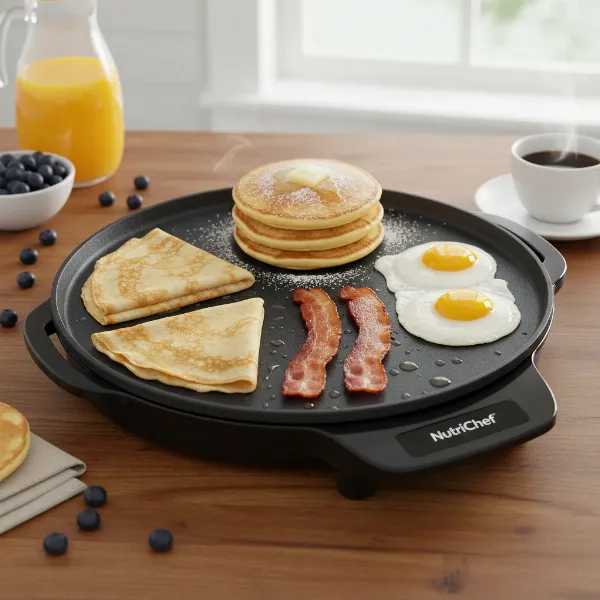
Few kitchen appliances can boast the staying power and versatility of the electric skillet. From its humble beginnings to its place as a cherished countertop companion, this unassuming device has consistently delivered convenience and culinary flexibility to households worldwide. It has adapted through eras, becoming a go-to for quick weeknight meals and elaborate holiday feasts alike. Let’s embark on a journey through time to uncover the fascinating evolution of the electric skillet, understanding how it cemented its status as an indispensable kitchen staple.
What is an Electric Skillet?
At its core, an electric skillet is a self-contained cooking appliance featuring an integrated heating element within the pan itself. Unlike traditional skillets that require a stovetop burner, an electric skillet operates independently, often with its own temperature control probe that plugs directly into an electrical outlet. This design allows it to function as a portable burner and a pan, offering precise heat management for a wide range of cooking tasks, from frying and sautéing to stewing and roasting. Its distinct form, often deeper and with straighter sides than a conventional frying pan, along with an accompanying lid, makes it incredibly versatile.
The Dawn of Electric Cooking: Early Innovations
The concept of electric cooking began to simmer in the late 19th and early 20th centuries. While patents for small electrical cooking appliances emerged in the USA as early as 1859, the path to a reliable, easy-to-use electric skillet was not straightforward. Early innovations like Westinghouse’s electric chafing dish in 1911 hinted at the potential of countertop electric cooking, capable of doubling as a hot plate. However, a significant hurdle remained: developing a dependable and variable heat control system that could rival the predictability of a traditional stovetop. This challenge meant early electric cooking devices often lacked the precision needed for consistent culinary results, limiting their widespread adoption in home kitchens.
The Game Changer: Sunbeam’s Automatic Frypan in 1953
The true turning point for the electric skillet arrived in 1953 with the introduction of the Sunbeam Automatic Frypan. This groundbreaking appliance is widely credited with bringing the electric skillet into the mainstream, transforming it from a niche item into a household essential. The key to its success was its innovative built-in thermostatic control. For the first time, home cooks could set and maintain a precise cooking temperature directly on the pan, eliminating guesswork and ensuring perfectly cooked meals.
The Sunbeam Automatic Frypan was typically a square, cast-aluminum pan with a robust, built-in heating element. Its design often featured a black plastic handle housing the heat control, making it user-friendly and highly practical. This new level of control and convenience resonated deeply with post-war consumers, eager for modern solutions that simplified daily chores and expanded their culinary horizons.
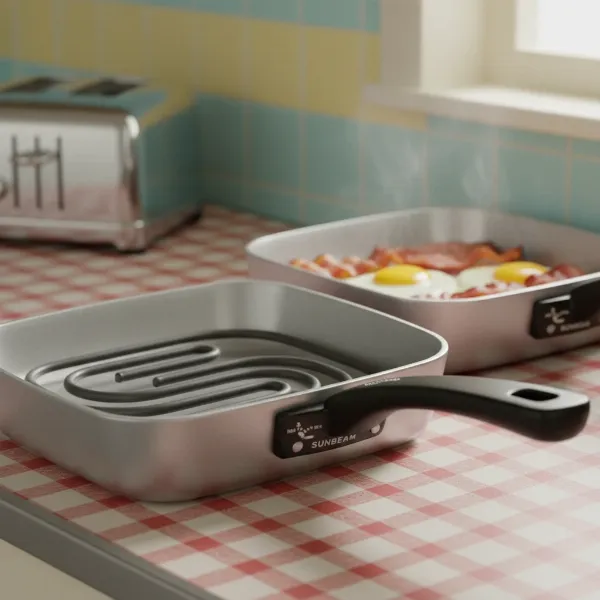 Historic Sunbeam Automatic Frypan from 1953 with a black handle and temperature control.
The Golden Age: Widespread Popularity and Evolution
Following Sunbeam’s breakthrough, the electric skillet entered its golden age, becoming a ubiquitous presence in kitchens throughout the 1950s, 60s, and 70s. Its popularity soared for several compelling reasons:
- Versatility: It could do it all – fry eggs for breakfast, sauté vegetables for lunch, and even roast a small chicken or prepare a casserole for dinner. It was a true multi-tasker.
- Convenience: As a countertop appliance, it freed up valuable stovetop space and could be used anywhere with an electrical outlet, making it ideal for small kitchens, dorm rooms, or even outdoor cooking.
- Ease of Cleaning: Many models, like the original Sunbeam, featured a detachable power cord and a water-sealed design, allowing for the entire pan to be safely submerged and washed, a significant improvement over many other kitchen tools of the era.
- Energy Efficiency: For many families, using a smaller electric skillet to cook a single dish was more economical than heating a large oven or multiple stovetop burners, especially for smaller meals.
Other manufacturers quickly followed suit. In 1954, S.W. Farber, Inc. introduced the first stainless steel electric frying pan, offering consumers more choices in materials and aesthetics. Throughout these decades, the electric skillet became more than just a pan; it symbolized convenience and modern living, a testament to its profound impact on home cooking practices.
Enduring Appeal: Advantages and Disadvantages Through Time
Despite the proliferation of other kitchen gadgets, the electric skillet’s fundamental advantages have ensured its lasting presence, though it faces a few inherent limitations.
Advantages
- Flexibility and Convenience: Its ability to operate independently from a stovetop makes it incredibly flexible, ideal for buffet lines, potlucks, or simply adding an extra cooking surface in a busy kitchen.
- Precise Temperature Control: Modern electric skillets continue the tradition of offering accurate temperature settings, crucial for achieving consistent results whether you’re simmering, frying, or slow-cooking.
- Space-Saving: For those with limited kitchen space or who prefer not to heat up a full oven, an electric skillet offers a compact, all-in-one solution for many cooking needs.
- Ease of Cleaning: Most contemporary models retain the detachable power cord, allowing for easy, full submersion cleaning, simplifying cleanup after even the messiest meals.
|
Our Picks for the Best Electric skillet in 2026
As an Amazon Associate I earn from qualifying purchases.
|
||
| Num | Product | Action |
|---|---|---|
| 1 | Elite Gourmet EG808 8” x 8" Non-stick Electric Skillet, Dishwasher Safe with Tempered Glass Vented Lid, Rapid Heat Up, 600W, Black |

|
| 2 | Pioneer Woman 3.5L Electric Skillet, Linen Speckle |
|
| 3 | FOHERE 16-Inch Electric Skillet with Glass Cover, 1500W Rapid Heat, Adjustable Temperature, Multi-Purpose Electric Skillet Fried Chicken, Perfect For Family Gathering Cooking |
|
| 4 | bella Make & Take Electric Skillet, Fits-anywhere™ kitchenware, EverGood™ Ceramic Coating, Adjustable Temperature & Dishwasher-Safe Tempered Glass Lid, Cast Aluminum Base, 1200 Watt, Oatmilk |
|
| 5 | Blue Diamond 7QT 5-in-1 Extra Large Electric Skillet, Healthy Ceramic Nonstick Interior, Non-Toxic PFAS-Free, Temperature Control, Stay Cool Handles, Easy Clean, Graphite |
|
| 6 | Elite Gourmet EG-6203# Extra Deep 16"x13"x3.2" (10.5Qt.) Scratch Resistant, Easy Pour Spout Dishwasher Safe, Non-stick Electric Skillet with Glass Vented Lid, Adjustable Temperature, Black |
|
| 7 | Elite Gourmet 12"x12"x2.15” Ceralast™ PFAS Free Ceramic Electric Skillet, Dishwasher Safe, Rapid Heat Up, 1200W, Dark Grey |
|
| 8 | Presto 06857 16-inch Electric Foldaway Skillet, Black |
|
| 9 | Elite Gourmet EG6201 Extra Deep 12"x12"x3.2" (7.5Qt.) Scratch Resistant Dishwasher Safe, Non-stick Electric Skillet with Glass Vented Lid, Adjustable Temperature, Black |
|
| 10 | Nuwave Medley XL Digital Electric Skillet, Family Size Griddle w/Glass Lid, 2025 New & Improved Precision Heating, 100°-425°F, PFAS Free G11 Nonstick Ceramic Coating, Portable Hot Plate, 7qt Capacity |
|
Disadvantages
- Limited Portability (Corded): While portable in terms of location, it always requires proximity to an electrical outlet, which can restrict its placement compared to a cordless appliance.
- Power Requirement: It draws a significant amount of electricity, which might be a consideration in some power-constrained environments.
- Not Ideal for All Cooking Methods: While versatile, it cannot entirely replace specialized cookware like high-heat woks or certain baking dishes, particularly for tasks requiring open flames or extremely rapid temperature changes.
Varieties and Modern Adaptations
The electric skillet has continued to evolve, offering a diverse range of options to suit every culinary preference and kitchen aesthetic.
Evolution of Shapes & Materials
Early models predominantly featured square or rectangular designs, optimizing cooking surface area. Today, electric skillets come in a variety of shapes including classic round, square, and rectangular, often with deeper capacities for stews and roasts. Materials have also diversified:
- Non-stick: The most common, offering easy food release and cleaning.
- Cast Iron: For those who prefer superior heat retention and even cooking.
- Stainless Steel: Valued for its durability and sleek appearance.
Advanced Features
Modern innovations have enhanced the user experience:
- Glass Lids: Allow cooks to monitor food without releasing heat.
- Detachable Temperature Controls: Standardized for safe and easy cleaning.
- Timers and Keep-Warm Functions: Add convenience, especially for busy cooks or entertaining.
- Ventilation Systems: Integrated vents in lids help manage steam release.
Today, prominent brands like Zojirushi, Presto, Proctor Silex, and others continue to innovate, offering models that blend historical reliability with contemporary features.
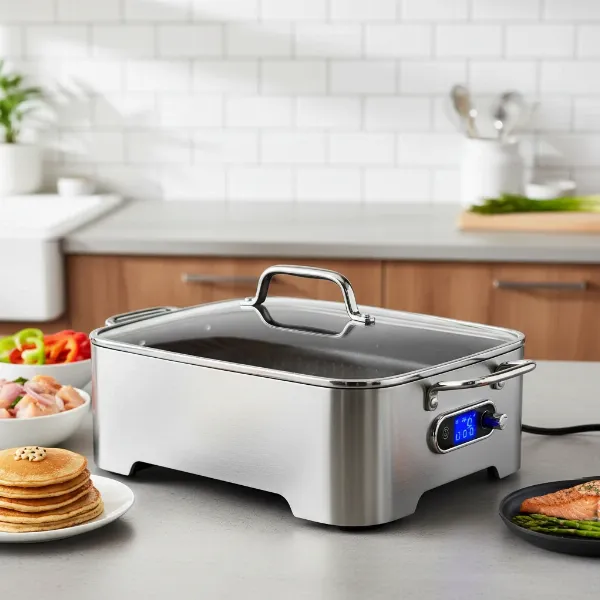 A modern electric skillet with a glass lid, detachable control, and advanced features.
Choosing Your Electric Skillet: A Modern Buying Guide
Selecting the right electric skillet involves considering your cooking habits and needs. Here’s a guide to help you make an informed decision:
Assess Your Needs
Before purchasing, consider what you’ll primarily use the skillet for. Do you need it for large family meals, occasional frying, or as an extra cooking surface? This will influence the size and features you prioritize.
Size and Capacity
Electric skillets come in various sizes, typically ranging from 10 to 16 inches in diameter or side length. A larger skillet is ideal for big families or entertaining, while smaller models are perfect for individual meals or limited counter space. Consider the overall capacity in quarts for stews and braises.
Material Considerations
- Non-stick: Excellent for healthy cooking with minimal oil and easy cleanup. Look for durable, PFOA-free coatings.
- Cast Iron: Offers exceptional heat retention and even distribution, ideal for searing and deep frying, but requires more maintenance.
- Stainless Steel: Durable, rust-resistant, and often dishwasher-safe, but may require more oil to prevent sticking.
Essential Features
Look for a precise, adjustable thermostat for accurate temperature control. A clear, tempered glass lid is invaluable for monitoring food. Features like cool-touch handles, a pouring spout, and a sturdy, flat base contribute to safety and convenience. Some models offer a “warm” setting, which is handy for serving.
Brand Reputation & Reviews
Research reputable brands known for quality and durability. Reading user reviews can provide real-world insights into performance and potential issues. Established brands often offer better customer support and warranty coverage.
Price vs. Value
Electric skillets vary widely in price. While it’s tempting to opt for the cheapest option, investing in a mid-range or higher-end model often translates to better construction, more reliable temperature control, and a longer lifespan. Consider it an investment in your kitchen’s versatility.
Mastering Your Electric Skillet: Usage and Care Tips
To ensure your electric skillet serves you well for years to come, proper usage and maintenance are key.
First Use & Temperature Control
Before the first use, always wash the skillet thoroughly according to manufacturer instructions. When cooking, allow the skillet to preheat fully to the desired temperature before adding food. The thermostat light typically indicates when the set temperature has been reached. Avoid overcrowding the pan, as this can lower the temperature and result in steaming instead of frying or searing.
Best Practices for Cooking
- Use Proper Utensils: Opt for silicone, wood, or heat-resistant plastic utensils to protect non-stick coatings.
- Oil Wisely: While non-stick surfaces require less oil, a little bit can enhance flavor and browning.
- Adjust for Altitude: Higher altitudes may require slight adjustments to cooking times and temperatures.
- Leverage the Lid: Use the lid to trap heat and moisture for braising, simmering, or keeping food warm.
Cleaning & Maintenance for Longevity
- Always Unplug and Cool: Before cleaning, always ensure the skillet is unplugged and has cooled completely to prevent burns and damage.
- Detachable Control: Remove the temperature control probe before washing. Never immerse the control unit in water.
- Hand Washing Preferred: Even if “dishwasher-safe,” hand washing with warm, soapy water and a soft sponge is often gentler and helps preserve the non-stick coating. For stubborn food, soak briefly.
- Thorough Drying: Dry all components completely before storing to prevent water spots or corrosion.
- Proper Storage: Store the skillet in a dry place. You might place a paper towel between the pan and the lid to prevent scratches if stacking.
Conclusion
The electric skillet’s journey from a nascent electrical appliance to a modern kitchen staple is a testament to its enduring design and utility. Its introduction revolutionized home cooking by offering unparalleled convenience, precise temperature control, and remarkable versatility. While culinary trends ebb and flow, the electric skillet has consistently proven its worth, adapting to new materials and features while holding onto the core benefits that made it popular decades ago. As we continue to seek efficient and flexible ways to prepare meals, the electric skillet remains a reliable workhorse, ready to tackle any culinary challenge.
What role does this versatile kitchen tool play in your everyday cooking, and how do you envision its future evolution?
Frequently Asked Questions
When did electric skillets become popular?
Electric skillets gained widespread popularity in the mid-20th century, particularly after the Sunbeam Automatic Frypan was introduced in 1953. Its built-in thermostat and convenient design made it a household essential throughout the 1950s, 60s, and 70s, cherished for its versatility and ease of use.
Who invented the first automatic electric skillet?
Sunbeam is widely credited with introducing the first automatic electric skillet, known as the Automatic Frypan, in 1953. This model revolutionized electric cooking by featuring a built-in thermostat for precise temperature control, making it a highly successful and influential kitchen appliance.
What materials were early electric skillets made from?
Early successful electric skillets, like the Sunbeam Automatic Frypan, were commonly made from cast-aluminum. Shortly after, in 1954, S.W. Farber, Inc. introduced the first stainless steel electric frying pan, expanding the material options available to consumers.
Can an electric skillet replace a traditional stovetop pan?
While an electric skillet offers tremendous versatility for frying, sautéing, simmering, and even roasting, it cannot fully replace a traditional stovetop pan for all cooking tasks. Its independent heating and precise control are advantages, but some specialized high-heat or open-flame cooking methods may still require a conventional stovetop.
Are electric skillets energy efficient?
For many cooking tasks, especially smaller meals, an electric skillet can be more energy-efficient than heating a full-sized oven or multiple stovetop burners. Its compact design and ability to concentrate heat directly in the pan minimize wasted energy, making it a smart choice for daily cooking.
How do modern electric skillets differ from older models?
Modern electric skillets retain the core functionality of their predecessors but often feature enhanced non-stick coatings, more ergonomic designs, advanced safety features like cool-touch handles, and sometimes additional functions such as integrated timers or specific “warm” settings. The fundamental advantage of precise temperature control remains central.