An electric skillet is a versatile kitchen workhorse, capable of frying, simmering, and roasting with remarkable ease. Yet, like all beloved appliances, it requires regular cleaning to maintain its performance and longevity. The unique challenge, however, lies in properly cleaning an electric skillet without inadvertently damaging its vital electrical components, especially the plug. Understanding the right techniques ensures your skillet remains a safe and efficient tool for years to come.
What is an Electric Skillet and Why Proper Cleaning Matters
An electric skillet is a self-contained cooking appliance featuring a heating element built directly into its base, allowing for precise temperature control independently of your stovetop. From searing steaks and frying chicken to simmering stews and preparing hearty breakfasts, its even heat distribution makes it a favorite in countless kitchens. Regular cleaning is absolutely essential not just for hygiene, but also to prevent food buildup that can reduce efficiency, degrade non-stick surfaces, and even pose health risks. More critically, neglecting proper cleaning can lead to residue accumulating around electrical connections, potentially impairing performance or creating safety hazards.
Understanding Your Electric Skillet’s Design: Immersible vs. Non-Immersible
Before you even think about grabbing a sponge, it’s crucial to identify your electric skillet’s design. This distinction dictates how you can safely clean it.
Some electric skillets come with a detachable temperature control unit and power cord. Once this unit is removed, the skillet body itself is often fully immersible in water or even dishwasher-safe. These models offer the most cleaning flexibility, as the core cooking vessel can be treated much like a regular pan.
Other electric skillets feature an integrated or non-detachable design, where the heating element and electrical connection are permanently affixed to the skillet body. These “one-piece” models require a more cautious approach, as they cannot be submerged in water at all. Always consult your appliance’s user manual to confirm its specific cleaning guidelines.
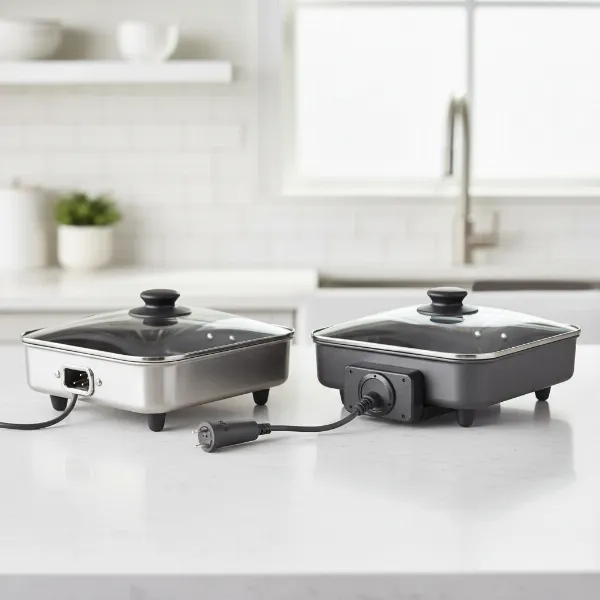 Two electric skillets side-by-side, showing detachable and integrated electrical components for cleaning.
The Absolute Rules for Cleaning an Electric Skillet Without Damaging the Plug
Mastering electric skillet cleaning hinges on a few non-negotiable rules that prioritize safety and preserve your appliance. Breaking these rules can lead to irreparable damage or, worse, electrical hazards.
“The cardinal rule of electric skillet care is simple: water and electricity don’t mix. Always ensure the electrical components are completely isolated from water during cleaning.” – Chef Elena Rodriguez, Culinary Appliance Specialist
- Rule #1: Always Unplug and Cool Completely. Never attempt to clean a hot skillet or one that is still plugged into an electrical outlet. This prevents burns and electrical shocks. Allow ample time for the skillet to reach room temperature before handling.
- Rule #2: Detach the Temperature Control Unit. For skillets with a removable temperature control unit and cord, always disconnect and set it aside before starting any cleaning process on the skillet body. This isolates the sensitive electrical components.
- Rule #3: Never Submerge the Electrical Components. This is the most critical safety instruction. Whether your skillet has a detachable unit or an integrated design, the electrical plug, temperature control probe, and any associated wiring must not be immersed in water. Water ingress can short-circuit the appliance, damage its internal mechanisms, and create a severe risk of electric shock when subsequently plugged in.
Step-by-Step Guide to Cleaning Your Electric Skillet
Now that we understand the fundamental safety rules, let’s walk through the cleaning process tailored to different skillet designs.
Preparing for Cleaning
Thorough preparation makes the cleaning process much safer and more effective.
- Unplugging and Cooling Down: As a first step, unplug your electric skillet from the wall outlet and allow it to cool completely. Rushing this step can lead to burns or damage to your cleaning tools.
- Removing the Detachable Temperature Control Unit: If your model features a removable temperature control probe or power cord, gently detach it from the skillet body. Place this unit in a safe, dry location away from any water or cleaning solutions.
- Safely Draining Excess Grease: Once cooled, carefully pour any leftover cooking oil or grease into a disposable container, such as an old jar or coffee can. Allow it to solidify, then discard it in the trash. Never pour grease down your sink drain, as it can solidify and cause severe plumbing clogs.
|
Our Picks for the Best Electric skillet in 2026
As an Amazon Associate I earn from qualifying purchases.
|
||
| Num | Product | Action |
|---|---|---|
| 1 | FOHERE 16-Inch Electric Skillet with Glass Cover, 1500W Rapid Heat, Adjustable Temperature, Multi-Purpose Electric Skillet Fried Chicken, Perfect For Family Gathering Cooking |

|
| 2 | Elite Gourmet EG-6203# Extra Deep 16"x13"x3.2" (10.5Qt.) Scratch Resistant, Easy Pour Spout Dishwasher Safe, Non-stick Electric Skillet with Glass Vented Lid, Adjustable Temperature, Black |
|
| 3 | Elite Gourmet EG808 8” x 8" Non-stick Electric Skillet, Dishwasher Safe with Tempered Glass Vented Lid, Rapid Heat Up, 600W, Black |
|
| 4 | Presto 06857 16-inch Electric Foldaway Skillet, Black |
|
| 5 | bella Make & Take Electric Skillet, Fits-anywhere™ kitchenware, EverGood™ Ceramic Coating, Adjustable Temperature & Dishwasher-Safe Tempered Glass Lid, Cast Aluminum Base, 1200 Watt, Oatmilk |
|
| 6 | Elite Gourmet 12"x12"x2.15” Ceralast™ PFAS Free Ceramic Electric Skillet, Dishwasher Safe, Rapid Heat Up, 1200W, Dark Grey |
|
| 7 | Elite Gourmet EG6201 Extra Deep 12"x12"x3.2" (7.5Qt.) Scratch Resistant Dishwasher Safe, Non-stick Electric Skillet with Glass Vented Lid, Adjustable Temperature, Black |
|
| 8 | Pioneer Woman 3.5L Electric Skillet, Linen Speckle |
|
| 9 | Nuwave Medley XL Digital Electric Skillet, Family Size Griddle w/Glass Lid, 2025 New & Improved Precision Heating, 100°-425°F, PFAS Free G11 Nonstick Ceramic Coating, Portable Hot Plate, 7qt Capacity |
|
| 10 | Blue Diamond 7QT 5-in-1 Extra Large Electric Skillet, Healthy Ceramic Nonstick Interior, Non-Toxic PFAS-Free, Temperature Control, Stay Cool Handles, Easy Clean, Graphite |
|
Cleaning the Skillet Body (Immersible Models)
For electric skillets where the main body can be immersed after removing the electrical unit, cleaning is straightforward.
- Using Warm, Soapy Water and a Soft Cloth/Sponge: Fill your sink with warm water and a few drops of mild dish soap. Submerge the skillet body, ensuring the electrical connector port (where the temperature control unit attaches) is kept pointing upwards and clear of the water as much as possible, especially during initial submersion. Using a soft sponge or dishcloth, gently scrub the interior and exterior of the skillet.
- Keeping the Connector Port Pointed Upwards: Even if your immersible skillet is designed to handle some water around the port, maintaining an upward angle minimizes the chance of water seeping into the electrical contacts.
- Rinsing Thoroughly: Once clean, rinse the skillet under running warm water, again being mindful to keep the connector port dry if possible. Ensure all soap residue is completely washed away.
Cleaning the Skillet Body (Non-Immersible/One-Piece Models)
For electric skillets with integrated electrical components that cannot be submerged, a different approach is necessary to avoid damaging the plug.
- Wiping with a Damp, Soapy Cloth: Prepare a solution of warm water and mild dish soap. Dip a soft cloth or sponge into the solution, wring it out thoroughly until it’s just damp, and then wipe down the interior of the skillet. For stubborn spots, re-dampen and wring the cloth as needed.
- Avoiding Direct Rinsing or Submersion: Never run water directly over a non-immersible skillet, nor should you submerge any part of it. The key is to control the amount of moisture.
- Wiping Clean with a Fresh Damp Cloth: Once you’ve scrubbed away food residue with the soapy cloth, take a fresh, clean cloth, dampen it with plain water, and wring it out completely. Use this cloth to wipe down all surfaces, removing any lingering soap film. Repeat until the skillet is thoroughly rinsed.
Cleaning the Temperature Control Unit and Cord
The electrical components also need care, but in a very specific, dry manner.
- Wiping with a Slightly Damp Cloth: For the detached temperature control unit and the power cord, use a cloth that is barely damp. Wipe down the exterior surfaces to remove grease or splatters.
- Using a Toothpick for Debris in the Connector: If you notice any stubborn grease or food particles inside the connector opening of the skillet body or on the probe of the control unit, use a dry toothpick or a cotton swab to carefully dislodge them.
- Ensuring No Water Enters the Connector: Be extremely careful not to let any moisture enter the openings or crevices of the electrical components. These areas must remain completely dry to prevent malfunction and ensure safety.
Tackling Stubborn Stains and Burnt-On Food Safely
Even with diligent care, some food residue might prove tenacious. Here’s how to tackle it without resorting to harsh methods that could damage your skillet or its plug.
- Gentle Heating with Water and Scraping: For burnt-on food, pour a small amount of water (just enough to cover the bottom) into the cooled skillet. Re-attach the temperature control (if detachable), plug it in, and heat on a very low setting for a few minutes. The gentle heat and steam will help loosen the residue. Unplug, let cool, then use a wooden spoon or nylon spatula to scrape away the loosened bits.
- Baking Soda Paste Method: A natural abrasive, baking soda is excellent for tough stains. Mix a few tablespoons of baking soda with just enough hot water to form a thick paste. Spread this paste over the stained areas and let it sit for 15-30 minutes. Then, gently scrub with a soft-bristled brush or non-abrasive sponge. Rinse (following the immersible/non-immersible guidelines) thoroughly.
- Vinegar for Grease and Mineral Deposits: For hard water spots or greasy film, white vinegar can be effective. Mix equal parts white vinegar and water, apply with a soft cloth, let sit for a few minutes, then wipe clean.
- What to Avoid: Absolutely steer clear of metal scrubbers, steel wool, abrasive scouring pads, oven cleaners, or harsh chemical detergents. These can permanently scratch non-stick coatings and other surfaces, compromising your skillet’s performance and appearance.
Drying and Storage for Long-Term Safety
Proper drying and storage are just as vital as the cleaning itself to prevent moisture-related damage to the electrical system.
- Thorough Drying of All Parts: After cleaning, meticulously dry every part of your electric skillet with a clean, soft towel. Ensure there are no water droplets or damp spots remaining, especially on the skillet’s exterior and base.
- Air Drying the Electrical Port: For skillets with a detachable temperature control, pay extra attention to the electrical connector port on the skillet body. Allow it to air dry completely for several hours, or even overnight, before reattaching the control unit or storing the skillet. Placing it upside down on a drying rack can help facilitate air circulation.
- Proper Storage to Prevent Damage: Store your clean, dry electric skillet in a cabinet or pantry where it won’t be exposed to moisture or extreme temperatures. Ensure the detachable temperature control unit is stored separately in a dry place to protect its sensitive electronics. Avoid stacking heavy items directly on the skillet’s cooking surface to prevent scratches or damage to the non-stick coating.
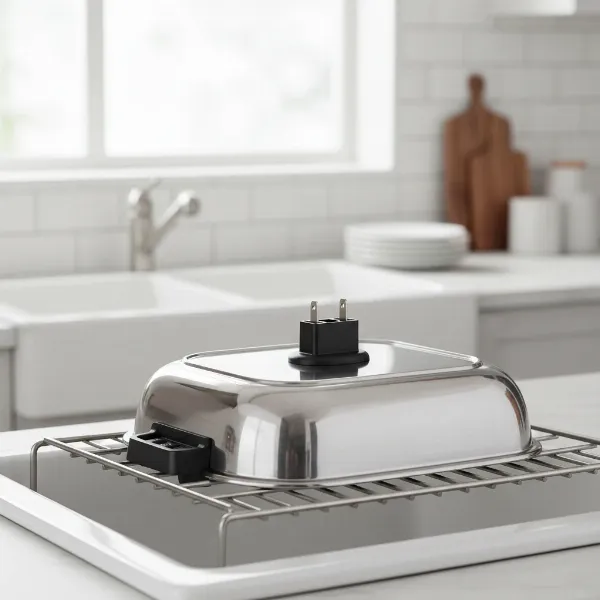 An electric skillet air drying with its electrical connector port facing upwards to prevent moisture.
Conclusion
Caring for your electric skillet doesn’t have to be a chore, and protecting its electrical components, particularly the plug, is simpler than you might think. By always unplugging, understanding your skillet’s design, and diligently keeping water away from sensitive electrical connections, you ensure both your safety and your appliance’s longevity. Remember, a clean electric skillet isn’t just a joy to cook with; it’s a testament to smart kitchen maintenance.
What delicious meal will you prepare in your sparkling clean electric skillet next?
Frequently Asked Questions
Can I put my electric skillet in the dishwasher?
Some electric skillet models with detachable temperature control units are indeed dishwasher safe, but it’s crucial to consult your specific owner’s manual. Never put the electrical control unit or cord in the dishwasher.
What if water accidentally gets into the plug area?
If water accidentally enters the electrical plug area, immediately unplug the skillet and do not use it. Allow it to air dry completely for an extended period, perhaps 24-48 hours, in a warm, dry spot before attempting to plug it in again. If you have any doubts, it’s safer to seek professional advice or consider replacement.
How often should I clean my electric skillet?
You should clean your electric skillet after every use to prevent food residue buildup and maintain hygiene. A quick wipe-down after each meal is typically sufficient, with a more thorough cleaning as needed for stubborn stains.
Can I use steel wool or abrasive cleaners?
No, never use steel wool, abrasive scouring pads, or harsh chemical cleaners on your electric skillet, especially if it has a non-stick coating. These can scratch and damage the surface, compromising its performance and making it more prone to sticking.
What is the best way to remove sticky residue without scratching the non-stick coating?
For sticky residue, try using a baking soda paste (baking soda mixed with a little water) and a soft sponge or cloth. For really tough spots, gently heating a small amount of water in the skillet can help loosen the residue for easier removal with a non-metal spatula.
Why is it so important not to get the plug wet?
The plug and temperature control unit contain sensitive electrical components. Water is an electrical conductor and can cause short circuits, rust, and corrosion within these parts, leading to appliance malfunction, electrical shock hazards, or permanent damage to the skillet.