Non-stick skillets have become indispensable tools in kitchens worldwide, simplifying everything from flipping delicate pancakes to searing meats without sticking. But for home cooks and seasoned chefs alike, a persistent question often arises: when comparing ceramic and traditional non-stick coatings, which one truly stands the test of time? Both promise effortless food release and easy cleanup, yet their durability and lifespan can vary significantly based on their unique compositions, how they’re used, and the care they receive. Understanding these differences is key to making an informed choice for your next kitchen essential. This article will delve into the characteristics of each coating, compare their typical lifespans, and provide practical advice to help you select a skillet that aligns with your cooking habits and lasts as long as possible.
Understanding Skillet Coatings: Ceramic vs. Traditional Non-Stick
Before we can compare their longevity, it’s essential to understand what these coatings are made of and how they function. Each type brings distinct properties to your cooking surface.
What is Traditional Non-Stick (PTFE)?
|
Our Picks for the Best Electric skillet in 2026
As an Amazon Associate I earn from qualifying purchases.
|
||
| Num | Product | Action |
|---|---|---|
| 1 | Elite Gourmet EG808 8” x 8" Non-stick Electric Skillet, Dishwasher Safe with Tempered Glass Vented Lid, Rapid Heat Up, 600W, Black |

|
| 2 | FOHERE 16-Inch Electric Skillet with Glass Cover, 1500W Rapid Heat, Adjustable Temperature, Multi-Purpose Electric Skillet Fried Chicken, Perfect For Family Gathering Cooking |
|
| 3 | Pioneer Woman 3.5L Electric Skillet, Linen Speckle |
|
| 4 | Elite Gourmet 12"x12"x2.15” Ceralast™ PFAS Free Ceramic Electric Skillet, Dishwasher Safe, Rapid Heat Up, 1200W, Dark Grey |
|
| 5 | Nuwave Medley XL Digital Electric Skillet, Family Size Griddle w/Glass Lid, 2025 New & Improved Precision Heating, 100°-425°F, PFAS Free G11 Nonstick Ceramic Coating, Portable Hot Plate, 7qt Capacity |
|
| 6 | Elite Gourmet EG6201 Extra Deep 12"x12"x3.2" (7.5Qt.) Scratch Resistant Dishwasher Safe, Non-stick Electric Skillet with Glass Vented Lid, Adjustable Temperature, Black |
|
| 7 | bella Make & Take Electric Skillet, Fits-anywhere™ kitchenware, EverGood™ Ceramic Coating, Adjustable Temperature & Dishwasher-Safe Tempered Glass Lid, Cast Aluminum Base, 1200 Watt, Oatmilk |
|
| 8 | Elite Gourmet EG-6203# Extra Deep 16"x13"x3.2" (10.5Qt.) Scratch Resistant, Easy Pour Spout Dishwasher Safe, Non-stick Electric Skillet with Glass Vented Lid, Adjustable Temperature, Black |
|
| 9 | Presto 06857 16-inch Electric Foldaway Skillet, Black |
|
| 10 | Blue Diamond 7QT 5-in-1 Extra Large Electric Skillet, Healthy Ceramic Nonstick Interior, Non-Toxic PFAS-Free, Temperature Control, Stay Cool Handles, Easy Clean, Graphite |
|
When most people refer to “non-stick” cookware, they are typically thinking of pans coated with Polytetrafluoroethylene, commonly known as PTFE. Teflon is the most recognized brand name for this material. PTFE is a synthetic fluoropolymer known for its incredibly low friction, making surfaces extremely slippery. This slick quality prevents food from adhering, allowing for cooking with minimal oil and effortless cleanup. Historically, PTFE production involved Perfluorooctanoic acid (PFOA), a chemical that raised health concerns. However, all major manufacturers have phased out PFOA since 2013, making modern PTFE coatings PFOA-free and generally considered safe for everyday cooking when used correctly.
What is Ceramic Coating?
Ceramic coatings, often marketed as “green” or “natural” non-stick, are typically made through a sol-gel process. This involves applying a silicon-dioxide (silica) based solution that forms a gel, which is then cured into a smooth, hard, and non-porous layer. These coatings are derived from inorganic materials, giving them a mineral-like composition that is free from PTFE and PFOA. This often leads to a perception of enhanced safety and environmental friendliness. It’s crucial to distinguish between ceramic-coated pans, where the ceramic is a thin layer over a metal base (usually aluminum), and “all-ceramic” cookware, which is made entirely of ceramic material. For this discussion, we are focusing on the more common ceramic-coated skillets.
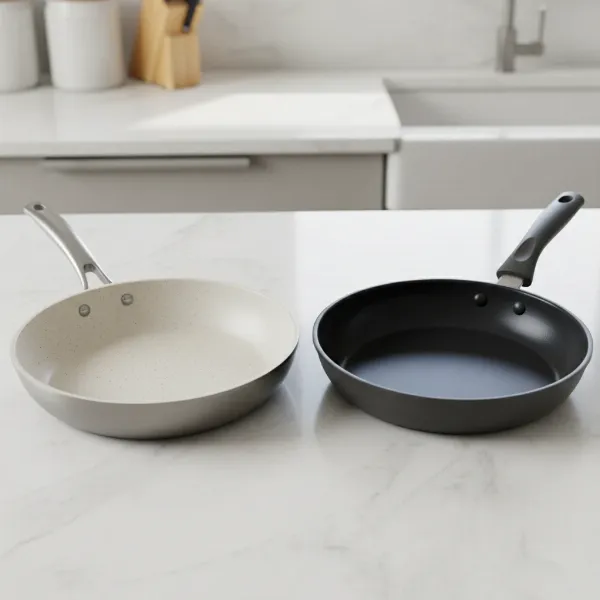 Side-by-side comparison of a ceramic-coated and a traditional PTFE non-stick skillet.
The Lifespan Lowdown: Durability and Longevity Compared
The central question revolves around which coating endures longer in a busy kitchen. The answer isn’t always straightforward, as both have strengths and weaknesses that impact their overall lifespan.
Lifespan of Traditional Non-Stick (PTFE)
Traditional non-stick skillets with PTFE coatings typically have an average lifespan of two to five years. This duration is heavily influenced by factors such as the quality of the pan, frequency of use, and adherence to care instructions. While PTFE is known for its excellent initial non-stick release, its primary vulnerability lies in its susceptibility to high heat and physical damage. Overheating can cause the coating to break down and degrade, leading to a loss of non-stick properties and, in extreme cases, the release of fumes. Scratches from metal utensils or abrasive cleaning can also quickly compromise the integrity of the surface, reducing its effectiveness and lifespan.
Lifespan of Ceramic Coatings
Ceramic-coated skillets often have a slightly shorter expected lifespan than their PTFE counterparts, generally ranging from one to three years, though some high-quality pans might last up to five years with meticulous care. Initially, ceramic coatings offer fantastic non-stick performance, often rivaling or even surpassing traditional non-stick. However, these coatings tend to be more brittle. They are prone to chipping and scratching, particularly if subjected to metal utensils, harsh scrubbing, or sudden temperature changes. Furthermore, ceramic coatings can lose their non-stick properties over time due to repeated exposure to high heat, which can cause the coating to become porous or darken, leading to food sticking more easily. The “easy-release” surface tends to diminish sooner than PTFE if not strictly maintained.
Direct Comparison: Which Lasts Longer?
In a head-to-head comparison, traditional non-stick (PTFE) skillets can often outlast ceramic-coated ones, provided they are used under specific conditions. PTFE coatings tend to retain their slick, non-stick qualities longer when kept at low or medium heat and handled with care. Ceramic pans, while performing beautifully initially, may lose their easy-release surface sooner, especially if accidentally overheated or scrubbed abrasively. Ultimately, neither non-stick cookware nor ceramic pans are “buy it for life” items; both coatings inevitably wear over time, leading to a decline in non-stick performance. They are best considered wear items that will eventually need replacement, regardless of their initial quality.
Advantages and Disadvantages Beyond Longevity
Choosing between ceramic and traditional non-stick isn’t solely about how long they last. Other factors, from perceived safety to cooking performance, play a significant role.
Advantages of Ceramic Coatings
One of the most significant advantages of ceramic coatings is their composition. They are widely promoted as being free from PTFE and PFOA, which many consumers perceive as a safer, more “natural” option for healthy cooking. This can provide peace of mind for those concerned about chemicals in their cookware. Additionally, ceramic coatings can often handle slightly higher temperatures than PTFE without the risk of releasing potentially harmful fumes, although high heat will still degrade the non-stick properties over time. Some ceramic pans also boast eco-friendlier manufacturing processes, aligning with sustainable lifestyle choices.
Disadvantages of Ceramic Coatings
Despite their appealing “green” image, ceramic coatings come with notable drawbacks. As discussed, they are generally less durable against physical damage; they can chip and scratch more easily than PTFE. This brittleness means they often require even more delicate handling. The non-stick performance of ceramic coatings is also known to degrade faster than PTFE with regular use, particularly when exposed to inconsistent heat or improper cleaning. This quicker decline in non-stick effectiveness can lead to a frustrating cooking experience sooner than expected.
Advantages of Traditional Non-Stick (PTFE)
Traditional non-stick skillets (PTFE) offer an exceptionally smooth, low-friction cooking surface that is hard to beat for effortless food release, especially for delicate items like eggs and fish. They are generally more forgiving against minor abrasions than ceramic coatings, making them slightly more resilient to everyday kitchen mishaps. PTFE pans are also widely available and often more affordable, making them an accessible option for many budgets. When used according to manufacturer guidelines, especially at low to medium heat, their non-stick properties can remain highly effective for several years.
Disadvantages of Traditional Non-Stick (PTFE)
The primary concern with traditional non-stick relates to its degradation at high temperatures. While modern PTFE is PFOA-free, overheating a PTFE pan (above 450-500°F or 232-260°C) can cause the coating to break down and release fumes, which can be harmful to small pets, such as birds, and may cause flu-like symptoms in humans. Furthermore, while more resilient than ceramic, PTFE still requires careful handling to prevent scratches and flaking, which not only diminishes its non-stick ability but also signals that the pan should be replaced. The presence of “forever chemicals” (PFAS) in the broader category, even if PTFE itself is inert, remains a concern for some consumers.
Key Factors Influencing Coating Longevity
Regardless of whether you choose ceramic or traditional non-stick, several factors universally dictate how long your skillet’s coating will last. Understanding these can significantly extend the life of your cookware.
Quality of Construction
The old adage “you get what you pay for” often holds true for non-stick skillets. Higher-quality pans typically feature thicker, more robust coatings and are built on durable base materials like anodized aluminum or stainless steel. These structural improvements contribute to better heat distribution, which prevents hot spots that can prematurely degrade the coating, and offer greater overall resilience against everyday use. A superior bond between the coating and the pan’s base also means the non-stick surface is less likely to peel or chip prematurely.
Heat Management
Heat is both a cook’s best friend and a non-stick coating’s worst enemy. Both ceramic and PTFE coatings are designed for low to medium heat cooking. Using excessively high heat, especially for extended periods or on an empty pan, is the single fastest way to shorten the lifespan of any non-stick surface. High temperatures cause the coatings to break down, harden, or become porous, leading to food sticking. Always preheat your skillet gradually and avoid using it on the highest heat settings unless specifically instructed by the manufacturer, and even then, understand the trade-offs in longevity.
Utensil Choice
The type of utensils you use directly impacts the longevity of your skillet’s coating. Metal spatulas, forks, or whisks can easily scratch and gouge both ceramic and traditional non-stick surfaces, creating weak points where the coating can peel or chip. To protect your investment, always opt for cooking utensils made from silicone, wood, or heat-resistant plastic. These materials are gentle on the delicate non-stick layer, preserving its integrity and ensuring a longer, more effective lifespan.
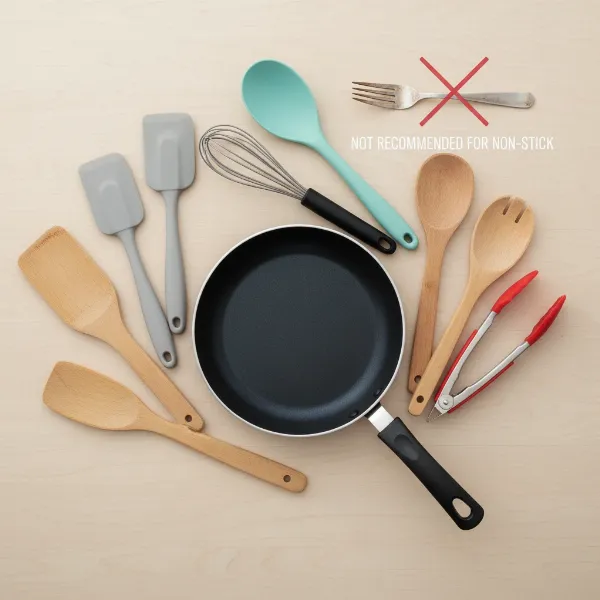 Assortment of safe cooking utensils like silicone, wood, plastic for non-stick pans.
Cleaning and Storage
The way you clean and store your non-stick skillet can also significantly affect its durability. Harsh abrasives, steel wool, or even vigorous scrubbing with a stiff brush can damage the coating. While some modern non-stick pans claim to be dishwasher-safe, hand-washing with a soft sponge and mild dish soap is almost always recommended to extend their life. Furthermore, storing pans properly, ideally with felt pan protectors between stacked items, prevents scratches that can occur when cookware rubs against each other. Letting a hot pan cool completely before washing also helps prevent thermal shock, which can stress and damage the coating.
Maximizing Longevity: Care and Maintenance Tips
To get the most out of your ceramic or non-stick skillet, adopt these best practices in your kitchen.
Initial Use and Seasoning
Always read the manufacturer’s instructions for first-time use, as some pans may require a light “seasoning” process with oil before their initial cook. This can help enhance the non-stick properties and protect the coating from the start.
Cooking Practices
- Mind the Heat: Stick to low to medium heat settings. Most non-stick cooking doesn’t require high heat.
- No Aerosol Sprays: Avoid cooking sprays that contain propellants. These can build up a sticky residue on the coating that is difficult to remove and degrades the non-stick surface over time.
- Gentle Utensils: Use only silicone, wood, or plastic utensils to prevent scratches.
- Enough Oil/Fat: Even with a non-stick coating, a small amount of oil or butter helps prevent sticking and protects the pan.
Cleaning and Storage
- Cool Down: Always allow your skillet to cool completely before washing it to prevent thermal shock.
- Hand-Wash: Gently hand-wash with warm, soapy water and a soft sponge. Avoid abrasive cleaners or scouring pads.
- Dry Thoroughly: Ensure the pan is completely dry before storing to prevent water spots and potential corrosion on the base metal.
- Protect When Storing: If stacking, place pan protectors or a soft cloth between skillets to prevent scratching the delicate non-stick surface.
- When to Replace: It’s time to replace your non-stick skillet when food starts consistently sticking, or if you notice significant scratches, chips, peeling, or discoloration on the coating. Continuing to use a damaged pan can be frustrating and may pose minor safety concerns if coating particles are ingested.
“Regardless of the coating type, the longevity of your non-stick skillet hinges almost entirely on consistent, gentle care. Treat it well, and it will serve your culinary adventures faithfully, at least for a few years.” – electricskilletguide.com Admin, Cookware Specialist
Conclusion
Choosing between ceramic and traditional non-stick skillets involves weighing perceived safety, initial performance, and durability against proper care. While traditional non-stick (PTFE) can often offer a slightly longer non-stick lifespan when used correctly at low to medium heat, ceramic coatings appeal to those seeking PTFE-free options, though their non-stick properties tend to diminish more rapidly with heavy use or high heat. Both types of coated skillets are considered consumables in the kitchen, designed for a limited lifespan of generally 1-5 years.
Ultimately, the best choice depends on your priorities and commitment to care. For those prioritizing long-lasting slickness under controlled conditions, a well-maintained PTFE pan might be the answer. If a PTFE-free surface is your top concern, a ceramic-coated skillet could be ideal, provided you’re diligent with gentle use and cleaning. Remember, consistent care, including appropriate heat management and using soft utensils, is the most crucial factor in extending the life of any non-stick cooking surface. What aspect of skillet longevity matters most to you in your daily cooking?
Frequently Asked Questions
Are ceramic skillets truly safer than traditional non-stick?
Modern ceramic coatings are celebrated for being free of PTFE and PFOA, appealing to those seeking “chemical-free” options. While modern PTFE is also PFOA-free, ceramic is often perceived as a safer alternative, especially concerning high-heat fume release, though both coatings can degrade with misuse.
Can I use metal utensils on ceramic or non-stick skillets?
Absolutely not. Metal utensils will scratch and damage both ceramic and traditional non-stick coatings, leading to a rapid decline in non-stick performance and premature wear. Always use silicone, wood, or heat-resistant plastic utensils to protect your pan.
What’s the best way to clean a non-stick or ceramic skillet?
The best practice is to let the skillet cool completely, then hand-wash it with warm water, mild dish soap, and a soft sponge. Avoid abrasive cleaners or harsh scrubbing pads, as these can strip or scratch the delicate non-stick surface.
How do I know when it’s time to replace my non-stick skillet?
You should replace your non-stick skillet when food consistently sticks, even with oil, or if the coating shows visible signs of damage such as scratches, chips, flaking, or significant discoloration. A compromised coating means compromised performance and potential safety concerns.
Do ceramic coatings always fail faster than traditional non-stick?
While general consensus suggests ceramic coatings can lose their non-stick properties faster, particularly with high heat or abrasive use, the exact lifespan varies by quality and care. With meticulous low-heat cooking and gentle handling, some ceramic pans can last several years.