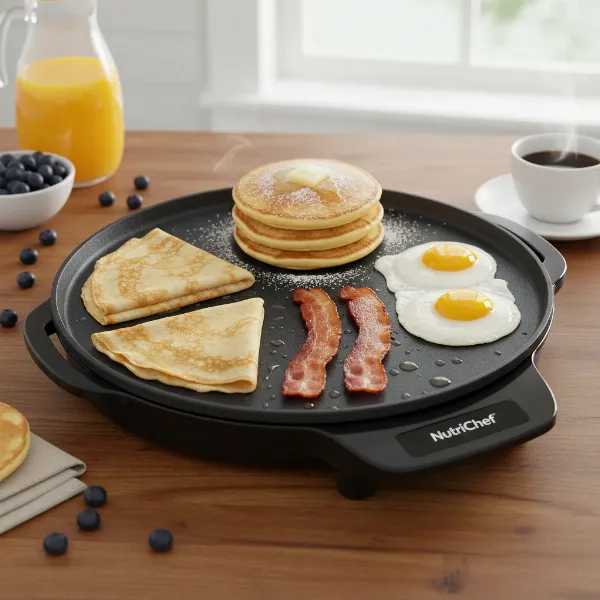
The electric skillet stands as a versatile workhorse in countless kitchens, a dependable appliance that often outshines its stovetop counterparts in consistency and convenience. Yet, unlocking its full potential, especially for achieving consistently delicious meals, hinges on one critical skill: precise temperature control. Whether you’re a seasoned chef or a home cook looking to elevate your culinary game, understanding how to perfectly manage the heat in your electric skillet is the secret ingredient to preventing burnt edges, undercooked centers, and uneven browning. This comprehensive guide will transform your cooking, ensuring every dish benefits from optimal, consistent heat, empowering you to master your electric skillet and create culinary perfection every time.
What is an Electric Skillet?
An electric skillet, often referred to as an electric frying pan, is a self-contained cooking appliance featuring an integrated heating element and a built-in thermostat. Unlike traditional skillets that rely on a stovetop burner for heat, electric skillets generate and regulate their own temperature, providing a consistent and controlled cooking environment. This independence from a stove makes them incredibly versatile, allowing for cooking anywhere a power outlet is available.
The journey of the electric skillet, from its early rudimentary designs to the sophisticated models available today, reflects a continuous drive for greater convenience and precision. Early versions offered basic on/off functionality, but advancements quickly led to the integration of adjustable thermostats. These controls transformed the electric skillet into a highly adaptable tool, capable of maintaining specific temperatures ideal for a wide range of cooking techniques, from gentle simmering to high-heat searing, revolutionizing how home cooks approach meal preparation.
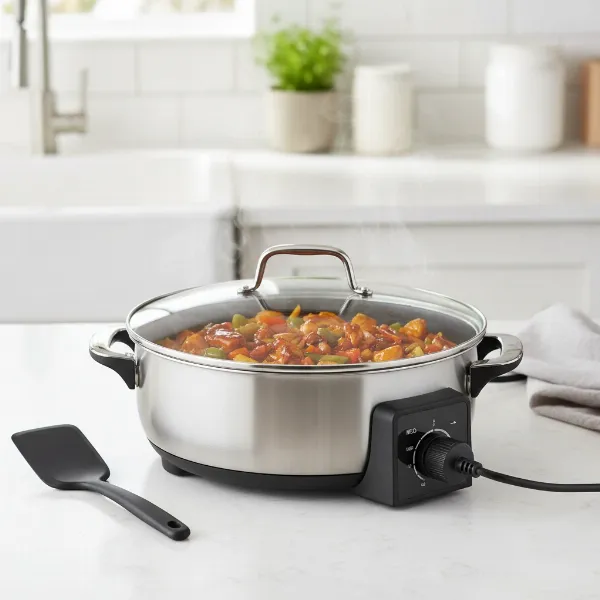 A sleek, modern electric skillet on a kitchen counter with food gently simmering inside.
Pros and Cons of an Electric Skillet
Like any kitchen appliance, the electric skillet offers a unique set of advantages and disadvantages. Understanding these can help you appreciate its strengths, particularly regarding heat management, and mitigate any potential drawbacks.
Pros
- Exceptional Temperature Control and Consistency: The most significant advantage of an electric skillet is its built-in thermostat. This feature allows you to set a precise temperature, which the skillet then actively maintains by cycling its heating element on and off. This constant regulation minimizes temperature fluctuations, providing a much more stable cooking environment than a stovetop burner, where heat can vary significantly. This consistency is crucial for delicate dishes and frying, preventing hot spots and ensuring even cooking.
- Versatility and Convenience: Its portability means an electric skillet isn’t confined to the kitchen. It’s perfect for potlucks, camping trips (with power access), or simply freeing up stovetop space during holiday cooking. Many models also feature high sides and generous capacity, making them suitable for everything from one-pot meals and stews to frying and baking.
- Energy Efficiency: Electric skillets often use less energy than heating a large stovetop burner and warming up a conventional oven, especially for smaller tasks. They concentrate heat directly on the cooking surface, reducing wasted energy.
- Easy Cleanup: Most modern electric skillets come with non-stick coatings and removable temperature probes, allowing the skillet body to be fully immersed in water or even placed in a dishwasher (always check manufacturer guidelines). This makes post-cooking cleanup remarkably simple, a welcome relief after a delicious meal.
|
Our Picks for the Best Electric skillet in 2026
As an Amazon Associate I earn from qualifying purchases.
|
||
| Num | Product | Action |
|---|---|---|
| 1 | Blue Diamond 7QT 5-in-1 Extra Large Electric Skillet, Healthy Ceramic Nonstick Interior, Non-Toxic PFAS-Free, Temperature Control, Stay Cool Handles, Easy Clean, Graphite |

|
| 2 | Elite Gourmet EG-6203# Extra Deep 16"x13"x3.2" (10.5Qt.) Scratch Resistant, Easy Pour Spout Dishwasher Safe, Non-stick Electric Skillet with Glass Vented Lid, Adjustable Temperature, Black |
|
| 3 | Presto 06857 16-inch Electric Foldaway Skillet, Black |
|
| 4 | Elite Gourmet 12"x12"x2.15” Ceralast™ PFAS Free Ceramic Electric Skillet, Dishwasher Safe, Rapid Heat Up, 1200W, Dark Grey |
|
| 5 | Elite Gourmet EG6201 Extra Deep 12"x12"x3.2" (7.5Qt.) Scratch Resistant Dishwasher Safe, Non-stick Electric Skillet with Glass Vented Lid, Adjustable Temperature, Black |
|
| 6 | Nuwave Medley XL Digital Electric Skillet, Family Size Griddle w/Glass Lid, 2025 New & Improved Precision Heating, 100°-425°F, PFAS Free G11 Nonstick Ceramic Coating, Portable Hot Plate, 7qt Capacity |
|
| 7 | FOHERE 16-Inch Electric Skillet with Glass Cover, 1500W Rapid Heat, Adjustable Temperature, Multi-Purpose Electric Skillet Fried Chicken, Perfect For Family Gathering Cooking |
|
| 8 | Pioneer Woman 3.5L Electric Skillet, Linen Speckle |
|
| 9 | Elite Gourmet EG808 8” x 8" Non-stick Electric Skillet, Dishwasher Safe with Tempered Glass Vented Lid, Rapid Heat Up, 600W, Black |
|
| 10 | bella Make & Take Electric Skillet, Fits-anywhere™ kitchenware, EverGood™ Ceramic Coating, Adjustable Temperature & Dishwasher-Safe Tempered Glass Lid, Cast Aluminum Base, 1200 Watt, Oatmilk |
|
Cons
- Dependence on Power Outlet: While portability is a pro, the reliance on an electrical outlet can also be a limitation. It can’t be used during power outages or in locations without access to electricity.
- Potential for Uneven Heating (in some models): While electric skillets generally offer excellent heat distribution, cheaper or older models might suffer from hot spots or uneven heating, particularly around the edges. This can lead to inconsistent cooking results if not managed carefully through stirring or rotating food.
- Limited Mobility with Attached Cords: Some designs have non-detachable power cords, which can make storing and maneuvering the skillet slightly less convenient.
- Not Ideal for All Cooking Methods: While highly versatile, an electric skillet won’t replace a broiler for certain browning needs or a deep fryer for very large batches of fried foods due to space and temperature recovery rates. It’s a fantastic all-rounder but has its specific sweet spots.
Popular Types of Electric Skillets on the Market
Electric skillets come in various forms, each offering distinct characteristics that can influence their performance, particularly concerning heat distribution and user-friendliness for temperature control. Understanding these differences can help you select a model best suited to your cooking style.
Classification by Shape
- Round Skillets: These are the most traditional shape, often mimicking conventional frying pans. They are excellent for everyday cooking, sautéing, and browning. Their circular design generally promotes relatively even heat distribution from the center outwards, which can aid in consistent temperature control.
- Square Skillets: Offering a larger usable cooking surface than a round skillet of similar diameter, square electric skillets are ideal for cooking larger quantities of food, such as multiple pancakes, burgers, or a family-sized stir-fry. The corners can sometimes be slightly cooler than the center, so awareness of these subtle temperature variations is key to perfect cooking.
- Rectangular Skillets: These are the largest capacity skillets, perfect for entertaining, buffet-style serving, or preparing meals for big families. Their elongated shape allows for cooking different items simultaneously or handling large cuts of meat. Similar to square skillets, monitoring heat consistency across the entire surface, particularly with regard to temperature regulation, is important.
Classification by Material
- Non-stick Skillets (typically coated aluminum): These are by far the most common type. The aluminum core heats quickly and, when combined with a quality non-stick coating, offers easy food release and cleanup. The non-stick surface, however, is delicate, and maintaining precise, moderate temperatures is crucial to preserve its integrity and prevent premature wear, which can otherwise lead to uneven cooking.
- Cast Iron Skillets: While less common as fully electric units, some electric skillets feature cast iron cooking surfaces. Cast iron excels at heat retention and provides incredibly even heat once preheated. This makes it superb for searing and deep frying where consistent high temperatures are desired. However, they are heavier, take longer to heat up, and require specific seasoning and care to prevent rust. Their robust nature means they can typically withstand higher temperatures without immediate surface degradation.
- Stainless Steel Skillets: Offering durability and a sleek aesthetic, stainless steel electric skillets are resistant to scratching and corrosion. They heat more slowly than aluminum but distribute heat very evenly once hot. While they don’t have a non-stick coating, they can achieve excellent searing and browning, especially with proper preheating and oiling. Their surface won’t degrade at high temperatures like some non-stick coatings, offering more flexibility in heat control.
Classification by Features
- Skillets with Glass Lids: A transparent glass lid is an invaluable feature for temperature control, as it allows you to monitor your food’s progress without lifting the lid. This helps to retain heat and moisture, which is critical for simmering, braising, and slow cooking, where maintaining a stable temperature is paramount.
- Skillets with Detachable Temperature Controls: Most modern electric skillets feature a removable temperature control probe. This design is highly practical, as it allows the skillet body to be fully immersed in water for easy cleaning. A well-designed, securely fitting probe is essential for accurate temperature readings and consistent heat regulation.
- Skillets with Timer Functions: Some advanced electric skillets include integrated timers, offering an extra layer of convenience and precision. This feature is particularly useful for recipes requiring specific cooking durations at controlled temperatures, preventing overcooking and ensuring consistent results.
- Digital vs. Dial Controls: While most electric skillets use a dial control with marked temperatures or low/medium/high settings, some premium models boast digital temperature displays. Digital controls often allow for more precise temperature adjustments, sometimes in smaller increments, giving users finer command over their cooking environment.
Comparing Popular Electric Skillet Brands
When selecting an electric skillet, the brand often signifies a commitment to quality, durability, and most importantly for our discussion, reliable temperature control. While specific models within each brand will vary, here’s a general comparison based on commonly recognized strengths:
| Brand | Price Range | Quality & Durability | Temperature Control Features | Notable Features | Ideal For |
|---|---|---|---|---|---|
| Presto | Mid-range | Good; often durable | Generally reliable, consistent thermostats; some models have a “keep warm” setting. | Many feature deep designs, removable handles for storage (Foldaway models). | Everyday cooking, frying, families needing larger capacity. |
| Zojirushi | High-end | Excellent, long-lasting | Highly precise digital temperature controls; superior heat distribution. | Multi-functional, often includes steaming trays, inner pans, and advanced safety. | Gourmet cooking, precise temperature tasks, health-conscious. |
| Proctor Silex | Budget | Basic, functional | Simple dial controls; less precision but generally functional. | Lightweight, easy to store, non-stick surfaces. | Basic cooking, small meals, budget-conscious buyers. |
| Cuisinart | Mid to High-end | Very good, robust | Accurate thermostats; consistent heat across the surface. | Often brushed stainless steel exteriors, glass lids, professional aesthetics. | Versatile cooking, home chefs, larger gatherings. |
| Dash | Low to Mid-range | Good for compact uses | Simple, quick heating; good for smaller portions. | Compact designs, vibrant colors, fast heating, often for single-serve or small meals. | Quick meals, small kitchens, dorm rooms, aesthetic appeal. |
Note: This table provides general observations. Always check specific model reviews for the most accurate information on performance and features.
Brands like Zojirushi are renowned for their meticulous engineering, often translating to exceptionally accurate and stable temperature management, which is crucial for delicate recipes or consistent frying. Presto offers a strong balance of functionality and affordability, with many users reporting reliable temperature performance for common tasks. Proctor Silex tends to be a more entry-level option, providing adequate temperature control for basic cooking, while Cuisinart sits in the premium segment, focusing on robust construction and consistent cooking results, making their temperature controls generally very trustworthy.
Electric Skillet Buying Guide
Choosing the right electric skillet can feel overwhelming with the array of options available. To ensure you select a model that perfectly matches your culinary needs and provides optimal temperature control, consider these key factors.
Determine Your Usage Needs
Before anything else, consider how you intend to use your electric skillet. Are you planning to regularly cook for a large family, host dinner parties, or prepare quick meals for one or two? Your primary cooking methods—whether it’s simmering stews, frying chicken, stir-frying vegetables, or even baking—will dictate the ideal temperature range, capacity, and features you’ll need. If consistent low-temperature simmering is critical, look for models with very stable low-heat settings. For searing, a skillet capable of reaching and holding higher temperatures without significant drops is essential.
Consider Size and Capacity
Electric skillets vary widely in size, typically ranging from 6 inches to over 16 inches in diameter or width.
- Small (6-10 inches): Ideal for single servings, cooking eggs, or small side dishes.
- Medium (10-14 inches): Suitable for 2-4 people, perfect for most everyday cooking.
- Large (14-16+ inches): Best for families of 5 or more, entertaining, or preparing large batches of food.
A larger skillet requires a more powerful heating element to ensure even heat distribution across its entire surface, which directly impacts temperature control. Disproportionately large pans with weak elements can suffer from significant cold spots.
Choose the Right Material
The cooking surface material significantly impacts heat distribution and maintenance:
- Non-stick (Aluminum with coating): Heats quickly and is easy to clean. Look for durable, PFOA-free coatings. Remember, precise temperature control is vital to extend the life of non-stick surfaces.
- Cast Iron: Excellent for heat retention and even heat, superb for searing. Takes longer to heat up but maintains stable temperatures.
- Stainless Steel: Durable, even heating, good for browning. Requires more oil to prevent sticking.
Check for Essential Features
- Temperature Control Probe: Ensure the probe is securely fitted and, ideally, removable for easy cleaning. Look for clear temperature markings in degrees Fahrenheit or Celsius, not just vague “low/medium/high” labels, for precise control. A wide temperature range (e.g., 150°F to 400°F) offers greater versatility.
- Indicator Light: A light that illuminates when heating and extinguishes when the set temperature is reached (and cycles on/off) is crucial for monitoring temperature status.
- Lid: A tight-fitting lid, preferably glass, is essential for retaining heat, moisture, and consistent internal temperatures, especially for simmering and braising.
- Handles: Look for cool-touch handles for safe handling.
- Wattage: Higher wattage (e.g., 1200-1500 watts) generally means faster preheating and better heat recovery, contributing to more stable temperature control, especially when adding cold ingredients.
Research Brands and Reviews
Don’t underestimate the power of user reviews. Look for feedback specifically addressing temperature consistency, heating speed, hot spots, and overall durability. Established brands like Presto, Zojirushi, and Cuisinart often have a reputation for reliable temperature performance, but new brands can also offer innovative features.
Compare Prices
Electric skillets range from budget-friendly options to high-end, multi-functional models. While a higher price doesn’t always guarantee superior temperature control, it often correlates with better build quality, more precise thermostats, and more durable materials that contribute to a more consistent cooking experience. Balance your budget with the features and performance you genuinely need.
Tips for Using and Maintaining Your Electric Skillet
Mastering perfect temperature control in your electric skillet goes beyond just setting the dial; it involves understanding its mechanics and adopting best practices. Here are essential tips for using and maintaining your electric skillet to achieve flawless results every time.
Using Your Electric Skillet
- First Use and Seasoning: Before its inaugural use, clean your electric skillet thoroughly with warm, soapy water, rinse, and dry completely. For non-stick surfaces, some manufacturers recommend a light seasoning: apply a thin coat of cooking oil and rub it in with a paper towel. This can help “prime” the surface for better initial cooking and potentially more even heat distribution.
- The Golden Rule: Preheat Properly: This is perhaps the most critical step for perfect temperature control. Always allow your electric skillet to preheat fully to the desired temperature before adding food. Most skillets have an indicator light on the temperature control probe that illuminates during heating and turns off once the set temperature is reached. For optimal stability, allow the light to cycle on and off a few times. This ensures the entire cooking surface has absorbed and stabilized at the target heat, preventing cold spots and ensuring even cooking from the start.
- Understanding Thermostat Cycling: The indicator light on your control probe will continuously cycle on and off throughout cooking. This isn’t a malfunction; it’s the thermostat diligently working. When the light is on, the heating element is active, adding heat. When it turns off, the element has paused, indicating the skillet is at or above the set temperature. This constant cycling is how your electric skillet maintains consistent heat, preventing overheating or cooling down too much.
- Match Temperature to Your Food: Different foods and cooking methods require specific temperature ranges for best results.
- Keep Warm: 150-200°F (65-95°C) – Ideal for holding food at serving temperature without further cooking.
- Simmering & Slow Cooking: 200-250°F (95-120°C) – Perfect for stews, braising, and gentle cooking. Start on medium, then reduce to low once steaming begins.
- Caramelizing & Delicate Frying (e.g., eggs): 250-300°F (120-150°C) – Gentle browning and cooking. Eggs at 275°F for 3-5 minutes are a common recommendation.
- Sautéing & Browning: 300-350°F (150-175°C) – For vegetables, chicken pieces, or browning meat before braising.
- Frying & Pancakes: 350-400°F (175-205°C) – Ideal for achieving crispy fried foods, pancakes, and many common pan-fried dishes. Pancakes generally cook well at 350-400°F for 2-3 minutes per side.
- Searing & High-Heat Frying: 400-450°F (205-230°C) – Use for quick searing of steaks or achieving a deep brown crust. Be cautious not to exceed maximum recommended temperatures, especially with non-stick coatings, as this can damage the surface.
- Adjust Heat Gradually: Avoid making drastic temperature changes. If you need to go from high to low, dial it down slowly. This allows the thermostat to adjust more smoothly and prevents sudden temperature drops or spikes that can shock your food.
- Use a Lid: The lid is your best friend for temperature management. It traps heat and moisture, allowing the skillet to maintain a more stable and even temperature, especially crucial for simmering, steaming, or cooking dishes through without drying them out.
- Utilize Proper Utensils: Always use silicone, plastic, or wooden utensils, especially with non-stick surfaces. Metal utensils can scratch the coating, compromising its non-stick properties and potentially leading to uneven heating due to surface damage.
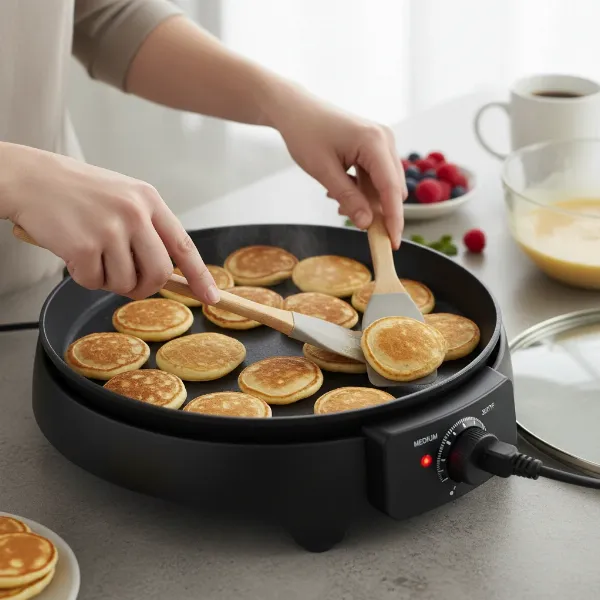 Hands using a silicone spatula in an electric skillet, demonstrating precise temperature control for cooking.
Cleaning and Maintenance
- Clean After Each Use: Allow the skillet to cool completely before cleaning. Submerging a hot skillet in cold water can cause warping or damage. Once cooled, disconnect and never immerse the temperature control probe in water. Wash the skillet body with warm, soapy water and a soft sponge. For stubborn food, soak the skillet for a short period.
- Care for the Temperature Control Probe: Wipe the probe clean with a damp cloth. Ensure it is completely dry before reattaching it or storing it. A clean and dry probe ensures accurate electrical connections and temperature readings for future use.
- Proper Storage: Store your electric skillet and its components (lid, probe) in a way that prevents scratching the non-stick surface. If stacking, place a cloth or paper towel between skillets. Proper storage protects the heating element and surface, ensuring its continued performance and accurate temperature regulation.
“The ability to truly ‘set it and forget it’ with an electric skillet’s temperature is its superpower. Neglect the preheating phase, and you’re fighting an uphill battle for even cooking.” – John Smith, Professional Chef & Culinary Instructor
Conclusion
Mastering the art of perfect temperature control on your electric skillet is a journey that transforms your cooking from guesswork into precision. By understanding how these versatile appliances regulate heat, from the crucial preheating phase and the rhythmic cycling of the thermostat to selecting the ideal temperature for specific culinary tasks, you gain unparalleled command over your kitchen. This mastery not only ensures consistently delicious and perfectly cooked meals but also extends the life of your appliance. Embrace the insights shared, from choosing the right features in a buying guide to implementing thoughtful usage and maintenance tips, and you’ll unlock a new level of culinary excellence.
What will be the first perfectly temperature-controlled dish you create in your electric skillet tonight?
Frequently Asked Questions
Why is my electric skillet not heating evenly?
Uneven heating in an electric skillet often stems from improper preheating, a damaged non-stick coating, or a lower-quality model with a less robust heating element. Always allow the skillet to fully preheat until the indicator light cycles multiple times to ensure the entire surface reaches a stable temperature.
What are the ideal temperatures for common dishes?
For simmering, aim for 200-250°F. Sautéing and browning typically benefit from 300-350°F. Frying and pancakes are best cooked between 350-400°F. Always refer to your recipe and adjust based on your specific electric skillet and desired results.
How do I know my electric skillet has reached the set temperature?
Most electric skillets feature an indicator light on the temperature control probe. This light illuminates during heating and turns off when the desired temperature is reached. For optimal stability, allow the light to cycle on and off a few times before adding food.
Can I use an electric skillet for slow cooking?
Yes, electric skillets are excellent for slow cooking and simmering. Their precise temperature control allows them to maintain consistent low temperatures (typically 200-250°F), ideal for braising meats, cooking stews, and developing rich flavors over an extended period.
What temperature should I avoid in an electric skillet?
You should generally avoid continuously using your electric skillet at its maximum temperature setting, especially if it has a non-stick coating, as this can shorten the coating’s lifespan. Also, avoid placing extremely cold or frozen foods directly into a very hot skillet, which can cause sudden temperature drops and inconsistent cooking.