Braising, a cherished culinary technique, transforms tough cuts of meat and hearty vegetables into remarkably tender, flavorful dishes. It’s a slow, moist cooking method that relies heavily on a tightly sealed environment to trap steam and circulate heat. But when it comes to achieving braising perfection, a crucial question arises for many home cooks: Which lid reigns supreme—glass or metal? The choice of lid might seem minor, but it profoundly impacts the outcome of your braised creations, influencing everything from moisture retention to heat distribution. Understanding the distinct properties of each type is key to unlocking the full potential of this time-honored cooking method.
What is Braising?
Braising is a combination cooking method that starts with searing food at high heat, then finishes it in a covered pot with a small amount of liquid over low heat for a long period. The process aims to break down tough connective tissues, rendering meat incredibly tender while infusing it with rich flavors from the cooking liquid and aromatics. This gentle, prolonged cooking ensures the ingredients are cooked through, creating a melt-in-your-mouth texture that is the hallmark of a well-braised dish. The success of braising hinges on maintaining a consistent, humid microclimate inside the cooking vessel, which is primarily managed by the lid.
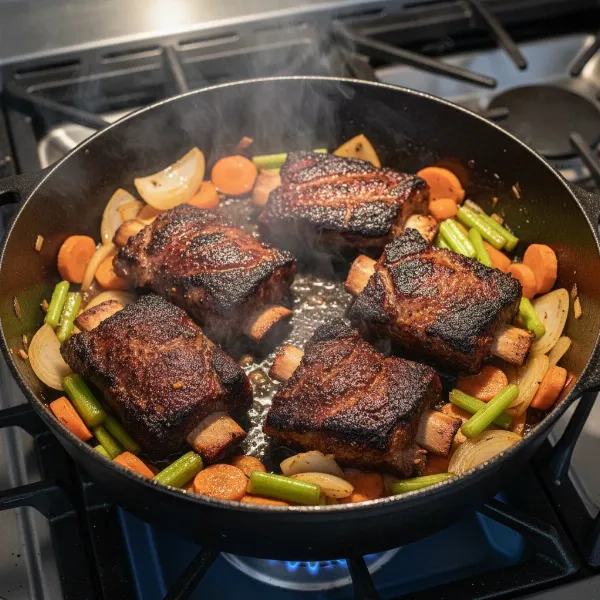 Close-up of beef braising in a Dutch oven with aromatics, showcasing the slow cooking process.
The Role of a Lid in Braising
In braising, the lid is far more than just a cover; it’s an active participant in the cooking process. Its primary function is to create a closed-loop system, trapping steam and allowing it to condense back into the food. This continuous basting keeps the ingredients moist, prevents them from drying out, and contributes to the tenderization process. A good lid also plays a critical role in heat retention, ensuring that the low, slow heat remains stable and evenly distributed throughout the cooking period. Without an effective lid, steam escapes, moisture is lost, and the delicate balance required for perfect braising is compromised, leading to tougher, drier results.
Glass Lids: Pros and Cons for Braising
Glass lids, often a standard inclusion with many cookware sets, offer certain conveniences but present specific challenges when it comes to the demands of braising.
Advantages of Glass Lids
|
Our Picks for the Best Electric skillet in 2026
As an Amazon Associate I earn from qualifying purchases.
|
||
| Num | Product | Action |
|---|---|---|
| 1 | Elite Gourmet EG808 8” x 8" Non-stick Electric Skillet, Dishwasher Safe with Tempered Glass Vented Lid, Rapid Heat Up, 600W, Black |

|
| 2 | Elite Gourmet EG6201 Extra Deep 12"x12"x3.2" (7.5Qt.) Scratch Resistant Dishwasher Safe, Non-stick Electric Skillet with Glass Vented Lid, Adjustable Temperature, Black |
|
| 3 | FOHERE 16-Inch Electric Skillet with Glass Cover, 1500W Rapid Heat, Adjustable Temperature, Multi-Purpose Electric Skillet Fried Chicken, Perfect For Family Gathering Cooking |
|
| 4 | Elite Gourmet 12"x12"x2.15” Ceralast™ PFAS Free Ceramic Electric Skillet, Dishwasher Safe, Rapid Heat Up, 1200W, Dark Grey |
|
| 5 | bella Make & Take Electric Skillet, Fits-anywhere™ kitchenware, EverGood™ Ceramic Coating, Adjustable Temperature & Dishwasher-Safe Tempered Glass Lid, Cast Aluminum Base, 1200 Watt, Oatmilk |
|
| 6 | Presto 06857 16-inch Electric Foldaway Skillet, Black |
|
| 7 | Pioneer Woman 3.5L Electric Skillet, Linen Speckle |
|
| 8 | Blue Diamond 7QT 5-in-1 Extra Large Electric Skillet, Healthy Ceramic Nonstick Interior, Non-Toxic PFAS-Free, Temperature Control, Stay Cool Handles, Easy Clean, Graphite |
|
| 9 | Nuwave Medley XL Digital Electric Skillet, Family Size Griddle w/Glass Lid, 2025 New & Improved Precision Heating, 100°-425°F, PFAS Free G11 Nonstick Ceramic Coating, Portable Hot Plate, 7qt Capacity |
|
| 10 | Elite Gourmet EG-6203# Extra Deep 16"x13"x3.2" (10.5Qt.) Scratch Resistant, Easy Pour Spout Dishwasher Safe, Non-stick Electric Skillet with Glass Vented Lid, Adjustable Temperature, Black |
|
The most apparent benefit of a glass lid is its visibility. You can easily monitor the cooking progress of your dish without lifting the lid, which theoretically helps maintain the internal temperature and moisture. This is particularly useful for dishes where visual cues, such as the color of a sauce or the level of simmering, are important. Additionally, glass lids are typically lighter in weight than their metal counterparts, making them easier to handle and maneuver.
Disadvantages of Glass Lids for Braising
Despite the allure of visibility, glass lids generally fall short for optimal braising. They tend to have poorer heat retention and thermal stability compared to metal lids. Glass cools faster, leading to thermal gradients that encourage evaporation over efficient condensation. This means that instead of steam consistently dripping back into your food, more moisture is lost as vapor. Many glass lids also come equipped with steam vents, which, while useful for other cooking methods like simmering, actively work against the moisture-locking requirement of braising. These vents allow precious steam to escape, contributing to a drier cooking environment. Furthermore, glass lids often have lower oven-safe temperature limits, typically ranging from 350°F to 425°F, which can restrict their use in high-temperature oven braises. Lastly, glass, by its nature, is susceptible to cracking or shattering if dropped or subjected to extreme thermal shock, posing a durability concern.
Metal Lids: Pros and Cons for Braising
Metal lids, especially those made from cast iron or heavy-gauge stainless steel, are often the preferred choice for serious braising due to their inherent properties.
Advantages of Metal Lids for Braising
Metal lids offer superior heat retention and thermal mass, particularly cast iron. Materials like cast iron heat slowly but hold their temperature with remarkable consistency, creating a highly stable internal environment that is ideal for long, slow cooking. This leads to excellent moisture locking and consistent condensation. The uniform temperature of a metal lid minimizes vapor loss, promoting efficient condensation where steam forms fine droplets that continuously baste the food. The substantial weight of metal lids, especially cast iron, creates a tighter seal with the pot, further enhancing moisture retention. Moreover, metal lids generally boast higher oven-safe temperatures—often oven-safe to 500°F or more, depending on the knob material—making them versatile for both stovetop and oven braising. This robust construction also contributes to their durability, as they are far less prone to breaking from impact.
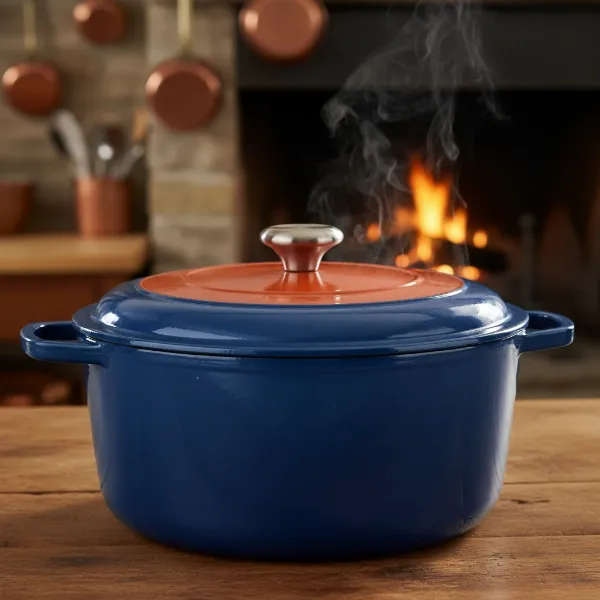 Heavy cast iron lid on a colorful enameled Dutch oven, illustrating excellent heat retention.
Disadvantages of Metal Lids
The primary drawback of metal lids is the lack of visibility. You cannot see the food cooking without lifting the lid, which disrupts the sealed environment and allows heat and steam to escape. For braising, however, this is a minor inconvenience compared to the benefits of superior heat and moisture retention. Metal lids, particularly cast iron, can also be heavier and more cumbersome to handle. Additionally, they tend to get very hot during cooking, requiring careful use of oven mitts or pot holders.
Head-to-Head Comparison: Glass vs. Metal for Braising
To provide a clearer picture, here’s a detailed comparison highlighting the key differences between glass and metal lids when it comes to braising:
| Feature | Glass Lid | Metal Lid (e.g., Cast Iron/Stainless Steel) |
|---|---|---|
| Visibility | High (can see food without lifting) | Low (opaque, requires lifting to check) |
| Heat Retention | Poor (cools faster, temperature fluctuates) | Excellent (high thermal mass, stable temperature) |
| Moisture Locking | Inefficient (more evaporation, steam vents common) | Superior (consistent condensation, tight seal) |
| Braising Quality | Suboptimal for achieving ultimate tenderness and juiciness | Optimal for deep flavor, tender, and moist results |
| Oven Safety | Generally lower (350-425°F, depending on knob) | Generally higher (often 500°F+, depending on knob) |
| Durability | Susceptible to cracking or shattering | Highly durable and robust |
| Weight | Lighter and easier to handle | Heavier, especially cast iron, requires more effort |
Which Lid is Better for Braising? The Definitive Answer
For braising, the definitive answer leans heavily towards metal lids, particularly heavy cast iron lids. Their inherent ability to retain heat, maintain a stable internal temperature, and create a superior moisture-locking seal is paramount for the braising process. The high thermal mass of a cast iron lid minimizes condensation loss by consistently holding temperature, ensuring that steam efficiently recondenses and drips back into your food, resulting in exceptionally tender and moist dishes. While glass lids offer the convenience of visual monitoring, their lower thermal mass and tendency to lose moisture through evaporation and steam vents make them less effective for the long, slow, and humid environment that braising demands. For truly exceptional braising results, prioritize a heavy, well-fitting metal lid.
Tips for Optimal Braising Results
Regardless of your lid choice, certain practices can further enhance your braising outcomes:
- Ensure a snug-fitting lid: A tight seal is crucial to prevent steam from escaping. If your lid has a steam vent, consider plugging it with a piece of aluminum foil for braising.
- Preheat the lid with the pot: Warming the lid helps establish an even temperature from the start, contributing to better heat retention and condensation.
- Avoid unnecessary lifting: Every time you lift the lid, heat and moisture escape, extending cooking time and potentially drying out your dish. Trust the process.
- Use appropriate temperatures and cooking times: Braising is a low-and-slow method. Stick to recipes’ recommended temperatures and allow ample cooking time for proper tenderization.
Conclusion
The choice between a glass lid and a metal lid for braising is not merely a matter of preference; it’s a decision that significantly impacts the quality of your culinary creations. While glass lids offer the convenience of visibility, metal lids, especially those made of cast iron, are the undisputed champions for braising. Their superior heat retention, thermal stability, and unparalleled ability to lock in moisture create the ideal environment for transforming ingredients into succulent, flavor-rich meals. By understanding these differences and making an informed choice, you can ensure your braised dishes are consistently tender, juicy, and utterly delicious. So, for your next braising adventure, will you reach for the lid that promises performance over transparency?
Frequently Asked Questions
Can I use a glass lid for braising in a pinch?
While a glass lid can be used, it’s not ideal for braising, especially for longer cooking times. You may experience more moisture loss and less tender results compared to using a well-fitting metal lid. It’s better for shorter braises or when you absolutely need to monitor the food visually.
Do steam vents on lids affect braising?
Yes, steam vents on lids are detrimental to the braising process. They allow precious steam and moisture to escape, undermining the humid, enclosed environment essential for tenderizing food. For braising, it’s best to use a lid without a vent or to find a way to plug the vent if possible.
What temperature is ideal for braising?
Braising typically involves low temperatures, often between 275°F (135°C) and 350°F (175°C) in the oven, or a low simmer on the stovetop. The goal is gentle, prolonged cooking, not boiling, to slowly break down connective tissues without drying out the food.
How does lid material impact moisture loss?
Lid material significantly impacts moisture loss. Metal lids, particularly cast iron, have higher thermal mass, which means they maintain a more consistent temperature. This stability minimizes temperature differences that cause steam to escape as vapor, promoting efficient condensation back into the pot and reducing moisture loss. Glass lids cool faster, leading to more evaporation.
Are all metal lids equally good for braising?
While all metal lids are generally better than glass for braising, there are differences. Heavy cast iron lids are often considered the best due to their exceptional thermal mass and tight seal, leading to superior heat retention and moisture locking. Stainless steel lids are also very good, especially heavy-gauge ones that fit snugly, but might not offer the same level of thermal stability as cast iron for very long braises.