Deep frying at home can transform ordinary ingredients into crispy, golden delights, offering a taste of restaurant-quality food right in your kitchen. While often associated with specialized deep fryers, an electric skillet can be a surprisingly versatile tool for this cooking method. Its built-in heating element and precise temperature control make it a compelling alternative for many home cooks. However, working with hot oil demands careful attention to safety. This guide will walk you through everything you need to know to deep fry safely and successfully using your electric skillet, ensuring delicious results without unnecessary risks.
What is Deep Frying with an Electric Skillet?
Deep frying is a cooking technique where food is submerged in hot oil or fat. This process quickly cooks the exterior, creating a crisp crust, while the interior cooks through, retaining moisture. Using an electric skillet for deep frying essentially brings this method to your countertop, offering a convenient way to achieve perfectly fried foods without a dedicated deep fryer. Electric skillets are typically designed with a flat bottom and high sides, making them suitable for holding a generous amount of oil. Their integrated heating element provides consistent and controllable heat, which is paramount for successful and safe deep frying. While dedicated deep fryers often have baskets and more enclosed designs, an electric skillet provides a wider, more open cooking surface that can be advantageous for larger batches or oddly shaped items, all while allowing for precise temperature management.
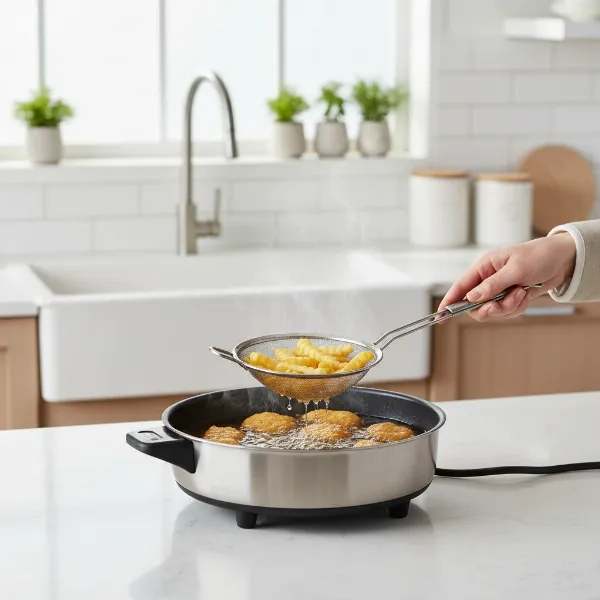 Electric skillet on countertop deep frying food, oil bubbling, long tongs
Advantages and Disadvantages of Using an Electric Skillet for Deep Frying
Choosing an electric skillet for deep frying comes with its own set of pros and cons that are important to consider before you start cooking. Understanding these can help you maximize your safety and enjoyment.
Advantages
- Precise Temperature Control: Most electric skillets feature an adjustable thermostat, allowing you to set and maintain an exact oil temperature. This precision is critical for deep frying, as consistent heat ensures evenly cooked food and prevents oil from becoming too hot and smoking.
- Even Heat Distribution: The heating element in an electric skillet often provides more uniform heat across the cooking surface compared to stovetop methods. This reduces hot spots, leading to more consistent frying results.
- Versatility and Convenience: Beyond deep frying, an electric skillet can sauté, simmer, roast, and even bake. This multi-functionality means you don’t need a single-purpose appliance just for deep frying. It’s also portable, allowing you to fry anywhere with an electrical outlet, away from your main stovetop.
- Countertop Use: Frying on a stable countertop rather than a potentially crowded stovetop can enhance safety by reducing the risk of accidental bumps or spills.
- Easy to Clean: Many modern electric skillets feature non-stick surfaces and removable components that are dishwasher safe, simplifying the cleanup process after frying.
|
Our Picks for the Best Electric skillet in 2026
As an Amazon Associate I earn from qualifying purchases.
|
||
| Num | Product | Action |
|---|---|---|
| 1 | FOHERE 16-Inch Electric Skillet with Glass Cover, 1500W Rapid Heat, Adjustable Temperature, Multi-Purpose Electric Skillet Fried Chicken, Perfect For Family Gathering Cooking |

|
| 2 | Elite Gourmet EG6201 Extra Deep 12"x12"x3.2" (7.5Qt.) Scratch Resistant Dishwasher Safe, Non-stick Electric Skillet with Glass Vented Lid, Adjustable Temperature, Black |
|
| 3 | Pioneer Woman 3.5L Electric Skillet, Linen Speckle |
|
| 4 | Elite Gourmet 12"x12"x2.15” Ceralast™ PFAS Free Ceramic Electric Skillet, Dishwasher Safe, Rapid Heat Up, 1200W, Dark Grey |
|
| 5 | Elite Gourmet EG808 8” x 8" Non-stick Electric Skillet, Dishwasher Safe with Tempered Glass Vented Lid, Rapid Heat Up, 600W, Black |
|
| 6 | bella Make & Take Electric Skillet, Fits-anywhere™ kitchenware, EverGood™ Ceramic Coating, Adjustable Temperature & Dishwasher-Safe Tempered Glass Lid, Cast Aluminum Base, 1200 Watt, Oatmilk |
|
| 7 | Presto 06857 16-inch Electric Foldaway Skillet, Black |
|
| 8 | Nuwave Medley XL Digital Electric Skillet, Family Size Griddle w/Glass Lid, 2025 New & Improved Precision Heating, 100°-425°F, PFAS Free G11 Nonstick Ceramic Coating, Portable Hot Plate, 7qt Capacity |
|
| 9 | Blue Diamond 7QT 5-in-1 Extra Large Electric Skillet, Healthy Ceramic Nonstick Interior, Non-Toxic PFAS-Free, Temperature Control, Stay Cool Handles, Easy Clean, Graphite |
|
| 10 | Elite Gourmet EG-6203# Extra Deep 16"x13"x3.2" (10.5Qt.) Scratch Resistant, Easy Pour Spout Dishwasher Safe, Non-stick Electric Skillet with Glass Vented Lid, Adjustable Temperature, Black |
|
Disadvantages
- Capacity Limitations: While many electric skillets offer deep interiors, their overall capacity for oil and food might be less than a large, dedicated deep fryer, potentially requiring more batches for bigger meals.
- Requires Electricity: An electric skillet needs to be plugged in, which means you’re dependent on available outlets and might be restricted by cord length.
- Potential for Splatter: The open design of an electric skillet, without a closed lid during active frying, can lead to more oil splattering. This necessitates careful attention to keeping the cooking area clean and protected.
- Not Designed for All Methods: While great for deep frying, it might not be ideal for exceptionally large items or recipes that specifically call for specialized deep fryer features like a dedicated basket lift system.
Essential Safety Equipment for Deep Frying
Safety is paramount when deep frying. Having the right tools on hand can make all the difference in preventing accidents and ensuring a smooth cooking experience.
- Deep-Fry Thermometer: This is non-negotiable. An accurate thermometer clipped to the side of your skillet allows you to constantly monitor the oil temperature, preventing it from overheating or dropping too low. Oil temperatures for deep frying typically range between 350-375°F (175-190°C), and exceeding 400-425°F (204-218°C) can cause oil to smoke or even catch fire.
- Appropriate Utensils: Use long-handled tools such as slotted spoons, spiders, or tongs to safely add and remove food from the hot oil. These allow you to maintain a safe distance and drain excess oil effectively. Avoid using plastic utensils that can melt.
- Fire Safety: Keep a tight-fitting metal lid for your skillet within arm’s reach. In the event of an oil fire, this lid can be used to smother the flames. Additionally, have baking soda nearby, which can also help extinguish small grease fires. Most importantly, an ABC-rated kitchen fire extinguisher is a wise investment for any cooking area, especially when deep frying.
- Protective Gear: Heat-resistant gloves can protect your hands and forearms from accidental splatters. An apron is also recommended to safeguard your clothing and skin.
- Splatter Screen: A mesh splatter screen placed over the skillet can help contain oil splatters while still allowing steam to escape, reducing mess and burn risk.
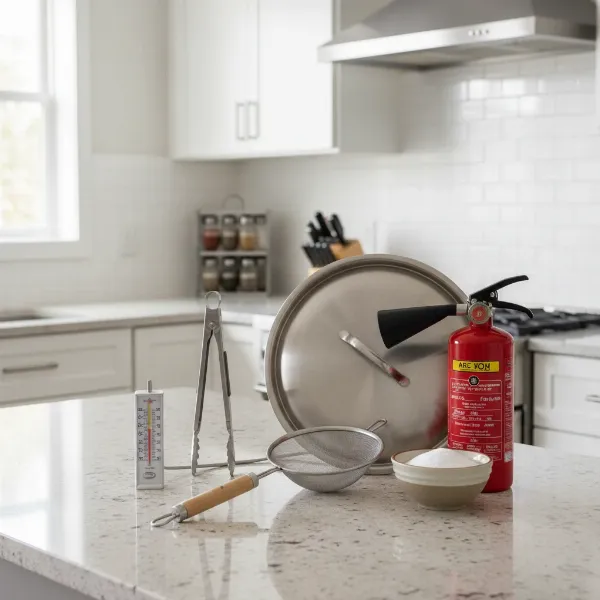 Essential deep frying safety equipment on a kitchen counter: thermometer, tongs, lid, extinguisher
Choosing the Right Oil for Deep Frying
The type of oil you use significantly impacts both the taste of your food and the safety of your deep frying process. Not all oils are created equal when it comes to high-heat cooking.
- High Smoke Point Oils: Select oils with a high smoke point, meaning they can be heated to high temperatures before they start to break down and smoke. Smoking oil not only imparts an unpleasant flavor to food but also indicates that the oil is past its safe cooking temperature and can be a fire hazard. Excellent choices include:
- Canola Oil: Neutral flavor, high smoke point (around 400°F/204°C).
- Peanut Oil: Mild, nutty flavor, very high smoke point (around 450°F/232°C).
- Vegetable Oil (Blends): Often a mix of different oils, typically a good all-around choice with a high smoke point.
- Grapeseed Oil: Light, neutral flavor, high smoke point (around 420°F/215°C).
- Avoid olive oil or butter, as they have lower smoke points and are not suitable for deep frying.
- Optimal Oil Level: Never fill your electric skillet more than one-third to halfway full with oil. This leaves ample room for the oil to bubble and expand when food is added, preventing dangerous boil-overs and splatters. Overfilling is a primary cause of deep-frying accidents.
- Maintaining Oil Quality: Fresh oil is always best. Avoid reusing oil that has been heated too many times, appears dark, cloudy, or has a strong odor, as its smoke point will have significantly decreased, and it can impart off-flavors.
Step-by-Step Guide to Safe Deep Frying with an Electric Skillet
Following a structured approach will help you deep fry safely and achieve excellent results.
Preparation is Key
Before you even turn on your skillet, thorough preparation is crucial for a safe and successful deep-frying experience.
- Clear and Dry Workspace: Ensure your cooking area is clean, dry, and free of clutter. Water is the enemy of hot oil, so make sure there’s no moisture on your countertops or near the skillet.
- Dry Food Thoroughly: This step cannot be overstated. Any moisture on your food, whether from washing, thawing, or marinades, will cause the oil to violently splatter, leading to burns and a messy kitchen. Pat food dry with paper towels until no visible moisture remains. For frozen foods, ensure they are fully thawed and then dried, or use a method specifically designed for frying from frozen if the recipe allows.
- Ventilation: Turn on your kitchen extractor fan or open a window to ensure good air circulation. This helps dissipate cooking odors and any potential smoke.
Setting Up Your Skillet
Once your workspace and food are ready, it’s time to set up your electric skillet.
- Add Oil Correctly: Pour your chosen high-smoke-point oil into the electric skillet. Remember the golden rule: never fill it more than one-third to halfway full to allow for bubbling and expansion.
- Preheat Oil to the Right Temperature: Clip your deep-fry thermometer to the side of the skillet, ensuring the tip is submerged in the oil but not touching the bottom. Set your electric skillet to the desired temperature, typically between 350-375°F (175-190°C), and allow it to preheat slowly and steadily. Monitor the thermometer closely.
Frying with Care
This is where the action happens. Patience and vigilance are your best friends during the frying process.
- Add Food Gradually: Never dump a large amount of food into the hot oil at once. This will cause the oil temperature to drop dramatically, leading to greasy food, and could also cause excessive bubbling and overflow. Instead, add food in small batches, gently lowering each piece with your long-handled tongs or spider.
- Monitor Temperature Constantly: Keep an eye on your thermometer throughout the frying process. The temperature will naturally dip when cold food is added. Adjust the skillet’s thermostat as needed to maintain a consistent temperature range.
- Avoid Overcrowding: Overcrowding the skillet cools the oil, results in uneven cooking, and prevents food from getting crispy. Fry in small batches to ensure each piece cooks properly and develops a perfect golden crust.
Post-Frying Procedures
Once your food is perfectly cooked, safe handling after frying is just as important as during.
- Draining and Cooling: Carefully remove the fried food from the skillet using a slotted spoon or spider, allowing excess oil to drip back into the pan. Transfer the food to a wire rack placed over paper towels to drain any remaining oil and keep it crispy. Turn off the electric skillet and allow the oil to cool completely, undisturbed, before attempting any cleanup.
- Safe Oil Disposal: Never pour used cooking oil down the drain, as it can clog pipes. Once completely cool, strain the oil to remove any food particles if you plan to reuse it (for a maximum of 1-2 more times, depending on what was fried). Otherwise, pour the cooled oil into a non-recyclable container (like its original bottle or a milk carton) and dispose of it in the trash.
Common Deep Frying Hazards and How to Avoid Them
Deep frying carries inherent risks, but most can be easily mitigated with awareness and proper technique.
Oil Fires
Oil fires are perhaps the most feared deep-frying hazard, but they are preventable and manageable if you know what to do.
- Never Use Water: This is the most critical rule. Water reacts violently with hot oil, causing a dangerous explosion of flaming oil known as a flash fire.
- Suffocate with a Lid or Baking Soda: If a small oil fire ignites, immediately turn off the heat source. If safe to do so, slide the tight-fitting metal lid over the skillet to smother the flames by depriving them of oxygen. Alternatively, pour a generous amount of baking soda over the flames.
- Keep Fire Extinguisher Handy: For larger fires, use an ABC-rated fire extinguisher. Know how to operate it beforehand. If a fire gets out of control, evacuate immediately and call emergency services.
Splatters and Burns
Hot oil splatters can cause painful burns and make a significant mess.
- Dry Food: As emphasized, thoroughly dry all food before it enters the oil. Moisture is the primary cause of splattering.
- Lower Food Gently: Never drop food into hot oil. Gently lower it using tongs or a spider to minimize splashing.
- Use Long Utensils and Protective Gear: Maintain a safe distance from the hot oil with long-handled tools and wear heat-resistant gloves and an apron for added protection.
Overfilling
Filling the skillet with too much oil is a recipe for disaster.
- Maintain Safe Oil Levels: Always stick to the one-third to halfway rule for oil volume. This ensures there’s enough headspace for the oil to rise without overflowing when food is added, preventing dangerous spills and potential fires.
Tips for Maintaining Your Electric Skillet After Deep Frying
Proper care of your electric skillet after deep frying ensures its longevity and readiness for your next culinary adventure.
- Cooling Down: After turning off the skillet, allow the oil to cool completely before attempting any cleaning. This typically takes several hours. Never pour hot oil out of the skillet.
- Cleaning: Once the oil is cool and disposed of, most electric skillets with non-stick coatings are relatively easy to clean. Many have removable probes and are fully immersible or even dishwasher safe. Refer to your specific model’s instruction manual. For stubborn residue, use a soft sponge and mild dish soap. Avoid abrasive scrubbers that can damage the non-stick surface.
- Storage: Store your clean, dry electric skillet in a safe place where it won’t be easily damaged. Ensure the lid and any removable parts are stored together.
Conclusion
Deep frying in an electric skillet is a rewarding way to enjoy delicious, crispy foods at home. With its precise temperature control and convenient countertop operation, your electric skillet can be an excellent tool for this cooking method. However, the key to success and enjoyment lies in prioritizing safety. By understanding the advantages of your skillet, equipping yourself with the right safety tools, choosing the appropriate oil, following careful step-by-step procedures, and knowing how to prevent and respond to hazards, you can confidently deep fry with minimal risk. Remember, a little vigilance goes a long way in ensuring your deep-frying adventures are always safe, enjoyable, and incredibly tasty.
What crispy creation will you master first in your electric skillet?
Frequently Asked Questions
What is the ideal oil temperature for deep frying in an electric skillet?
The ideal oil temperature for most deep frying is between 350°F and 375°F (175°C – 190°C). Maintaining this range ensures food cooks evenly, becomes golden brown, and achieves a crispy texture without absorbing too much oil. Always use a deep-fry thermometer to monitor the temperature accurately.
Can I deep fry frozen foods in an electric skillet?
Yes, you can deep fry frozen foods, but extreme caution is necessary. Ensure the oil level is appropriate, and add frozen items in very small batches to avoid a drastic temperature drop and excessive splattering caused by ice crystals. Some frozen foods may require specific frying instructions, so always check the packaging.
What kind of oil is best for deep frying?
The best oils for deep frying have high smoke points (above 400°F or 204°C) and neutral flavors. Popular choices include canola oil, peanut oil, vegetable oil blends, and grapeseed oil. These oils can withstand the high temperatures required for frying without breaking down or imparting undesirable tastes.
How do I prevent oil from splattering?
To prevent oil from splattering, always ensure your food is as dry as possible before placing it in the hot oil. Even a small amount of water can cause significant splashing. Also, lower food gently into the oil, avoid overcrowding the skillet, and consider using a splatter screen to contain any rogue droplets.
What should I do if the oil catches fire?
If the oil in your electric skillet catches fire, immediately turn off the power. Do NOT use water, as it will exacerbate the fire. Instead, carefully slide a tight-fitting metal lid over the skillet to smother the flames by cutting off oxygen, or pour a generous amount of baking soda over it. Keep a kitchen fire extinguisher nearby for emergencies.
How often should I change deep frying oil?
The frequency of changing deep frying oil depends on what you’re frying and how often. Generally, oil can be reused 1-2 more times if it’s strained after each use to remove food particles and stored properly. Discard oil if it becomes dark, cloudy, smokes easily, or develops an off-odor, as its quality has degraded.