Dreaming of golden-brown, juicy fried chicken that rivals your favorite restaurant? While the stovetop can be temperamental, the electric skillet offers a controlled environment, making homemade fried chicken an achievable and immensely satisfying culinary feat. This guide will walk you through everything you need to know, from understanding your electric skillet to mastering expert frying techniques and effortless cleanup. Get ready to transform your kitchen into a fried chicken haven!
What is an Electric Skillet?
An electric skillet, also known as an electric frying pan, is a versatile kitchen appliance that brings a dedicated heating element directly to your countertop. Unlike traditional stovetop pans, it boasts its own thermostat, allowing for precise and consistent temperature control, which is critical for successful frying. This standalone unit frees up valuable burner space on your range, providing an extra cooking zone perfect for everything from searing steaks to simmering stews. Its design, featuring integrated heating, makes it particularly adept at tasks requiring stable heat, such as achieving that perfectly crispy fried chicken crust. Electric skillets have been a household staple for decades, evolving to offer greater convenience and performance for home cooks.
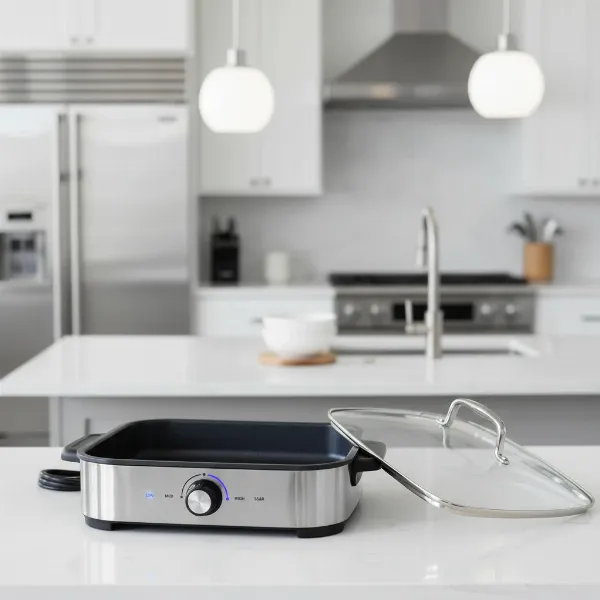 Modern electric skillet on a kitchen countertop with precise temperature control.
Advantages and Disadvantages of Electric Skillets
Electric skillets offer a compelling combination of benefits for the home chef, but like any appliance, they come with a few considerations. Understanding these can help you maximize your skillet’s potential, especially when tackling a dish as particular as fried chicken.
Advantages
- Exceptional Flexibility and Convenience: An electric skillet serves as an independent cooking station, providing extra capacity for large batches or multi-course meals. It’s portable, allowing you to cook away from the main stove, even for entertaining.
- Effortless Temperature Control: This is perhaps the greatest strength of an electric skillet for frying. Its built-in thermostat maintains a precise and consistent temperature, eliminating the guesswork and constant adjustments often needed on a stovetop. This stability prevents oil from overheating or cooling too much, which is essential for evenly cooked, crispy fried chicken.
- Space-Saving Design: Many electric skillets are designed to be compact or even foldable for easy storage. They offer a dedicated cooking surface without permanently occupying stove burners, making them ideal for smaller kitchens or for adding cooking capacity during holidays.
- Simplified Cleanup: Most modern electric skillets feature nonstick surfaces that make food release a breeze. Many models also have removable parts that are dishwasher-safe, drastically cutting down on post-meal scrubbing and making the process much more efficient.
|
Our Picks for the Best Electric skillet in 2026
As an Amazon Associate I earn from qualifying purchases.
|
||
| Num | Product | Action |
|---|---|---|
| 1 | FOHERE 16-Inch Electric Skillet with Glass Cover, 1500W Rapid Heat, Adjustable Temperature, Multi-Purpose Electric Skillet Fried Chicken, Perfect For Family Gathering Cooking |

|
| 2 | Presto 06857 16-inch Electric Foldaway Skillet, Black |
|
| 3 | Elite Gourmet EG6201 Extra Deep 12"x12"x3.2" (7.5Qt.) Scratch Resistant Dishwasher Safe, Non-stick Electric Skillet with Glass Vented Lid, Adjustable Temperature, Black |
|
| 4 | Pioneer Woman 3.5L Electric Skillet, Linen Speckle |
|
| 5 | Elite Gourmet 12"x12"x2.15” Ceralast™ PFAS Free Ceramic Electric Skillet, Dishwasher Safe, Rapid Heat Up, 1200W, Dark Grey |
|
| 6 | Blue Diamond 7QT 5-in-1 Extra Large Electric Skillet, Healthy Ceramic Nonstick Interior, Non-Toxic PFAS-Free, Temperature Control, Stay Cool Handles, Easy Clean, Graphite |
|
| 7 | Elite Gourmet EG-6203# Extra Deep 16"x13"x3.2" (10.5Qt.) Scratch Resistant, Easy Pour Spout Dishwasher Safe, Non-stick Electric Skillet with Glass Vented Lid, Adjustable Temperature, Black |
|
| 8 | Nuwave Medley XL Digital Electric Skillet, Family Size Griddle w/Glass Lid, 2025 New & Improved Precision Heating, 100°-425°F, PFAS Free G11 Nonstick Ceramic Coating, Portable Hot Plate, 7qt Capacity |
|
| 9 | Elite Gourmet EG808 8” x 8" Non-stick Electric Skillet, Dishwasher Safe with Tempered Glass Vented Lid, Rapid Heat Up, 600W, Black |
|
| 10 | bella Make & Take Electric Skillet, Fits-anywhere™ kitchenware, EverGood™ Ceramic Coating, Adjustable Temperature & Dishwasher-Safe Tempered Glass Lid, Cast Aluminum Base, 1200 Watt, Oatmilk |
|
Disadvantages
- Limited Mobility: While portable, an electric skillet requires a nearby electrical outlet. This dependency can restrict placement options compared to a stovetop pan, which can be moved freely (before heating, of course).
- Power Requirement: Operating solely on electricity, it needs a stable power source. This is generally not an issue for home use but is a factor to consider for off-grid cooking scenarios.
- Not Ideal for All Cooking Methods: While versatile, electric skillets might not replace all specialized cookware. For extremely deep-frying (where food is fully submerged in several inches of oil), a dedicated deep fryer with a smaller footprint and deeper basket might be preferred by some, although electric skillets handle shallow frying exceptionally well.
Popular Electric Skillet Types on the Market
Electric skillets come in various forms, each designed to cater to different cooking needs and preferences. Knowing the common types can guide you in selecting the best one for your fried chicken adventures.
Classification by Shape
The shape of an electric skillet often dictates how efficiently you can arrange food for even cooking.
- Round Skillets: These are the most traditional shape, offering a familiar cooking surface. They are good for smaller batches or dishes that benefit from circular stirring.
- Square Skillets: Square designs maximize cooking surface area, allowing you to fit more pieces of chicken or larger cuts in a single layer, which is crucial for even browning and crisping during frying.
- Rectangular Skillets: Often larger than square models, rectangular electric skillets are excellent for cooking family-sized meals or multiple batches. Their extended shape can accommodate longer items like fish fillets or several chicken pieces side-by-side.
Classification by Material
The material of an electric skillet’s cooking surface impacts its durability, heat distribution, and ease of cleaning.
- Nonstick Skillets: These are the most common, featuring coatings like Teflon, ceramic, or marble. They excel at preventing food from sticking and simplify cleanup, which is a major advantage when frying breaded chicken.
- Cast Aluminum Skillets: Offering good heat conductivity and durability, cast aluminum skillets often come with nonstick coatings. They tend to heat up quickly and distribute heat evenly across the surface.
- Stainless Steel Skillets: Less common in electric skillet form, stainless steel offers exceptional durability but may require more oil and careful heat management to prevent sticking.
Classification by Features
Modern electric skillets incorporate various features to enhance usability and versatility.
- Skillets with Glass Lids: Transparent glass lids allow you to monitor cooking progress without releasing heat and steam, helping to maintain a consistent oil temperature and prevent splattering.
- Skillets with Detachable Temperature Controllers: These designs allow the main pan body to be fully immersed for washing, making cleanup significantly easier. The controller unit simply unplugs.
- Skillets with Timer Functions: Some advanced models include built-in timers, offering added convenience for precise cooking durations.
- Foldaway Designs: Certain skillets are designed to fold up, making them incredibly space-efficient for storage, a boon for kitchens with limited cabinet space.
- Pour Spouts: A dedicated pour spout is a valuable feature for safely draining excess oil after frying, reducing mess and making disposal easier.
Comparing Famous Electric Skillet Brands
When choosing an electric skillet for fried chicken, several reputable brands stand out for their quality, features, and performance. Here’s a comparison of some popular options:
| Brand | Key Features for Frying Chicken | Typical Price Range | Pros | Cons |
|---|---|---|---|---|
| Presto | Known for foldaway designs, precise temperature control, deep pans, nonstick surfaces. | Budget to Mid-range | Compact storage, reliable heat, easy to clean. | Some models might be less durable over very long term use. |
| Cuisinart | High-quality nonstick, even heating, durable construction, often oval or rectangular for capacity. | Mid to High-end | Excellent heat distribution, robust build, stylish. | Can be pricier, may not have foldaway features. |
| Hamilton Beach | Deep dish ceramic skillets, Durathon nonstick, often family-sized. | Budget to Mid-range | Durable ceramic coating, good capacity, often budget-friendly. | Heat distribution can sometimes be slightly less even than premium. |
| Elite Gourmet | Extra-deep designs, large capacity, some with pour spouts, often dishwasher safe parts. | Budget to Mid-range | Great for large batches, convenient features, easy cleanup. | Some users report uneven heating toward edges. |
| Zojirushi | High-end, precise temperature control, multi-functional (can often be used for other dishes too). | High-end | Superior temperature accuracy, high quality, versatile. | Significantly more expensive. |
| CRUX | Modern designs, deep pans, copper ceramic nonstick, PFOA & PTFE free. | Mid-range | Stylish aesthetic, durable coating, generous cooking surface. | Might be bulky for small kitchens. |
| BLACK+DECKER | Family-sized, nonstick surface, often simple and functional designs. | Budget | Affordable, good for basic frying, dependable. | Fewer advanced features, might have shorter lifespan. |
This table provides a snapshot, but always consider specific model reviews and your personal budget when making a final decision.
Guide to Choosing the Right Electric Skillet for You
Selecting the perfect electric skillet can make all the difference in your fried chicken success. Consider these factors to find an appliance that fits your cooking style and needs.
Determine Your Usage Needs
Before anything else, think about how often you plan to fry chicken and for how many people.
- Are you cooking for a single person or a large family? This will influence the size you need.
- Will you use it primarily for frying or for a variety of dishes like stews, pancakes, or roasts? Versatility can be a key factor.
- Do you need it for everyday meals or just for special occasions and entertaining?
Consider Size and Capacity
For fried chicken, a larger, deeper skillet is often preferable.
- Surface Area: A square or rectangular skillet typically offers more usable cooking space than a round one of similar stated dimensions, allowing you to fry more chicken pieces in a single layer without overcrowding. Overcrowding drops the oil temperature and leads to soggy chicken.
- Depth: An extra-deep skillet is ideal for frying chicken as it accommodates more oil, reducing splatter and making it easier to submerge chicken pieces sufficiently for even cooking. Aim for models with at least a 3-inch depth for optimal frying.
Choose the Right Material
The cooking surface material affects both performance and ease of care.
- Nonstick Coatings (Ceramic, PTFE-free, etc.): Highly recommended for fried chicken. They prevent the breading from sticking and make cleanup much easier. Look for durable, scratch-resistant nonstick.
- Cast Aluminum: Offers good heat distribution and is often paired with a nonstick coating.
- Avoid: Skillets without nonstick surfaces can be more challenging for frying breaded items, leading to sticking and difficult cleanup.
Examine the Features
Specific features can greatly enhance your frying experience.
- Precise Temperature Control: Essential for fried chicken. Look for a thermostat that offers accurate and consistent temperature settings, ideally up to 400°F (200°C), with a reliable temperature probe.
- Lid: A tight-fitting glass lid is crucial. It helps contain splatters, retains heat, and allows you to monitor your chicken without lifting it and losing heat.
- Pour Spout: A built-in pour spout is incredibly handy for safely draining excess oil after frying, minimizing mess.
- Detachable Components: For easier cleaning, look for models where the pan detaches from the heating element and can be fully immersed in water or placed in a dishwasher.
Research Brands and Reviews
Reputable brands often signify better quality and reliability.
- Read customer reviews, especially those focused on frying performance and durability. Look for mentions of even heating and how well the nonstick coating holds up over time.
- Brands like Presto, Elite Gourmet, and Cuisinart are frequently praised for their electric skillets suitable for frying.
Compare Prices
Electric skillets vary widely in price.
- Set a budget, but remember that investing a bit more in a quality skillet can pay off in better performance and longevity. Sometimes, a slightly higher price means more durable nonstick or more precise temperature control.
Expert Tips for Using and Maintaining Your Electric Skillet
Cooking perfect fried chicken and keeping your electric skillet in top shape involves a few key practices.
Using Your Electric Skillet for Fried Chicken
The electric skillet’s consistent heat is your secret weapon.
- First-Time Use Preparation: Before its inaugural fry, thoroughly wash your new electric skillet according to the manufacturer’s instructions. Some nonstick surfaces benefit from a light seasoning with cooking oil, heated briefly, then wiped clean before first use. This can enhance the nonstick properties.
- Achieving the Perfect Frying Temperature: For crispy, thoroughly cooked fried chicken, preheat your oil to 350-375°F (175-190°C). The electric skillet’s thermostat will hold this temperature beautifully. Use a cooking thermometer to confirm the oil temperature before adding chicken. If the oil smokes, it’s too hot; reduce the temperature.
- Don’t Overcrowd the Skillet: Fry chicken in batches, leaving space between pieces. Overcrowding lowers the oil temperature dramatically, leading to greasy, soggy chicken that cooks unevenly.
- Flip for Even Browning: Unless your skillet is deep enough for full submersion (which is rare for electric skillets), you’ll be shallow frying. This means flipping the chicken halfway through cooking to ensure both sides develop a golden, crispy crust. Cook until the internal temperature of the chicken reaches 165°F (74°C) using a meat thermometer, typically 6-10 minutes per side depending on thickness.
- Use the Right Utensils: Always use heat-resistant silicone, plastic, or wooden utensils to protect the nonstick coating of your electric skillet from scratches. Metal tools can damage the surface over time.
- Post-Fry Warm Holding: As you fry in batches, you can keep the cooked chicken warm and crispy by transferring it to a wire rack placed over a baking sheet in a preheated oven at a low temperature, around 200°F (93°C).
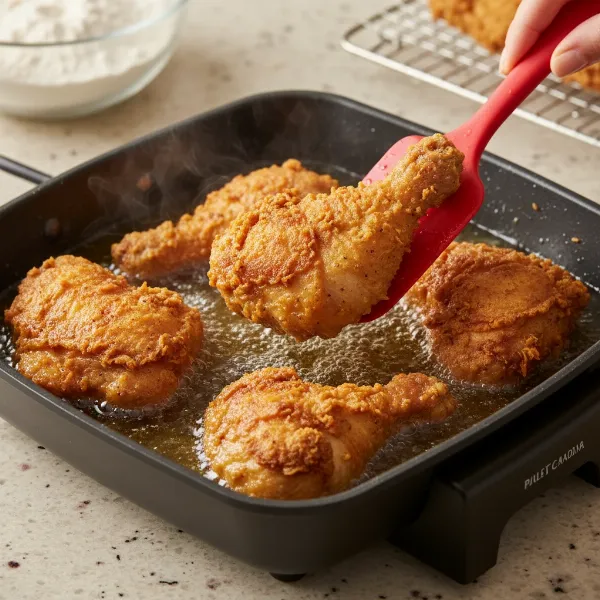 Golden-brown crispy fried chicken pieces cooking in an electric skillet with hot oil.
Cleaning and Maintenance
Proper cleaning ensures your electric skillet remains a reliable kitchen companion for years.
- Immediate Cleanup is Key: For easier cleaning, deal with your skillet soon after cooking, but always allow the oil and pan to cool down to a safe handling temperature first.
- Safe Oil Disposal: Never pour cooking oil down the drain. Once cooled, pour the used oil into an old jar or disposable container and discard it in the trash. You can often reuse frying oil a few times if filtered through a fine-mesh sieve or cheesecloth after it cools.
- Disconnect and Remove Electrical Components: Before washing, always ensure your electric skillet is unplugged and the temperature control probe is completely removed from the pan. Getting the electrical connector wet can damage the appliance.
- Washing Immersible Skillets: If your skillet is immersible (meaning the pan can go in water once the electrical probe is removed), fill your sink with warm, soapy water. Gently wash the interior and exterior with a non-abrasive sponge or dishcloth. For stubborn bits, a nylon scraper can be used without damaging the nonstick. Rinse thoroughly and dry completely to prevent water spots and rust (if applicable).
- Cleaning Non-Immersible Skillets: For skillets that cannot be submerged, wipe the cooking surface with paper towels to remove most grease. Then, wipe it down with a damp cloth and a small amount of dish soap, followed by a clean, damp cloth to remove soap residue. Ensure no water enters the electrical control housing.
- Tackling Tough Stains: For cooked-on food or discoloration, a paste of baking soda and a little water can be gently applied and left to sit for a few minutes before scrubbing with a non-abrasive sponge.
- Proper Storage: Store your clean, dry electric skillet in a cabinet, ideally with a soft cloth or paper towel placed between the pan and lid to protect the nonstick surface from scratches.
Conclusion
Mastering fried chicken in an electric skillet is a culinary journey that promises delicious rewards. With its consistent temperature control, ample cooking space, and user-friendly design, the electric skillet truly simplifies what can often be an intimidating dish. By following these expert tips—from choosing the right model and perfecting your frying technique to ensuring meticulous cleanup—you’ll consistently achieve that coveted crispy exterior and tender, juicy interior that defines truly great fried chicken. So, what are you waiting for? Embrace your electric skillet and delight in the incredible flavors of homemade fried chicken!
Frequently Asked Questions
Is an electric skillet suitable for deep frying chicken?
An electric skillet is generally best suited for shallow frying chicken, where the pieces are submerged halfway and flipped. While some models are deeper, dedicated deep fryers offer full submersion and often quicker cooking for extremely crispy results, though an electric skillet can still produce excellent fried chicken with careful technique.
What is the ideal oil temperature for frying chicken in an electric skillet?
The ideal oil temperature for frying chicken in an electric skillet is between 350-375°F (175-190°C). Maintaining this temperature consistently is crucial for achieving a crispy, golden crust without burning the exterior or leaving the interior undercooked, a task made easy by the electric skillet’s thermostat.
How do I prevent fried chicken from sticking to my electric skillet?
To prevent fried chicken from sticking, always ensure your electric skillet has a good nonstick coating and is adequately preheated with enough oil. Avoid overcrowding the pan, as this can lower the oil temperature and increase the likelihood of sticking. Using a proper batter or breading also helps create a barrier.
Can I reuse the oil after frying chicken in my electric skillet?
Yes, you can typically reuse frying oil after cooking chicken. Allow the oil to cool completely, then strain it through a fine-mesh sieve or cheesecloth to remove any food particles. Store the filtered oil in an airtight container in a cool, dark place and use it for future frying sessions.
How do I clean stubborn, cooked-on bits from my electric skillet after frying chicken?
For stubborn, cooked-on bits, ensure the skillet is cool and unplugged. If immersible, soak the pan in warm, soapy water. For non-immersible, wipe out excess grease, then create a paste of baking soda and a little water. Apply the paste to the affected areas, let it sit for 10-15 minutes, then gently scrub with a non-abrasive sponge or nylon scraper before rinsing or wiping clean.