Electric skillets are versatile kitchen tools, perfect for everything from frying to simmering. However, when it comes to cleaning, a common question arises: can you submerge your electric skillet in water? For most models, the answer is a definitive no, and understanding why is crucial for both the longevity of your appliance and your safety.
The General Rule: Keep Electrical Components Dry
The primary reason most electric skillets cannot be fully submerged is due to their integrated electrical components. Unlike a traditional frying pan, an electric skillet contains a heating element and often a temperature control unit directly attached to or built into the pan itself. Exposure to water can severely damage these electrical parts, leading to several hazards:
- Electric Shock: Water and electricity are a dangerous combination. Submerging an electric skillet can create a risk of electric shock when the appliance is next used or even when handled after washing.
- Appliance Damage: Water can cause short circuits, corrosion, and irreversible damage to the heating element and internal wiring, rendering your skillet inoperable.
- Fire Hazard: A damaged electrical system can overheat or malfunction, potentially leading to a fire.
|
Our Picks for the Best Electric skillet in 2026
As an Amazon Associate I earn from qualifying purchases.
|
||
| Num | Product | Action |
|---|---|---|
| 1 | bella Make & Take Electric Skillet, Fits-anywhere™ kitchenware, EverGood™ Ceramic Coating, Adjustable Temperature & Dishwasher-Safe Tempered Glass Lid, Cast Aluminum Base, 1200 Watt, Oatmilk |

|
| 2 | Pioneer Woman 3.5L Electric Skillet, Linen Speckle |
|
| 3 | Elite Gourmet EG-6203# Extra Deep 16"x13"x3.2" (10.5Qt.) Scratch Resistant, Easy Pour Spout Dishwasher Safe, Non-stick Electric Skillet with Glass Vented Lid, Adjustable Temperature, Black |
|
| 4 | Elite Gourmet 12"x12"x2.15” Ceralast™ PFAS Free Ceramic Electric Skillet, Dishwasher Safe, Rapid Heat Up, 1200W, Dark Grey |
|
| 5 | Nuwave Medley XL Digital Electric Skillet, Family Size Griddle w/Glass Lid, 2025 New & Improved Precision Heating, 100°-425°F, PFAS Free G11 Nonstick Ceramic Coating, Portable Hot Plate, 7qt Capacity |
|
| 6 | Presto 06857 16-inch Electric Foldaway Skillet, Black |
|
| 7 | Blue Diamond 7QT 5-in-1 Extra Large Electric Skillet, Healthy Ceramic Nonstick Interior, Non-Toxic PFAS-Free, Temperature Control, Stay Cool Handles, Easy Clean, Graphite |
|
| 8 | FOHERE 16-Inch Electric Skillet with Glass Cover, 1500W Rapid Heat, Adjustable Temperature, Multi-Purpose Electric Skillet Fried Chicken, Perfect For Family Gathering Cooking |
|
| 9 | Elite Gourmet EG808 8” x 8" Non-stick Electric Skillet, Dishwasher Safe with Tempered Glass Vented Lid, Rapid Heat Up, 600W, Black |
|
| 10 | Elite Gourmet EG6201 Extra Deep 12"x12"x3.2" (7.5Qt.) Scratch Resistant Dishwasher Safe, Non-stick Electric Skillet with Glass Vented Lid, Adjustable Temperature, Black |
|
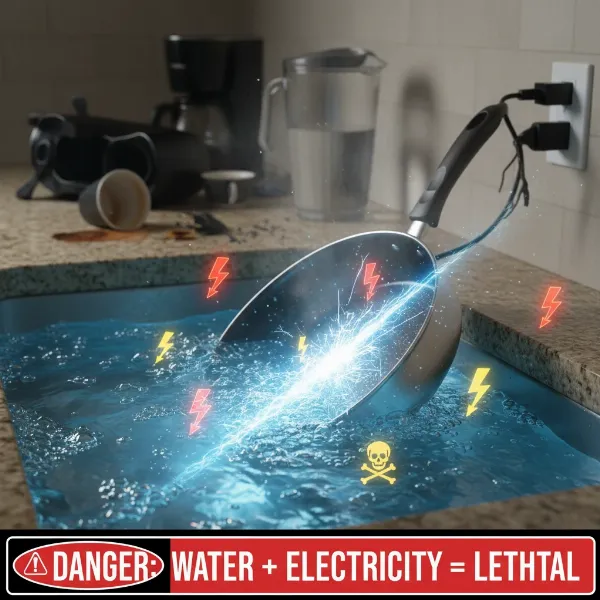 Electric skillet in water with electrical sparks, symbolizing danger.
When Submersion Might Be Possible (Always Check Your Manual)
While the general rule advises against submersion, there are specific electric skillet models designed to be safely immersed. These models typically feature a detachable temperature control unit. If your skillet has a removable control, the pan itself might be submersible after the control unit has been detached.
It is absolutely essential to consult your electric skillet’s owner’s manual. This guide will provide precise cleaning instructions specific to your model, detailing whether any part of the skillet is submersible and outlining the correct procedure. Never assume an appliance is submersible without explicit confirmation from the manufacturer’s instructions.
Safe and Effective Cleaning Practices
For the majority of electric skillets that are not submersible, or for the main body of those that are partially, follow these safe cleaning steps:
- Unplug and Cool: Always unplug your electric skillet from the power outlet and allow it to cool completely before attempting any cleaning. This prevents burns and electrical hazards.
- Detach Control Unit: If your skillet has a removable temperature control unit, detach it before cleaning. This unit should never be submerged in water.
- Wipe Down Interior: Use a soft cloth or sponge with warm, soapy water to gently wipe the interior cooking surface. For stubborn food residue, you can let some warm, soapy water sit in the pan for a few minutes to loosen it, then wipe clean. Avoid abrasive pads or harsh scouring powders, which can damage non-stick coatings.
- Clean Exterior: Wipe the exterior surfaces with a damp cloth. Be extremely careful to keep water away from any electrical connections, the power cord, and the heating element housing.
- Wash the Lid Separately: The lid of your electric skillet is typically safe to wash under running water with dish soap or in the dishwasher.
- Rinse and Dry Thoroughly: After cleaning, wipe all parts (except the electrical control unit) with a clean, damp cloth to remove soap residue. Then, dry all components thoroughly with a clean towel before reassembling or storing. Any residual moisture, especially around electrical areas, can be a hazard.
- Avoid Harsh Chemicals: Do not use ammonia, bleach, or other harsh chemical cleaners, as these can damage the skillet’s surfaces or finishes.
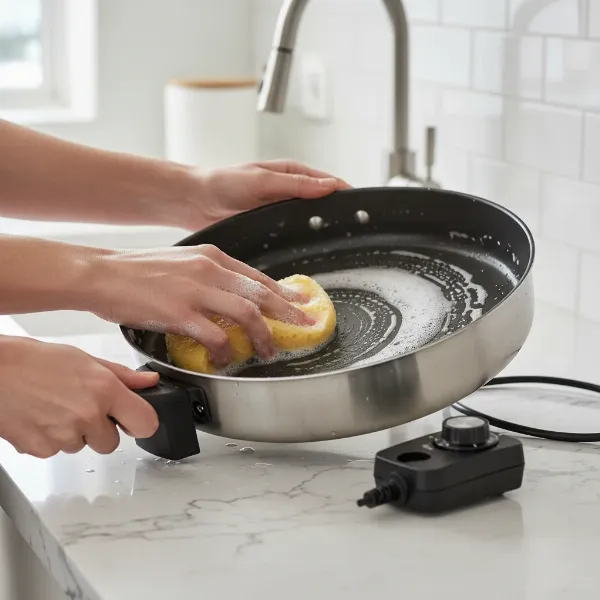 Person wiping interior of electric skillet with sponge, avoiding electrical parts.
General Electric Appliance Safety
Beyond cleaning, always practice general safety when using any electric appliance near water:
- GFCI Outlets: Use ground fault circuit interrupter (GFCI) protected outlets, especially in kitchens or any area where water is present. GFCIs can quickly cut power to prevent electric shock.
- Keep Away From Sinks: Position your electric skillet away from sinks or other water sources to prevent accidental spills or the appliance from falling into water.
- Inspect Cords: Regularly check power cords for any signs of damage, fraying, or wear. Never use an appliance with a damaged cord.
By adhering to these safety guidelines and always referring to your specific model’s instructions, you can ensure your electric skillet remains a safe and reliable appliance in your kitchen for years to come.